
“The July Revolution 2024: A New Dawn That Shook Bangladesh”
A Turning Point in History

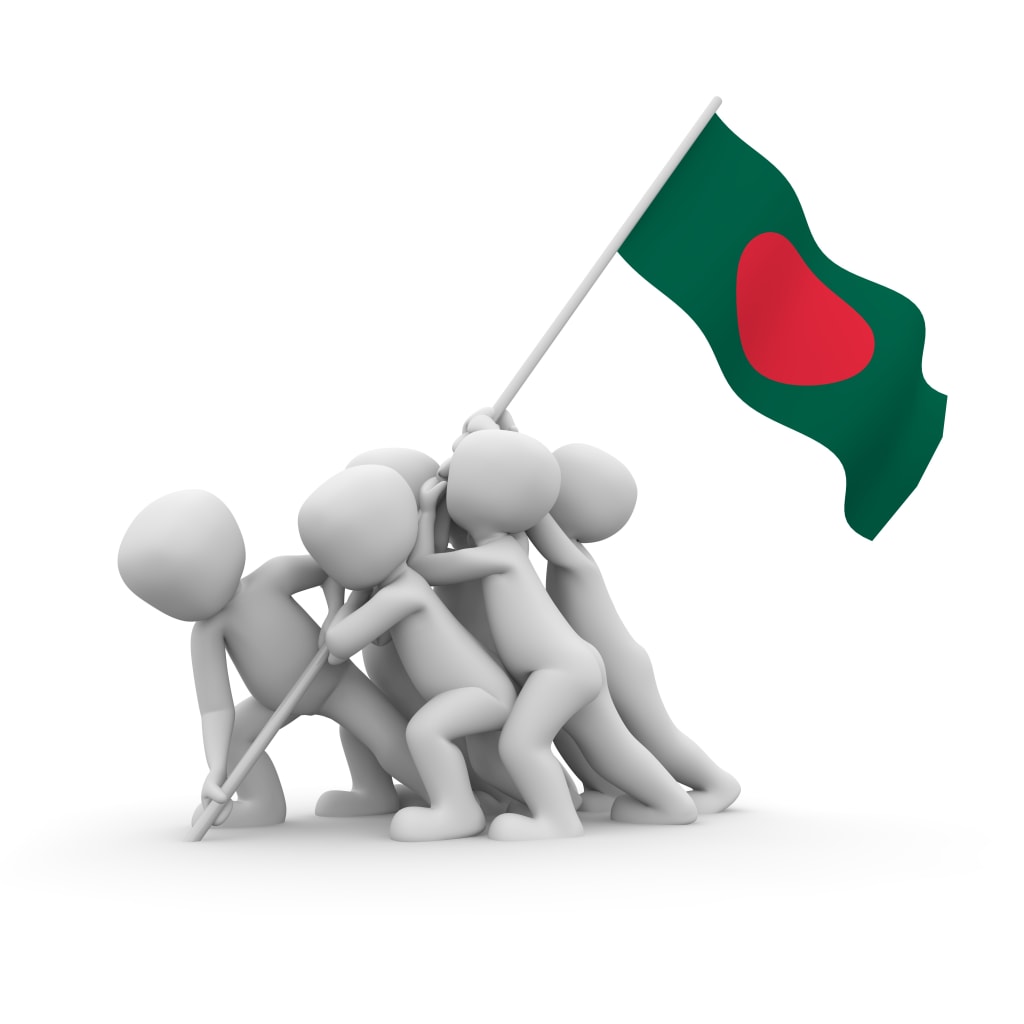
In July 2024, Bangladesh experienced a watershed moment. What started out as a protest by students turned into a national call for justice. The “July Revolution” wasn’t just another movement—it was the awakening of a nation’s suppressed hopes. With youthful leaders at the helm and a united chorus of “justice, not the state,” this was a moment when courage lit the way forward.
From Quota Reform to the Widespread Awakening: The Backstory The story dates to 2018, when students first rallied for reform of the quota system in public service. That effort was harshly crushed, but the spark never truly died. Fast forward to June 2024: Bangladesh’s High Court reinstated the quota system, reigniting long-festering frustrations. Students staged peaceful sit-ins and human chains across campuses. Although significant changes were about to take place in history, few anticipated the spark turning into an avalanche. The Tragic Spark, July 16 Abu Sayeed, a student, was killed by the government's forceful response to protests in Rangpur. His life was cut short; his sacrifice triggered a national movement. From Dhaka to Chattogram, Sylhet to Rajshahi, thousands took to the streets. Government tactics—internet shutdowns, campus lockdowns, cowed media—only stoked the fire. Young people around the country found their courage and their voices, chanting in unison:
“We demand justice, not the state.”
🎙 Young Leaders, Resilient Voices
Emerging at the forefront were student leaders like Nahid Islam, Sadia Afrin, Mahadi Khan, and Zahida Noor. Their clarity, passion, and unwavering purpose galvanized a movement. Through Facebook Live sessions, grassroots posters, and direct engagement, they turned individual frustration into collective strength.
Nahid Islam, in particular, rose as a symbol of accountability. After the shift in power, he was named the Interim Minister for ICT & Media—a remarkable choice reflecting the movement’s integrity.
⛓ August 5: The Regime Falls
Sheikh Hasina resigned on August 5 amid rising internal protest and global scrutiny. "The Iron Lady Falls" was the headline on all of the news outlets worldwide. It marked the first time in Bangladesh’s history that an elected leader stepped down due to mass nonviolent protest—since the 1971 Liberation War.
The following day, a new interim government was formed under military oversight. Nobel laureate Dr. Muhammad Yunus, aged 84, was appointed Chief Advisor. He devised daring strategies to restore judicial independence, reform the Election Commission, and
rewrite the constitution, ushering in a new promise for the republic.
🌍 Global Solidarity: A Movement Amplified
Media giants like Time, The Guardian, Le Monde, Al Jazeera, BBC hailed the events as the emergence of “The Second Republic of Bangladesh.” Experts praised the shift as a democratic revival in South Asia.
Abroad, Bangladeshis in New York, London, and Toronto marched in solidarity. Candlelight rallies and heartfelt speeches echoed the words:
“We stand with Bangladesh.”
It became clear: this was not just a local revolt—it was a universal story of people reclaiming their power.
Challenges After the Revolution: Rebuilding a Nation With victory came new responsibilities. The interim government faced immediate tasks:
Tackling economic instability and rising public debt
Confronting deep-rooted corruption within bureaucracy
Managing political tensions among factions
But unlike past movements, this time the public was politically awakened and active. To channel that power, movement leaders formed the National Citizens’ Party (NCP), carrying forward pledges of transparency, civic participation, and accountability.
The July Revolution's Lessons The events of July 2024 teach us four enduring truths:
Organization elevates protest into change.
Digital tools empower the truth amid censorship.
Youth engagement is essential for real reform.
A principled, law-abiding movement wins lasting support.
Those lessons aren’t abstract theories—they were demonstrated on Bangladesh’s streets by millions of determined citizens.
In conclusion, Hope's Realized Promise The July Revolution proved that a nation shaped by its people, not by power alone, is possible. Courage, consensus, and sacrifice—these were the true agents of change.
Bangladesh today stands on the brink of profound possibility. The future belongs to those who won't just speak about a better world, but who intentionally draw its blueprint. July’s student protests were more than mirrors of dissatisfaction. They were the architects of a fairer tomorrow.
About the Creator
Kindness Is Not Weakness: Breaking a Cultural Misconception
Growing up, many of us were taught one basic survival rule — “Don’t be too nice.” We were told, directly or indirectly, that if we are too soft, too caring, too forgiving — people will take advantage of us.
By kaykobad9 months ago in Motivation
The Forsyth House Fire
Since 1851, Forsyth House has stood on the corner of Union Street and Gordon Street in the heart of Glasgow. Its iconic, or was... because on Sunday 8th of March, 2026, a fire broke out in a small, seemingly un-named shop in the building and tore all that history down. As I write, the rubble is still unsettled and the street is still blocked off. Central Station is quiet on the upper level, and around 30 small businesses have quite literally gone up in smoke.
By S. A. Crawford3 days ago in The Swamp


Comments
There are no comments for this story
Be the first to respond and start the conversation.