
The Iran War May Be About to Escalate
Intensifying strikes, regional retaliation, and global economic risks suggest the conflict could soon widen beyond its current battlefield.
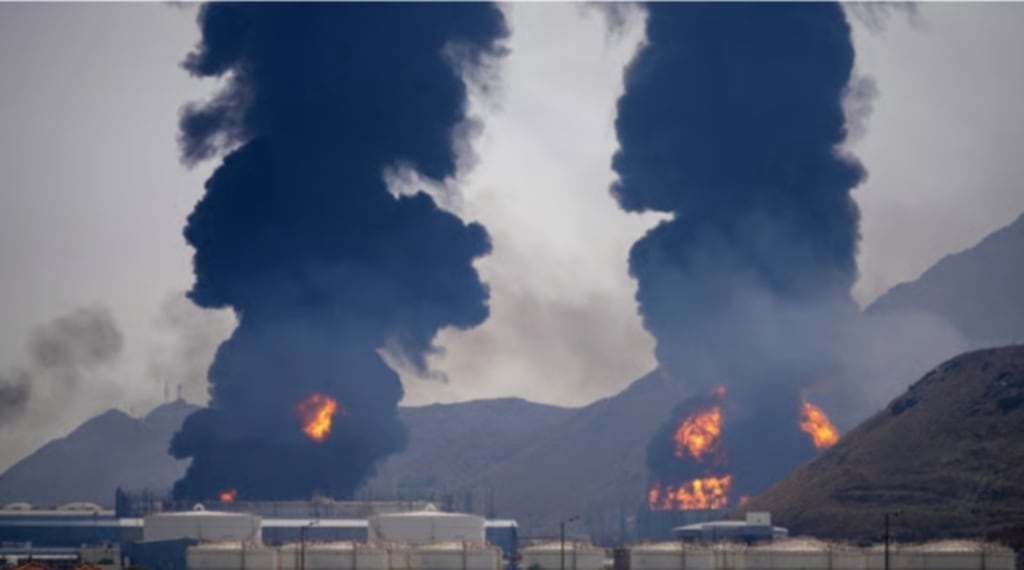
The war involving Iran, Israel, and the United States has entered a dangerous new phase. After several weeks of escalating strikes, analysts warn that the conflict could soon expand further across the Middle East, drawing in additional actors and dramatically increasing global tensions.
What began as targeted military operations has quickly evolved into a multi-front confrontation involving missile strikes, drone attacks, and growing threats to international shipping routes. As both sides continue to raise the stakes, the possibility of a broader regional war appears increasingly real.
How the Conflict Reached This Point
The current conflict intensified after a coordinated military campaign known as Operation Lion's Roar was launched on 28 February 2026. The operation involved strikes by Israeli forces—reportedly with coordination from the United States—targeting military and nuclear-related facilities across Iran.
The strikes triggered a rapid cycle of retaliation. Iran responded with missile and drone attacks aimed at Israeli territory, U.S. military positions, and strategic infrastructure across the Gulf region.
Within days, the conflict spread beyond Iran and Israel, affecting multiple countries and military installations throughout the Middle East. Experts began warning that the situation could spiral into a wider confrontation if further escalation continued.
New Strikes Raise the Stakes
One of the most significant recent developments occurred when U.S. forces launched major airstrikes on Kharg Island, a critical Iranian oil export hub in the Persian Gulf. The strikes reportedly targeted more than 90 military sites, including missile storage facilities and naval mine depots.
Although the attacks avoided Iran’s oil infrastructure, the strategic significance of the location was clear. Kharg Island handles a large portion of Iran’s oil exports, making it a vital economic asset for the country.
The strike signaled that the United States and its allies are willing to expand their operations deeper into Iranian territory if the conflict continues.
According to recent reporting, Washington has warned Tehran that further retaliation could lead to additional attacks on strategic sites.
Regional Spillover Already Underway
The conflict is no longer limited to a single battlefield. Iran has already launched drone and missile attacks targeting sites in neighboring countries, including strikes on ports and oil tankers near Oman.
Other incidents linked to the war have occurred across the region, including attacks near military bases in the eastern Mediterranean and threats against Gulf infrastructure.
These developments highlight a key feature of modern Middle Eastern conflicts: regional networks of allies and proxies that can expand a war far beyond its original participants.
Iran has longstanding relationships with armed groups across the region, while the United States maintains military partnerships with several Gulf nations. If additional countries become involved directly, the conflict could transform into a much larger regional war.
Strategic Calculations on Both Sides
Both sides appear to believe that escalation could strengthen their strategic position.
For Israel and the United States, increased military pressure is intended to weaken Iran’s missile capabilities, limit its nuclear ambitions, and reduce its regional influence.
Iran, however, may see escalation as a way to impose higher costs on its adversaries. By targeting regional infrastructure, shipping routes, or allied military bases, Tehran could force opponents to reconsider the long-term consequences of the conflict.
Analysts note that such strategies often create what is known as an “escalation ladder,” where each side responds to the other with increasingly intense actions.
The risk is that once escalation begins, it can become extremely difficult to control.
The Economic Shockwave
Beyond the battlefield, the war is already affecting the global economy. Financial markets have reacted nervously to the possibility that the conflict could disrupt oil shipments from the Persian Gulf.
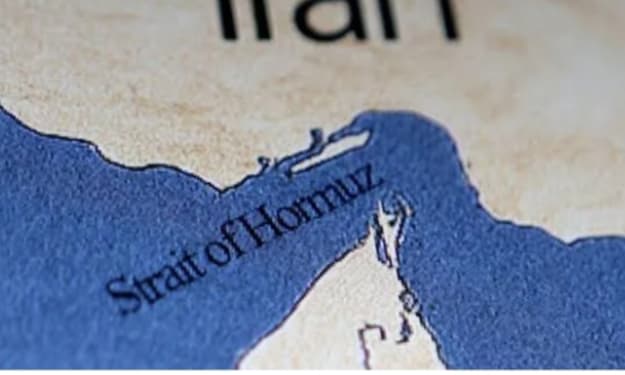
The Strait of Hormuz—a narrow shipping corridor through which roughly one-fifth of the world’s oil supply passes—has become a major focal point of concern.
Some analysts warn that if the conflict continues to escalate, the waterway could become effectively closed to commercial shipping, triggering a global energy crisis.
Even temporary disruptions could cause oil prices to spike dramatically, affecting economies around the world.
Political Upheaval Inside Iran
Another factor complicating the situation is internal political instability within Iran. The country recently underwent a leadership transition after the assassination of former Supreme Leader Ali Khamenei during the conflict.
Following the assassination, the Assembly of Experts selected Mojtaba Khamenei as the new supreme leader, marking a major shift in Iran’s political leadership.
Leadership changes during wartime often create uncertainty about future strategy. While some observers hoped the transition might open the door to negotiations, others fear it could push the country toward a more confrontational stance.
The Risk of a Wider War
Many security experts now believe the conflict is approaching a critical turning point.
If additional regional actors become directly involved—or if attacks target vital economic infrastructure—the war could expand into a broader Middle Eastern conflict.
Possible escalation scenarios include:
Direct attacks on Gulf oil facilities
Closure of key shipping routes
Expanded missile strikes across the region
Greater involvement from regional militias
Each of these developments would increase the risk of a prolonged and destabilizing war.
Is There Still a Path to De-Escalation?
Despite the rising tensions, diplomatic efforts have not completely disappeared. Several international actors continue to push for negotiations aimed at reducing hostilities.
However, deep mistrust between the main parties makes diplomacy extremely difficult. Both sides currently believe that military pressure may produce a more favorable outcome than negotiations.
As long as this perception remains, the incentives for escalation may outweigh those for compromise.
A Conflict at a Dangerous Crossroads
The Iran war now stands at a pivotal moment. Continued military strikes, expanding regional involvement, and mounting economic pressure are all signs that the conflict could soon intensify further.
While escalation is not inevitable, the current trajectory suggests that the war may be far from reaching its peak.
For the Middle East—and for the global economy—the coming weeks could determine whether the conflict stabilizes or spirals into a much larger and more destructive confrontation.
About the Creator
The Forsyth House Fire
Since 1851, Forsyth House has stood on the corner of Union Street and Gordon Street in the heart of Glasgow. Its iconic, or was... because on Sunday 8th of March, 2026, a fire broke out in a small, seemingly un-named shop in the building and tore all that history down. As I write, the rubble is still unsettled and the street is still blocked off. Central Station is quiet on the upper level, and around 30 small businesses have quite literally gone up in smoke.
By S. A. Crawford3 days ago in The Swamp


Comments
There are no comments for this story
Be the first to respond and start the conversation.