
The Greenland Gamble: Trump’s Arctic Power Play Risks Economy and Alliances
The push for Greenland exposes a dangerous strategy of weaponizing trade and straining alliances for territorial gain, with irreversible global consequences.

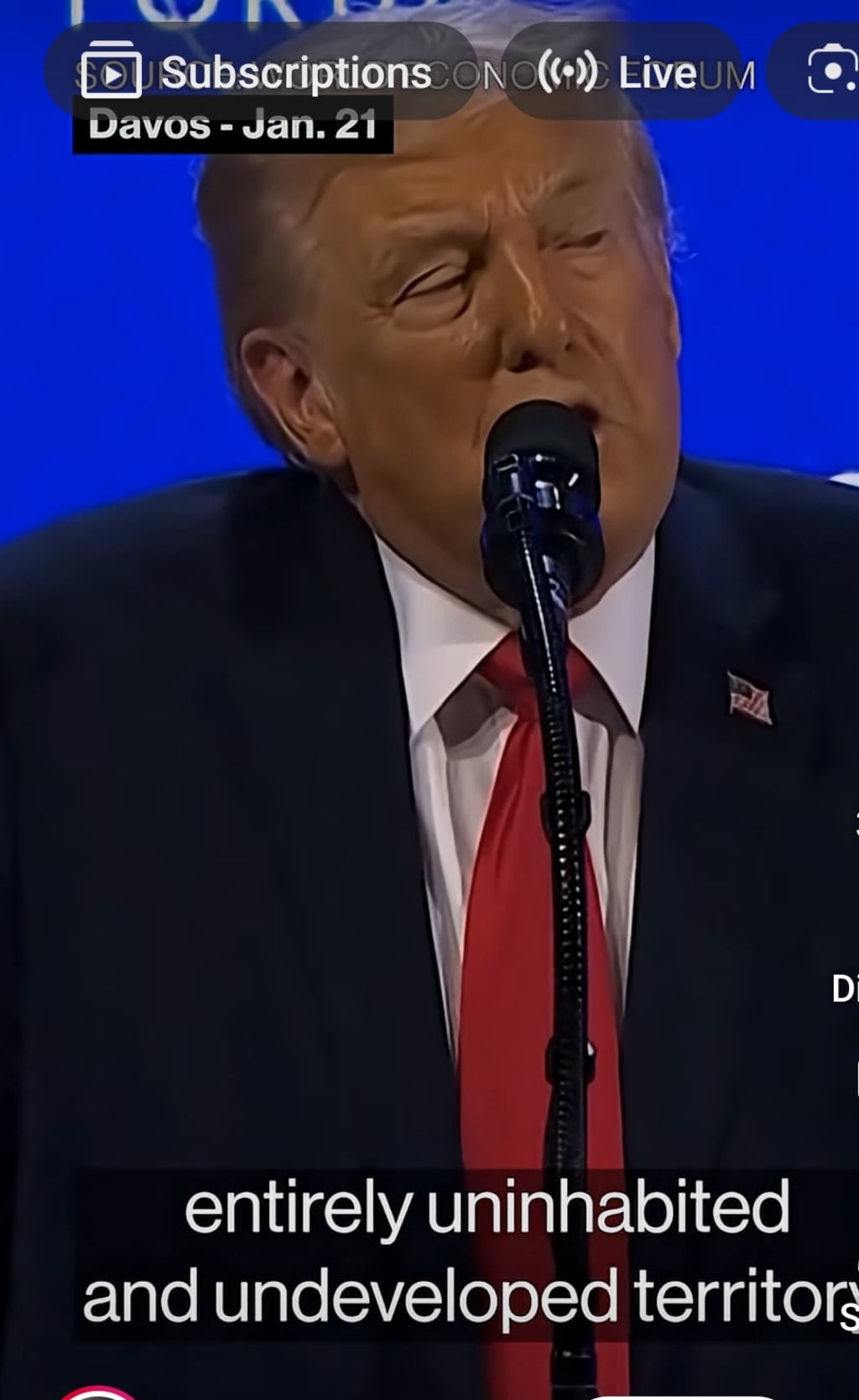
The year 2026 opened with a geopolitical shockwave that rattled the foundations of the Western alliance. In January, U.S. President Donald Trump intensified pressure on Denmark to cede control of Greenland, threatening a 10% tariff—rising to 25% by June—on goods from Denmark, the UK, and six other European nations until a deal was reached for the "Complete and Total purchase of Greenland". This move, framed as a national security imperative, has triggered a crisis that experts warn is fracturing the global trading system and undermining decades of diplomatic trust at a perilous moment for the world economy.
A Pattern of Pressure, Not an Isolated Incident
President Trump's interest in Greenland is not new; it dates back to his first term. However, the tactics have escalated sharply since his return to office. He has stated the U.S. would obtain Greenland "one way or the other" and, until recently, refused to rule out the use of military force. While he later stated at Davos he "won't use force," he paired that with a clear threat: "You can say yes, and we will be very appreciative. Or you can say no and we will remember".
The administration justifies this pursuit on two primary grounds:
· National Security: Trump claims Greenland is vital for U.S. protection, particularly for missile defense, and argues that Denmark is incapable of securing it from Russian or Chinese threats.
· Strategic Resources: Advisers and commentators point to Greenland's vast deposits of rare earth minerals and other critical resources, essential for clean energy and technology, as a key motivation.
European and Danish leaders have uniformly rejected the premise. Danish Prime Minister Mette Frederiksen insisted "Europe won't be blackmailed," and a joint statement from affected nations warned Trump's actions "undermine transatlantic relations and risk a dangerous downward spiral". On the ground in Greenland, the commander of Denmark’s Joint Arctic Command stated bluntly, "We don't see a threat from China or Russia today".
Weaponizing Trade in a Fragile Global Economy
The Greenland crisis is accelerating broader, dangerous trends in global trade identified by economists for 2026.
Here are the key economic trends being exacerbated by this confrontation:
· Rising Protectionism & Tariffs
· Impact: Governments increasingly use tariffs as strategic tools, disrupting trade, raising costs, and creating uncertainty.
· Greenland Link: Trump's threat against eight European nations is a direct example, punishing allies to force a territorial concession.
· Geopolitical Fragmentation of Trade
· Impact: Value chains are reconfigured based on political blocs rather than efficiency, reducing growth and marginalizing some economies.
· Greenland Link: The standoff fractures the NATO alliance, pushing trade rules toward further fragmentation.
· Focus on Critical Mineral Security
· Impact: Nations scramble to secure supplies of minerals vital for tech and energy, leading to export controls and fragmented markets.
· Greenland Link: Access to Greenland's mineral wealth is a stated subtext of the U.S. push, turning the island into a strategic commodity.
· Erosion of Multilateral Rules
· Impact: The WTO's authority wanes as unilateral actions increase, making disputes harder to resolve.
· Greenland Link: The unilateral tariff threat bypasses all multilateral frameworks, setting a precedent for coercion over cooperation.
This protectionist surge comes as global economic growth is already projected to slow to 2.6% in 2026. The uncertainty generated by such geopolitical shocks discourages the long-term investment needed for stability.
The "American Carnage" Extends Beyond U.S. Borders
The term "American Carnage" — famously evoked in Trump's first inaugural address and the title of a FRONTLINE documentary examining division and insurrection — now describes a foreign policy that inflicts collateral damage on global norms and alliances. This approach is consistent with other administration moves in early 2026 that prioritize unilateral power over shared well-being.
In tandem with the Greenland pressure, the Trump administration dealt two significant blows to global climate cooperation:
1. Withdrawing the U.S. from key international bodies like the UN Framework Convention on Climate Change.
2. Directing the EPA to stop calculating the number of lives saved by air pollution regulations, a move experts say "rips the heart out of the government’s ability to regulate".
These actions create a vacuum in global leadership. As China dominates the production of solar panels, wind turbines, and electric vehicles, its influence over the terms of the energy transition grows. Michael Oppenheimer, a professor at Princeton, warns the U.S. is on the road to becoming "the last petro state".
An Irreversible Shift in the World Order
The consequences of the Greenland gambit are profound and extend far beyond the Arctic.
For the United States:
· Erosion of Alliance Trust: Using tariffs to coerce NATO allies severely damages mutual defense commitments. Article 5 of NATO's treaty—that an attack on one is an attack on all—becomes questionable when the U.S. threatens economic attack on its own partners.
· Economic Self-Sabotage: Tariffs raise costs for American consumers and businesses. In a slowing global economy, disrupting trade with key European partners undermines growth at home.
· Strategic Distraction: The obsessive focus on Greenland, which overwhelmingly rejects becoming part of the U.S., diverts attention and diplomatic capital from other global challenges.
For the Global System:
· Normalization of Coercion: It signals that territorial acquisition through economic threat is a valid tool of statecraft in the 21st century.
· Accelerated Fragmentation: It pushes Europe and other democracies to accelerate efforts to become independent from U.S. economic and security whims, leading to a more divided, volatile world order.
· Undermined Sovereignty: It disrespects the democratic will of 56,000 Greenlandic people, for whom independence from Denmark is a goal, but not annexation by a foreign power.
As the Atlantic Council notes, markets in 2025 tried to look past Trump's shocks, but 2026 "may look very different". The Greenland crisis is not a isolated negotiation tactic; it is a stress test for the international system. It demonstrates a willingness to sacrifice alliance unity and economic stability for a unilateral gain, creating "carnage" in the established world order that may indeed prove irreversible. The scars on the transatlantic relationship and the global trading system will long outlast any single territorial dispute.
FAQs on the Greenland Crisis
Why is Greenland so important geopolitically?
Greenland's location in the Arctic makes it strategically vital for missile warning systems and monitoring shipping routes. Its vast untapped resources of rare earth minerals, essential for electronics and green technology, also make it an economic prize in a resource-constrained future.
What is the historical basis for the U.S. interest in Greenland?
The U.S. has had a military presence in Greenland since World War II to protect it from German invasion. The current Pituffik Space Base is a key part of U.S. and NATO defense infrastructure. The U.S. has previously attempted to purchase the island in 1867 and 1946.
How are other countries responding besides diplomatic protests?
Several European nations, including France, Sweden, and Germany, have sent military personnel to Greenland for joint exercises with Denmark, signaling a commitment to defend allied interests in the region.
What does this mean for the future of NATO?
This crisis strikes at NATO's core principle of solidarity. Threatening allies with tariffs to force a territorial concession fundamentally contradicts the mutual trust required for collective defense, potentially weakening the alliance's cohesion in the long term.
What are the potential outcomes of this crisis?
· Standoff Continues: The most likely scenario is a prolonged diplomatic and economic stalemate, with continued tariffs and rising tensions.
· Broken Alliance: A severe rupture in U.S.-European relations, leading to a permanent shift in how NATO operates.
· Military Escalation: While currently downplayed by Trump, the threat of force, however remote, has been implied and remains a background risk.
About the Creator
Saad
I’m Saad. I’m a passionate writer who loves exploring trending news topics, sharing insights, and keeping readers updated on what’s happening around the world.
The Forsyth House Fire
Since 1851, Forsyth House has stood on the corner of Union Street and Gordon Street in the heart of Glasgow. Its iconic, or was... because on Sunday 8th of March, 2026, a fire broke out in a small, seemingly un-named shop in the building and tore all that history down. As I write, the rubble is still unsettled and the street is still blocked off. Central Station is quiet on the upper level, and around 30 small businesses have quite literally gone up in smoke.
By S. A. Crawford3 days ago in The Swamp



Comments
There are no comments for this story
Be the first to respond and start the conversation.