
The GCC Is Rewriting the Script on Global Diplomacy
In the evolving architecture of international affairs, the Gulf Cooperation Council (GCC) is increasingly asserting itself; not as a passive regional bloc, but as a nimble architect of global diplomacy.

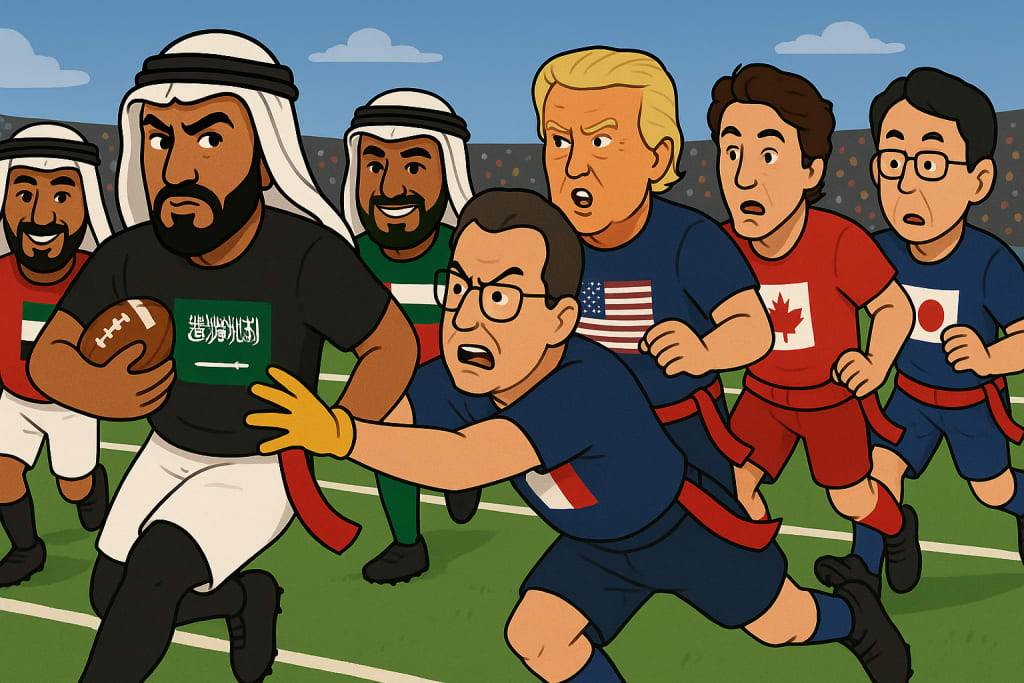
While once relegated to strategic hedges and security dependence on major powers, GCC states are now actively shaping a new narrative; one rooted in pluralistic engagement, mediation, and global partnership.
From Security Reliance to Mediation Leadership
Historically, Gulf states leaned on the United States for security guarantees. The June 2025 missile strike on Qatar’s Al Udeid Air Base highlighted the limitations of this reliance, and underscored an urgent need for strategic diversification. In response, GCC leaders have pivoted toward mediation as a diplomatic instrument, asserting their agency not through military strength but through facilitating resolution in conflicts beyond their immediate neighborhood.
This shift is embodied by Qatar’s role in brokering a detainee exchange between the U.S. and Afghanistan in early 2025—an outcome welcomed by GCC Secretary‑General Jasem Al Budaiwi as emblematic of Gulf diplomacy’s constructive and principled engagement on the global stage . Likewise, the GCC has reaffirmed its mediation mandate before the UN Human Rights Council in Geneva, which emphasizes respect for human dignity, international norms, and rights-based conflict resolution—especially regarding the Palestinian crisis and the broader Middle East peace process .
Building Partnerships Beyond the Gulf
Trade, investment, and multilateral summits underscore the GCC’s outward‑looking strategy. Through targeted trade pacts such as CEPAs with India, Indonesia, and Türkiye, the United Arab Emiriates (UAE), and Saudi Arabia are reinventing themselves as deal‑makers whose agility and pragmatism contrast sharply with slow, bureaucratic global negotiations. GCC‑UK free trade agreement talks advanced further in mid‑2025, signaling a deepening commercial and strategic alignment with Western partners.
Meanwhile, GCC engagement with Central Asia—via the 2024 Strategic Dialogue and the May 2025 summit in Samarkand—heralds a new model of bridging economic corridors, digital infrastructure, energy cooperation, and logistics ties across Eurasia. Such outreach demonstrates the GCC’s ambition to act as an investment conduit and diplomatic interlocutor across diverse regions.
Cultural Diplomacy: Smart Power as Strategic Currency
Global diplomacy today embraces narratives and symbols. GCC states are mastering this dynamic—investing in cultural platforms that resonate far beyond the region. Institutions such as Louvre Abu Dhabi, the Red Sea Film Festival, AlUla’s cultural renaissance, and major art fairs have propelled GCC cultural smart power to global prominence. This cultural diplomacy conveys an inspirational story about the Gulf—innovative, creative, inclusive—and positions it as a hub of global artistic exchange.
Advancing Global Governance and Innovation Diplomacy
The World Economic Forum has spotlighted the GCC’s role in accelerating global cooperation across five key vectors: trade and capital flows, innovation ecosystems, climate and clean energy, health tech, and peace/security diplomacy. In each domain, GCC countries are forging partnerships—from Saudi Arabia’s green‑hydrogen and tree‑planting campaigns to the UAE’s AI and fintech initiatives, and Qatar’s genome research collaborations. These efforts help GCC countries define themselves as forward‑thinking contributors to global public goods.
Notably, GCC advocacy for reforming international financial institutions—championing greater inclusion for emerging markets—and Gulf sovereign wealth funds’ high-impact investments across Africa and Asia reflect the region’s intent to shape global economic norms from within .
Calibrating Relations with the Great Powers
The GCC’s global diplomacy is distinguished by a balance between historic Western ties and deepening engagement with non‑Western powers. As global geopolitics becomes multi-polar, Gulf states have introduced China, Russia, and others into their strategic calculus. This re-calibration is evident in the Saudi and UAE's investments in U.S. markets and infrastructure, while simultaneously maintaining robust trade and diplomatic ties with Beijing and Moscow. Leaders believe they can navigate these partnerships more deftly than others—acting as facilitators between global powers while maintaining their sovereignty .
Challenges and the Road Ahead
Despite meaningful progress, the GCC’s new diplomacy narrative faces tests. Recent crises—such as missile strikes across the Gulf—remind all how swiftly regional trust and stability can be undermined, bringing forth questions about the effectiveness of emerging diplomatic tools. Additionally, the dual pressures of great‑power competition require Gulf leaders to continuously calibrate relations without becoming proxies or alienating long-standing partners.
Moreover, cultural diplomacy and investment‑led influence must be matched by social governance progress internally. Critics point to limited progress on personal rights and inclusiveness; as the GCC seeks recognition on the world stage, expectations around governance and rights will grow.
Conclusion
By marshaling mediation initiatives, forging regional and extra‑regional trade and investment links, and re-imagining cultural soft power, the GCC is authoring a new story in global diplomacy—one grounded in pragmatism, partnership, and global responsibility. This narrative positions the Gulf not merely as a beneficiary of global order, but as its proactive custodian in many domains—from conflict resolution to innovation collaboration.
Over the coming years, how successfully Gulf states navigate the interplay between autonomy and alliances, stability and reform, security and outreach, will determine whether this narrative may become a durable cornerstone of global diplomacy—not a footnote for aspiration.
References
1. World Economic Forum, “5 ways the GCC is supporting global cooperation efforts”
2. Stimson Center analysis of GCC engagement with Taliban and broader diplomacy
About the Creator
Victor Trammell
Mr. Trammell is an award-winning digital media producer, freelance journalist, and author. Formerly, he wrote national radio content for the Michael Baisden Show. He also served as Senior Editor at the Your Black World online news network.
Keep reading
More stories from Victor Trammell and writers in The Swamp and other communities.
Road to WW3: Israel Went on a Brutal Rampage During Latest Air Raids Against Iran's Nuclear Sites-The World Sounds Off
In a dramatic escalation of Middle East tensions, Israel launched a series of airstrikes June 13, 2025 on multiple Iranian nuclear facilities. The punishing raids, which reportedly caused significant damage to key infrastructure sites in the cities of Natanz and Fordow, has sent shockwaves across the international community. Israel's actions have incited fears that a broader global conflict could be imminent.
By Victor Trammell9 months ago in The Swamp
Parallel Protests
I haven't written for quite some time, but I have A LOT of thoughts about yesterday's protest rally against our government's involvement and complicity in America's war on Iran, on the harbourside of my home city Bristol, and I need to put them somewhere. My gorgeous girlfriend is always a loving and listening ear and sharing it all with her will always be a healthy and happy way of processing the mental and emotional weight, but getting it straight in my brain to share means writing it all down in straight lines, so, here we are and thanks for being here.
By Steph Cole9 days ago in The Swamp
Sweden Investigates Cargo Ship Allegedly Transporting Stolen Grain with Russian Crew
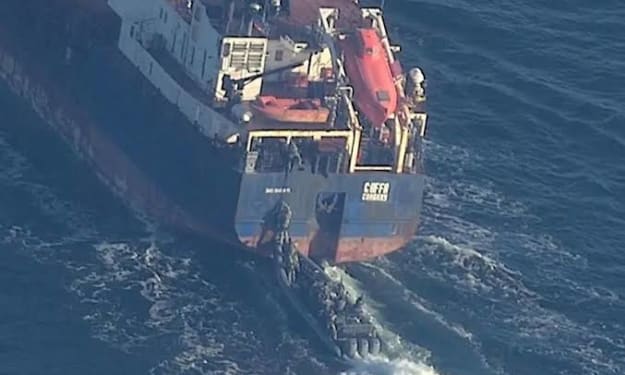
Authorities probe suspected illegal shipment linked to grain seized in occupied Ukrainian territories. Swedish authorities have launched an investigation into a cargo vessel suspected of transporting stolen grain believed to have originated from Ukraine’s occupied territories. The probe follows concerns raised by Ukrainian officials and international observers that the shipment may be part of a broader network trafficking agricultural goods taken from farms and storage facilities during the ongoing conflict. According to officials in Sweden, maritime authorities began examining the vessel after it entered waters under Swedish jurisdiction. The cargo ship, reportedly operated by a crew largely composed of Russian nationals, had drawn attention due to irregular documentation and suspicions regarding the origin of its grain cargo. The case has emerged against the backdrop of longstanding accusations by Ukraine that grain harvested from its occupied regions has been transported through international shipping routes and sold on global markets. Since the beginning of the war with Russia in 2022, Kyiv has repeatedly claimed that agricultural commodities taken from Ukrainian territory are being exported abroad through complex logistical channels. Suspicion Over Cargo Origins The vessel under investigation reportedly arrived at a port in southern Sweden earlier this week. Authorities said that customs officials and maritime inspectors became suspicious when reviewing shipping records and cargo manifests, which appeared incomplete or inconsistent. While officials have not publicly disclosed the ship’s name pending the ongoing investigation, reports suggest that the grain cargo may have originated from areas of eastern or southern Ukraine currently under Russian control. Ukrainian officials argue that such shipments represent the systematic removal of resources from territories seized during the conflict. Representatives of Sweden’s customs and coast guard agencies have confirmed that samples of the grain cargo are being examined. Experts are attempting to determine the grain’s geographic origin using agricultural and trade data, a process that may help establish whether the shipment matches harvest patterns from Ukrainian regions. Diplomatic and Legal Implications The investigation highlights the increasingly complex legal issues surrounding wartime trade and maritime commerce. If the grain is proven to have been taken from occupied territories without the consent of Ukrainian authorities, it could potentially constitute the transport of stolen goods under international law. Officials from European Union institutions have also been monitoring such cases closely. The EU has imposed extensive sanctions on Russia since the invasion of Ukraine, targeting sectors ranging from energy to shipping and agriculture. Any confirmed involvement in transporting looted commodities could lead to further legal or financial penalties. For Sweden, which joined NATO in 2024, the investigation underscores the broader geopolitical tensions surrounding the war in Ukraine and the enforcement of international sanctions. Swedish authorities have emphasised that their investigation is being conducted in accordance with national law and international maritime regulations. Ukraine’s Claims of Grain Theft Ukrainian officials have long alleged that millions of tonnes of grain have been removed from occupied areas since the start of the conflict. The country, one of the world’s largest grain exporters, relies heavily on agricultural exports to support its economy and global food supply chains. Kyiv has argued that the alleged seizure of grain not only damages Ukraine’s economy but also distorts international markets by introducing agricultural products whose origins may be concealed. Ukrainian diplomats have repeatedly urged governments and shipping authorities to investigate suspicious cargo shipments arriving in international ports. In several previous cases, ships suspected of carrying Ukrainian grain were reportedly turned away from ports or subjected to inspection after documentation discrepancies were discovered. The Investigation Continues Swedish authorities have stressed that the inquiry remains in its early stages and that no formal charges have yet been filed against the ship’s crew or operators. Investigators are reviewing shipping logs, satellite tracking data, and customs paperwork to reconstruct the vessel’s journey. Maritime experts say such investigations can take weeks or months, particularly when cargo may have been transferred between ports or mixed with grain from other sources during transit. For now, the cargo ship remains under scrutiny while authorities determine whether the shipment violated international trade regulations or sanctions regimes. The outcome of Sweden’s investigation could set an important precedent for how European ports handle suspected shipments of goods taken from conflict zones. As the war continues, scrutiny over global trade routes and cargo origins is expected to intensify, with governments seeking to ensure that international markets are not used to profit from resources seized during wartime.
By Fiaz Ahmed 5 days ago in The Swamp



Comments
There are no comments for this story
Be the first to respond and start the conversation.