
The European Union Driver’s License: One Permit for a Connected Continent
Le permis de conduire européen : faciliter la mobilité et renforcer la sécurité sur les routes"

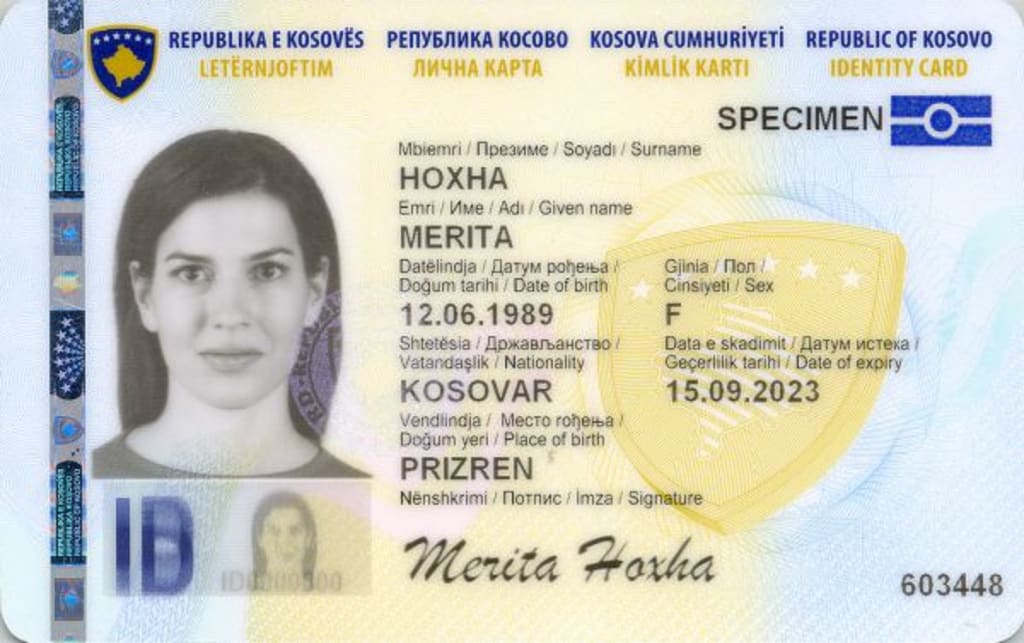
In a continent as diverse as Europe, where cultures, languages, and landscapes change from one border to the next, the ability to move freely is one of the European Union’s greatest achievements. Among the many benefits that come with EU citizenship, the “permis de conduire Union européenne” — the European Union driver’s license — is one of the most practical symbols of this unity. It allows millions of Europeans to drive across 27 member states without needing to apply for a new license every time they cross a border. But how exactly does this system work, and why is it so important?
---
A Common License for 27 Nations
Before the creation of a unified system, each European country had its own driver’s license design, rules, and regulations. This made life complicated for travelers, students, and workers who moved between countries. In 2006, the EU introduced a directive to standardize driving licenses across all member states, creating a single format recognized everywhere in the Union.
The modern EU driving license looks the same across countries. It’s a pink, plastic, credit-card–sized permit with a European flag and a unique ID number. On the surface, it may seem simple, but it represents a massive step toward integration and safety on European roads.
---
Freedom of Movement Made Easier
One of the main goals of the European Union is to make it easier for citizens to live, work, and travel across borders. The EU driving license is a key part of that mission. Whether someone is moving from France to Germany for work or taking a road trip from Spain to Italy, the same license is valid in all EU countries — no translation or exchange needed.
For students studying abroad or professionals relocating for a job, this system eliminates unnecessary bureaucracy. Imagine a young Italian student moving to the Netherlands — they can rent a car, drive to class, or explore neighboring countries without worrying about new paperwork or driving tests.
This convenience is part of what makes the EU such a connected community.
---
Improving Road Safety
Beyond convenience, the unified driving license also aims to make European roads safer. The EU introduced stricter rules for issuing and renewing licenses to ensure that only qualified drivers get behind the wheel.
The directive on driving licenses (Directive 2006/126/EC) includes shared safety standards for driver training, testing, and medical fitness. It also establishes a central database that helps authorities detect fraud or multiple license holders. This prevents unsafe drivers from escaping penalties by moving to another country.
Thanks to these measures, it’s easier for police and transport authorities to verify driver identities, track violations, and promote responsible driving across borders.
---
Digital Transformation: The Future of EU Driving
The EU is also moving toward digitalization, with a plan to introduce a digital driving license accessible through smartphones by 2030. This step will make it even easier to carry and verify a license anywhere in Europe.
The European Commission believes that digital permits will not only modernize the system but also make it harder for forgeries to occur. Additionally, digital licenses will be especially helpful for younger drivers, who increasingly prefer to manage documents electronically rather than carry physical cards.
---
Recognition Beyond the EU
While the EU driving license is valid across the European Union and in the European Economic Area (EEA), many countries outside Europe also recognize it. Travelers can often use it to rent cars or drive temporarily in places like the United Kingdom (post-Brexit), Switzerland, and even parts of North America or Asia, depending on local agreements.
However, if someone plans to live abroad long-term, they may still need to exchange their EU license for a local one after a certain period.
---
Challenges and Criticism
Despite its many advantages, the EU license system isn’t perfect. Some critics argue that the standards for issuing licenses still vary slightly between countries — for instance, driving tests in Germany might be stricter than in Romania. Others believe that the renewal process could be simpler, especially for elderly drivers or those living abroad.
Nonetheless, the EU continues to work toward harmonizing these details. The upcoming revisions to EU driving laws are expected to further align testing standards, strengthen medical checks, and ensure equal treatment of drivers across all countries.
---
A Symbol of European Unity
The “permis de conduire Union européenne” is more than a driving document — it’s a reflection of how Europe sees itself: open, connected, and cooperative. It represents not just freedom of movement but also trust among nations that share roads, safety standards, and a vision of unity.
For millions of Europeans, this small plastic card is a daily reminder that borders can be crossed smoothly, cultures can mix freely, and citizens can travel from Lisbon to Warsaw with just one license in their pocket.
In an ever-changing world, the EU driving license is a quiet but powerful example of how unity and practicality can come together — one road at a time.
About the Creator
Fiaz Ahmed
I am Fiaz Ahmed. I am a passionate writer. I love covering trending topics and breaking news. With a sharp eye for what’s happening around the world, and crafts timely and engaging stories that keep readers informed and updated.
Keep reading
More stories from Fiaz Ahmed and writers in The Swamp and other communities.
Russian Jets in NATO Airspace Over Lithuania: What Happened and Why It Matters
On October 23, 2025, two Russian military aircraft — a Su-30 fighter jet and an Il-78 aerial refueling tanker — briefly entered Lithuanian airspace for about 18 seconds, Lithuania’s military reported. The incursion came from the Russian exclave of Kaliningrad, and occurred around 15:00 GMT.
By Fiaz Ahmed 3 months ago in The Swamp
Trump’s Actions May Be Illegal — But His Greed Might Be the Only Thing Holding Him Back
In American politics, few figures provoke as much controversy, outrage, and relentless fascination as Donald Trump. Years after entering the political arena, he remains a dominant force not only in elections and headlines, but also in courtrooms and public debate. Legal scholars, journalists, and watchdog groups have repeatedly argued that many of Trump’s actions — both during his presidency and after — crossed clear legal and ethical lines. From election interference claims to allegations of abusing executive power, mishandling classified information, and entangling public office with private business interests, the accusations against Trump are neither isolated nor trivial. They form a pattern that critics say reveals a leader willing to push, bend, or outright ignore the law when it suits him. And yet, paradoxically, Trump has not gone as far as many of his harshest critics once feared. The reason may not be respect for democratic norms or fear of legal accountability — but something far more personal: his own greed. This is not a defense of Trump’s conduct. Rather, it is an attempt to understand a reality that even some of his opponents quietly acknowledge. Trump’s obsession with personal wealth, brand image, and financial survival may sometimes limit how far he is willing to go, even when legality appears optional. A Pattern of Questionable Legality Trump’s political career has been accompanied by an almost constant cloud of legal scrutiny. Investigations have examined campaign finance violations, obstruction of justice, business fraud, election interference, and misuse of power. Unlike many politicians who rely on subtlety or plausible deniability, Trump often operates in full public view, openly testing the boundaries of what he can get away with. His response to legal challenges is also strikingly consistent. He rarely engages with the substance of allegations. Instead, he frames investigations as politically motivated “witch hunts” and portrays prosecutors, judges, and journalists as enemies of the people. This narrative has proven effective with his base, many of whom see legal accountability not as justice, but as persecution. The brazenness of this strategy has led critics to argue that Trump believes himself above the law. And yet, despite his rhetoric, he has repeatedly stopped short of actions that would create immediate, irreversible consequences. The question is why. The Central Role of Money and Brand To understand Trump’s restraint, one must understand how he sees himself. Trump has never primarily viewed himself as a public servant or ideological leader. His core identity is that of a businessman and brand. Trump’s wealth — or at least the perception of it — is central to his political power. His properties, licensing deals, fundraising apparatus, and media presence all depend on the image of success. Politics, for Trump, has never been separate from profit. It is another platform for monetization and self-promotion. Unlike leaders driven by ideology, nationalism, or historical legacy, Trump’s decisions often reflect a simple cost-benefit calculation. Actions that threaten his brand value, fundraising ability, or business empire are approached with caution. Actions that energize supporters without endangering his financial interests are embraced enthusiastically. This explains a recurring pattern: Trump escalates rhetorically, but hesitates operationally. He may use inflammatory language, encourage outrage, or flirt with extreme ideas, but often stops short of moves that would directly and permanently damage his wealth. Greed as a Limiting Force Greed is typically viewed as a corrupting influence, and in many ways, it is. But in Trump’s case, it also functions as a brake. Absolute power, while tempting, carries real risks — sanctions, asset seizures, international isolation, and loss of market confidence. Trump may dismiss institutions publicly, but he understands markets instinctively. He knows investors flee chaos, lenders demand predictability, and brands collapse under prolonged legal uncertainty. Even when he attacks courts or regulators in speeches, his actual behavior often reveals caution: delays, negotiations, settlements, and procedural maneuvering rather than outright defiance. This suggests that Trump’s greatest fear is not prison, but bankruptcy. Having faced financial collapse multiple times in the past, he appears determined never to experience it again. His greed does not eliminate risk-taking, but it shapes where he draws the line. Why This Is Not Reassuring It would be a profound mistake to find comfort in the idea that greed will protect democracy. Self-interest is not a moral safeguard; it is an unreliable and fragile one. Trump’s restraint is situational, not principled. When personal profit and political power align, the danger increases dramatically. Relying on greed rather than law also sets a dangerous precedent. Democracy should not depend on whether a powerful individual calculates that illegal actions are “bad for business.” That logic leaves institutions vulnerable to leaders with fewer assets to lose, greater tolerance for chaos, or ideological motivations stronger than personal wealth. In Trump’s case, the line is not legality — it is profitability. The Legal System Still Matters Despite its flaws and delays, the legal system has not been irrelevant in Trump’s story. Courts have imposed fines, restricted business practices, and upheld investigations despite intense political pressure. These outcomes matter, not just symbolically, but financially. Every legal loss chips away at Trump’s carefully constructed image as a “winner,” an image that underpins his fundraising and influence. Ironically, his obsession with money also makes him vulnerable. Legal accountability threatens the very thing he values most. A Calculated Balance Trump operates within a narrow corridor: push boundaries enough to energize supporters, but not so far that financial consequences become catastrophic. This balancing act explains why aggressive speeches are often followed by procedural stalling, appeals, and strategic retreats. It also explains why Trump attacks institutions rhetorically while continuing to rely on them practically. Banks, courts, and markets are not enemies he can afford to lose entirely. Conclusion Donald Trump’s legacy will likely be defined by how often he tested the limits of the law — and how inconsistently those limits restrained him. Yet one constant remains unmistakable: his devotion to personal profit. That devotion may sometimes hold him in check — not because he respects democracy, but because he values his wealth. Democracy deserves stronger guardians than greed. But for now, it remains an uncomfortable part of the equation in understanding Trump’s behavior and the risks he poses to American political life.
By Muhammad Hassan6 days ago in The Swamp
Miss Persephone's Manual to a Seemingly Ordinary Life
Miss Persephone was found at the dining table, her blue eyes swollen, her tears arriving and retreating like the tides of the ocean. Earlier that day, her family had visited her in the retirement home where she had lived for eight years. It was her eightieth birthday.
By Imola Tóth2 days ago in Fiction


Comments (1)
AI generated a by line in another language then switched back to English because that's polite behavior?