

The kettle rattled on the stove as Mary poured the last of their tea into two chipped mugs. Her hands trembled slightly, not from cold but from exhaustion—physical, emotional, and everything in between. She set the mugs on the table, her eyes darting toward the clock. 10:45 p.m. Jim would be home soon, his shift on the picket line ending for the night. She pulled her thin cardigan tighter around her, the damp chill of the Derbyshire evening settling into the stone walls of their terraced house.
The miners' strike had been going on for months now, and every day felt heavier than the last. Mary had grown up in this village, nestled among rolling green hills scarred by the black veins of coal mines. She had married Jim when they were barely out of their teens. Back then, he’d been strong and full of life, laughing about the dust that clung to his skin and hair. “Coal pays the bills,” he’d say, shrugging off the dangers of the pits. But now, with the pits threatened, the laughter was gone, replaced by lines of worry etched into his face.
Mary’s gaze shifted to the kitchen cupboards. Bare shelves, a stark reminder of their dwindling supplies. She’d learned to stretch meals further than she’d ever thought possible: watered-down soup, bread made with whatever flour she could scrounge, and potatoes from a neighbour's garden. The strike fund helped, but it wasn’t enough. It never was.
The door creaked open, and Jim stepped inside, his shoulders hunched against the cold. He looked older than his thirty-five years, his face pale beneath the smudges of dirt. Mary forced a smile.
“Tea’s on,” she said, pushing a mug toward him.
“Thanks, love,” he mumbled, collapsing into a chair. The silence stretched between them, heavy with unspoken fears.
“Any news?” Mary finally asked.
Jim shook his head. “Same as always. No talks, no compromise. Thatcher’s digging her heels in.” He clenched his fists, his knuckles whitening. “They don’t care about us, Mary. They’d see us starve before giving an inch.”
Mary reached across the table, placing her hand over his. “We’ll get through this. We always do.”
But even as she said the words, doubt gnawed at her. The strike had turned neighbour against neighbour. Some men had crossed the picket line, desperate to feed their families, and the division had torn the village apart. Jim spat whenever he saw a “scab” in the street, his anger barely contained. Mary understood his fury, but she couldn’t bring herself to hate the women who knocked on her door in the dead of night, asking for a bit of sugar or flour.
The next morning, Mary rose early, her breath visible in the frosty air. The fire had burned down to embers overnight, and she hurried to rekindle it. Fuel was another worry. They couldn’t afford coal from the company, and the small stash Jim had managed to “borrow” from the pit would only last a few more weeks.
The children stirred upstairs. Tommy, their eldest at twelve, had taken on a man’s role in many ways. He even stood on the picket line when school was cancelled due to the strike. But it wasn’t fair. He should have been worrying about football matches, not whether his dad would be arrested during a protest.
The younger ones, Rosie and little Jack, were harder to shield from the reality of their situation. Rosie had stopped asking for sweets at the corner shop, and Jack’s favourite stuffed rabbit had been patched so many times Mary wasn’t sure how much of the original fabric remained.
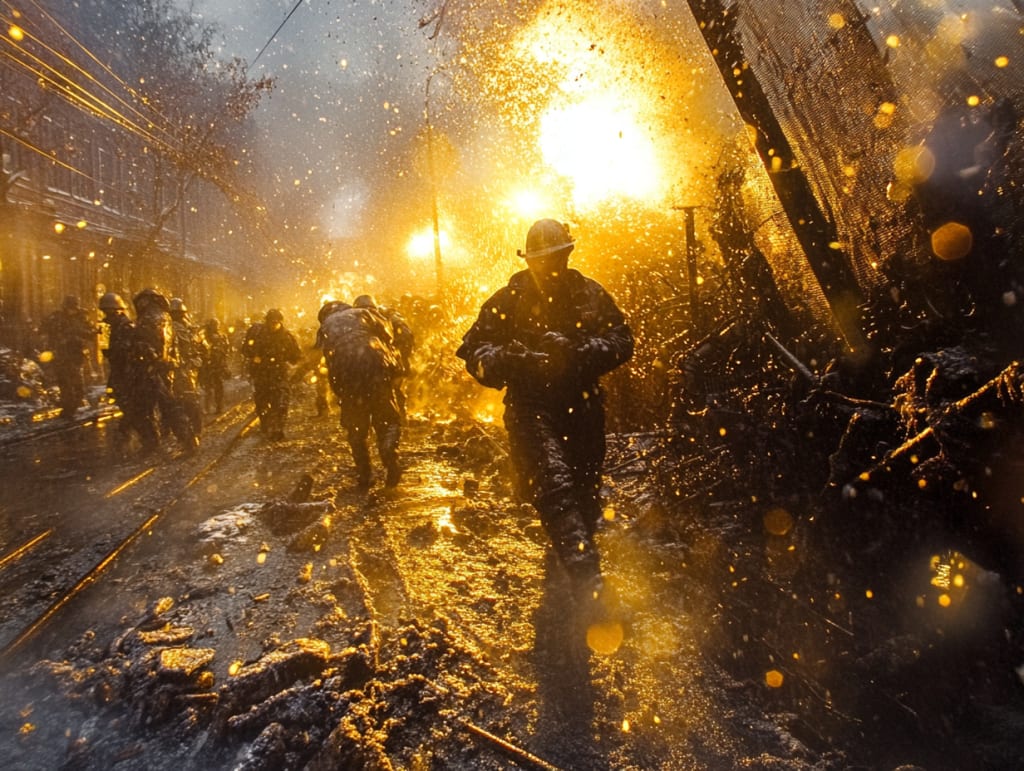
By midday, Mary could hear shouting from the main road—another clash between the strikers and the police. Her stomach tightened. She prayed Jim wasn’t involved, though she knew better. He’d never back down from a fight, especially not now.
When he finally came home that evening, there was a fresh cut above his eyebrow. He waved off her concern.
“Just a scuffle,” he said, but his voice was tight. “They’ve brought in more coppers from down south. Don’t care about us, just here to break us.”
Mary dabbed at the wound with a damp cloth. “And what about you, Jim? How many more fights can you take?”
He didn’t answer. Instead, he stared into the fire, his jaw set.
Christmas came and went with little fanfare. Mary managed to make a small pudding, using dried fruit she’d bartered for with a neighbor. The children hung paper decorations, their laughter a rare brightness in the gloom. But the strain was taking its toll. Jim grew more withdrawn, and Mary found herself snapping over small things—a spilled cup of milk, a broken plate. The weight of survival pressed down on her, relentless and unforgiving.
One icy morning in February, Mary walked to the village shop, clutching the few coins she’d managed to save. The shelves were sparse, the strike having disrupted supply chains. She picked up a loaf of bread and a tin of beans, her heart sinking at the price.
As she left, she saw Margaret Thompson, the wife of a “scab,” hurrying down the street. Margaret’s face was pale, her eyes darting nervously. Mary hesitated, then called out.
“Margaret!”
The woman stopped, clutching a bundle of blankets to her chest. “Mary,” she said, her voice trembling.
“Are you all right?” Mary asked.
Margaret hesitated, then shook her head. “It’s my youngest. He’s got a fever, and I can’t...” Her voice broke. “I can’t afford the medicine.”
Mary’s first instinct was to turn away. Margaret’s husband had betrayed the strike, after all. But as she looked into the woman’s tear-filled eyes, she saw only a mother’s desperation. Without another word, Mary dug into her bag and handed Margaret her last coin.
“Get what you need,” she said softly.
Margaret’s gratitude was overwhelming, but Mary brushed it off. As she walked home, she wondered if Jim would forgive her when he found out. But deep down, she knew she’d made the right choice.
The strike finally ended in March. The miners returned to work, their heads held high despite their defeat. The pits would close, just as the government had planned, and the village would never be the same.
Mary watched as Jim donned his helmet and headed back underground, his steps heavy with resignation. She knew they’d face more hardships in the months and years to come. But she also knew they’d endured something extraordinary—a fight not just for coal, but for dignity, community, and a way of life.
One evening, as they sat by the fire, Jim took Mary’s hand in his. “We’ll manage,” he said quietly. “We always do.”
Mary squeezed his hand, a flicker of determination sparking in her chest. “Aye, we will.”
And as the coal dust settled, Mary allowed herself to hope.
The UK Miners’ Strike of 1984-1985
The strike was a response to the Conservative government under Prime Minister Margaret Thatcher, which sought to modernize and privatize industries, including reducing the heavy subsidies provided to the coal industry.
I live in one of the affected areas, and even today, there is a fierce hatred between local communities, following the decision of some miners to break the picket lines and return to work, in desperate need of money.
About the Creator
Diane Foster
I’m a professional writer, proofreader, and all-round online entrepreneur, UK. I’m married to a rock star who had his long-awaited liver transplant in August 2025.
When not working, you’ll find me with a glass of wine, immersed in poetry.
Keep reading
More stories from Diane Foster and writers in The Swamp and other communities.
The Remarkable, Heroic Life of Ted Williams
When you think of the Boston Red Sox, names such as David Ortíz, Pedro Martínez, and the late Tim Wakefield come to mind. However, the Red Sox player who is the focus of this story is none other than Ted Williams. Even if you're not a baseball fan, you've probably heard of his name at least once. Towards the end of this story, I'll share the one admirable thing Williams had done to get Major League Baseball's attention. But first, let's get to know the Hall of Famer's life and career.
By Mark Wesley Pritchard 7 days ago in The Swamp



Comments (2)
This story merits more than an emoji. I had not idea that miners strikes could cause even supply chains. I didn't know the UK had mines. I don't know much about strikes or people crossing the lines of a striking cause, but I found your article very informative, and I learned something. Well Done!!!
🩷