
The BVR Technology & Future Warfare: China vs USA vs Europe
How Beyond Visual Range Missiles Are Shaping the Next Global Power Struggle

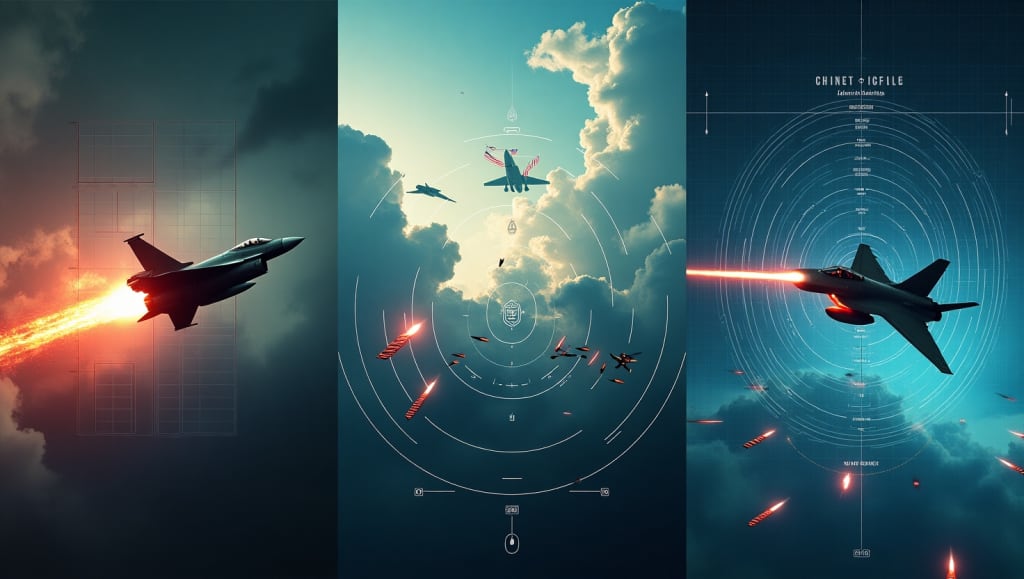
Introduction: The New Face of War
In a world increasingly shaped by digital intelligence and machine-led precision, the battlefield is evolving. What was once dominated by dogfights and visible enemies is now defined by silence, distance, and invisible threats. This is the era of Beyond Visual Range (BVR) warfare—a domain where pilots may never see the target they're tasked to destroy, and where machines think faster than humans can react. The adoption and advancement of BVR missile technology marks not only a tactical evolution but a seismic shift in defense doctrines, national identities, and the emotional psychology of warfare.
As global powers like China, the United States, and the nations of Europe race to perfect these systems, the consequences of their success will reverberate far beyond the skies.
China's Leap Forward: PL-15 and PL-15E
China has aggressively advanced its BVR missile capabilities through the development of the PL-15 and its export variant, the PL-15E. These missiles feature a reported range of over 200 kilometers, putting them among the most formidable BVR systems in the world. The integration of Active Electronically Scanned Array (AESA) radar gives these weapons a strategic edge in target tracking and lock-on after launch.
Deployed primarily with the Chengdu J-20 stealth fighter, the PL-15 forms a critical component of China's air dominance strategy. At international defense expos like the Zhuhai Airshow, China proudly displays these weapons as emblems of its growing technological independence. The design evolution in the PL-15E—including foldable fins for stealthier internal storage—underscores China's intent to challenge U.S. and European air superiority head-on.
These developments are more than just technical triumphs; they are instruments of geopolitical signaling. China is declaring its status as a first-tier military power, one capable of defending its interests across vast distances.
The American Response: AIM-260 Joint Advanced Tactical Missile (JATM)
The U.S., long considered the global leader in air superiority, has taken notice. In response to the PL-15, the U.S. Air Force and Lockheed Martin are developing the AIM-260 JATM. Expected to replace the aging AIM-120 AMRAAM, the JATM promises extended range, higher speed, and advanced resistance to electronic countermeasures.
Though details remain classified, the JATM is rumored to be part of the Next Generation Air Dominance (NGAD) program, which also includes manned-unmanned teaming and AI-based threat identification systems. These integrations will allow U.S. pilots to engage threats beyond enemy radar ranges, giving American forces a significant tactical edge in multi-domain warfare.
For the U.S., the JATM isn't just a new missile; it's an assurance of continued global leadership and technological dominance. The ability to strike from hundreds of kilometers away without detection is an unmatched deterrent, and one America is keen to preserve.
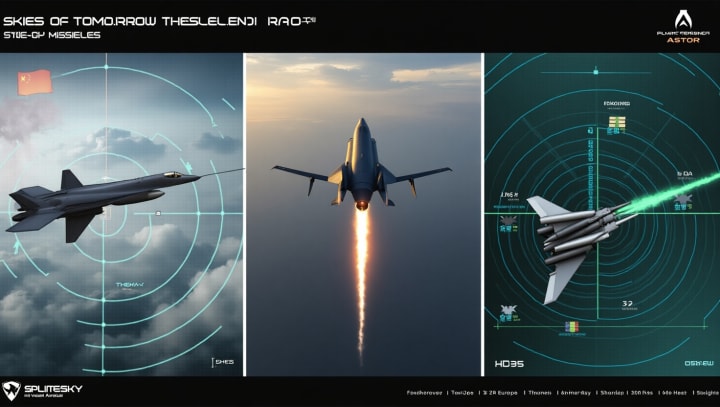
Europe's Precision: The Meteor Missile
Europe may not command the same defense budget as China or the U.S., but what it lacks in size, it makes up for in innovation. The Meteor missile, developed by MBDA, is often cited as one of the most advanced BVR missiles in existence. It uses a throttleable ducted rocket (ramjet) engine that allows it to sustain high speeds over long distances, giving it "no-escape zones" that far exceed those of traditional air-to-air missiles.
Its most impressive feature may be its two-way data link, which allows mid-flight course corrections. This ensures dynamic, real-time targeting, particularly useful in complex aerial engagements where threats move unpredictably. Countries like the UK, France, Germany, Italy, and Sweden have incorporated the Meteor into their air forces, relying on its superior performance to offset limited fleet sizes.
Europe’s commitment to multilateral defense solutions highlights the continent’s collaborative identity and shared reliance on technological cohesion.
Emotions Behind the Technology: The Pilot's Dilemma
Despite their precision and range, BVR missiles create a deeply emotional paradox for the human beings who operate them. Unlike traditional aerial engagements where pilots could visually confirm targets, modern BVR scenarios demand decisions based on electronic signals and radar blips.
The psychological burden of launching a missile without direct visual confirmation is significant. Pilots must trust that the Identification Friend or Foe (IFF) systems are accurate, that no civilian or ally is caught in the crossfire. This creates a moral fog, different but equally profound as the physical fog of war.
Veterans have described the act as "clinical and detached," yet deeply unsettling. The disconnection from the consequences of one's actions challenges our traditional understanding of courage, accountability, and heroism in warfare.
Identity and National Pride: More Than Just Missiles
BVR missiles have become more than weapons; they are symbols of national ambition. China's unveiling of the PL-15 is not merely a technical announcement—it's a message to the world about its self-image as a global power. Similarly, the U.S. developing the AIM-260 signals a refusal to cede air superiority, a defining aspect of its military identity since World War II.
Europe, with its Meteor missile, projects a different kind of identity: one rooted in collective security, precision, and strategic depth. The BVR arms race isn't just about who has the longest range or the fastest missile—it's about how nations perceive themselves and wish to be perceived on the world stage.
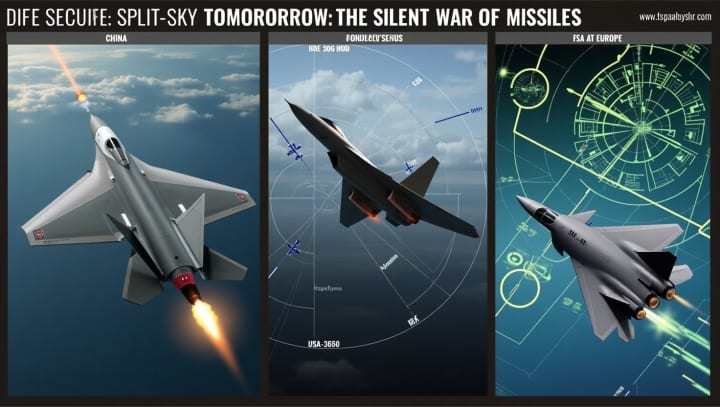
Technological Integration: The Rise of AI and Hypersonics
The future of BVR warfare lies in the convergence of several cutting-edge technologies. Artificial Intelligence (AI) is already being integrated into missile guidance systems, enabling real-time analysis, target prioritization, and adaptive decision-making. AI-driven systems can help identify decoys, distinguish friend from foe, and even alter trajectories mid-flight based on dynamic battlefield conditions.
Hypersonic weapons, capable of speeds exceeding Mach 5, are another game-changer. China and Russia are investing heavily in Hypersonic Glide Vehicles (HGVs), while the U.S. and Europe are not far behind. These weapons dramatically shrink reaction windows, rendering traditional radar and interception systems less effective.
When combined with BVR capabilities, these advancements could usher in a new era of "hyperwar," where milliseconds make the difference between victory and devastation.
Challenges and Controversies: ECM and ECCM Systems
BVR systems also face significant challenges from electronic countermeasures (ECM) and electronic counter-countermeasures (ECCM). Nations are constantly developing jamming systems to disrupt missile guidance and radar tracking. This has led to a cat-and-mouse game of innovation where each advancement triggers a corresponding counter-advancement.
For instance, Israel's ECM technologies have been highly effective in battlefield scenarios, while China has collaborated with Russia and Pakistan to enhance their own systems. Meanwhile, the U.S. and its allies continue to refine ECCM technologies to maintain an operational edge.
Conclusion: A Future Written in Code and Metal
The evolution of BVR missile technology represents a microcosm of modern warfare: high-tech, high-stakes, and profoundly human. As China, the U.S., and Europe continue to innovate, the battlefield of the future will be decided not just by who has more weapons, but by who integrates them most effectively with artificial intelligence, stealth, electronic warfare, and human insight.
We stand at the threshold of a new era where the silent skies may conceal the loudest statements of power. And in that silence, our collective future will be shaped—one radar blip at a time.
About the Creator
🍂🍂🍂.
Research on geopolitics
A Gathering of Evil Bosses
“I’m the queen of chin jutting while I smooth my hair, attacking, insulting, and deflecting to protect my appointer.” “Oh, please, Blondi, my hair is curled, highlighted, and longer than yours. I feature television commercials telling immigrants that we will give them a free plane ride home, and if they voluntarily turn themselves in, they will be allowed to legally apply for re-entry. It runs everywhere, and I look good in it! You can’t compete because of your blond hair. Mine is nicer, and my lips are prettier than yours.”
By Andrea Corwin 16 days ago in The Swamp
I used to report from the West Bank. Twenty years after my last visit, I was shocked by how much worse it is today – podcast
Two decades ago, I walked the streets of the West Bank as a young journalist, trying to make sense of a conflict that has long defied easy solutions. At that time, I witnessed checkpoints, tensions, and uncertainty, but there was also a sense that dialogue, however fragile, was still possible. Returning twenty years later for a recent visit, I found a landscape and a reality that was far more severe, starkly illustrating how the conflict has deepened over time. The first thing that struck me was the sheer scale of militarization. Israeli checkpoints, once sporadic, now dominate much of the West Bank’s main thoroughfares. Soldiers in armored vehicles and heavily fortified positions are a constant presence. Roads are divided, access restricted, and Palestinian towns and villages are encircled by fences and barriers. What had been a tense but navigable environment in the early 2000s now feels like a territory under occupation in full lockdown. Settlement expansion is another transformation impossible to ignore. Over the past twenty years, Israeli settlements have grown both in number and size, cutting through the Palestinian landscape. Once-contiguous Palestinian communities are now separated by walls, roads reserved for settlers, and security zones, fragmenting society and severely limiting freedom of movement. Farmers I spoke to lamented that land they had cultivated for generations is now inaccessible, reducing both livelihood and morale. The human dimension of these changes is heartbreaking. Palestinians I met spoke of frustration, fear, and despair, and many feel trapped in a system that restricts education, healthcare, and economic opportunity. Youth, in particular, face a future clouded by uncertainty. I heard accounts of families struggling just to move between cities, access hospitals, or attend school. Even basic daily life is complicated by bureaucracy, permit requirements, and the constant threat of military intervention. Violence remains a pervasive and destructive element. I encountered neighborhoods where buildings bore scars from clashes, shootings, or tear gas. Communities are haunted by the memory of lost loved ones, and the cycle of retaliation and suppression continues. Two decades ago, there was still a cautious optimism in some quarters that negotiations and international intervention might stabilize the region. Today, that optimism seems increasingly elusive. One of the most profound changes is the psychological toll. Twenty years ago, I saw resilience, hope, and determination. Now, I saw fatigue, cynicism, and resignation among people who have lived under repeated waves of restriction and conflict. Children have grown up knowing little else than checkpoints and military presence. The pervasive sense of entrapment and lack of agency is palpable, and it is reshaping society in ways that will have long-term consequences. Technology and media have amplified awareness of the situation. Social media now allows Palestinians to document daily hardships, human rights violations, and violent incidents in real time. International attention has increased, yet meaningful political change remains limited. Global actors often respond with statements rather than substantive action, leaving the local population to endure the day-to-day hardships largely on their own. As a journalist, returning to the West Bank has been both sobering and deeply instructive. It reminded me of the human cost behind the headlines, the slow erosion of rights, and the impact of entrenched political structures on ordinary lives. The contrast between my experiences twenty years ago and today illustrates that, despite international diplomacy and countless initiatives, the reality on the ground has worsened. This visit reinforced a vital truth: understanding the West Bank is not merely about politics or borders—it is about people, communities, and their lived experiences under persistent conflict. For anyone interested in the future of the region, it is crucial to recognize that without tangible changes in policy, protection of human rights, and genuine engagement, the West Bank will continue to face escalating hardship. The urgency to act has never been greater.
By Fiaz Ahmed 4 days ago in The Swamp
Bomb Scare
It was 2027, and the world never thought it would happen. A missle hit the United States, but it wasn't where they had anticipated. A little town in the northeast was hit by a missile strike, they didn't know why, and they didn't know exactly where it hit, but they did know it was a coastal community, somewhere between Maine and Delaware.
By Gregory Paytonabout 17 hours ago in Fiction




Comments
There are no comments for this story
Be the first to respond and start the conversation.