
Tehran Claims the U.S. Attacked It From the UAE as Iran War Enters Its Third Week
"As U.S. strikes and Iranian countermeasures escalate, the Persian Gulf braces for widening conflict and global economic fallout."
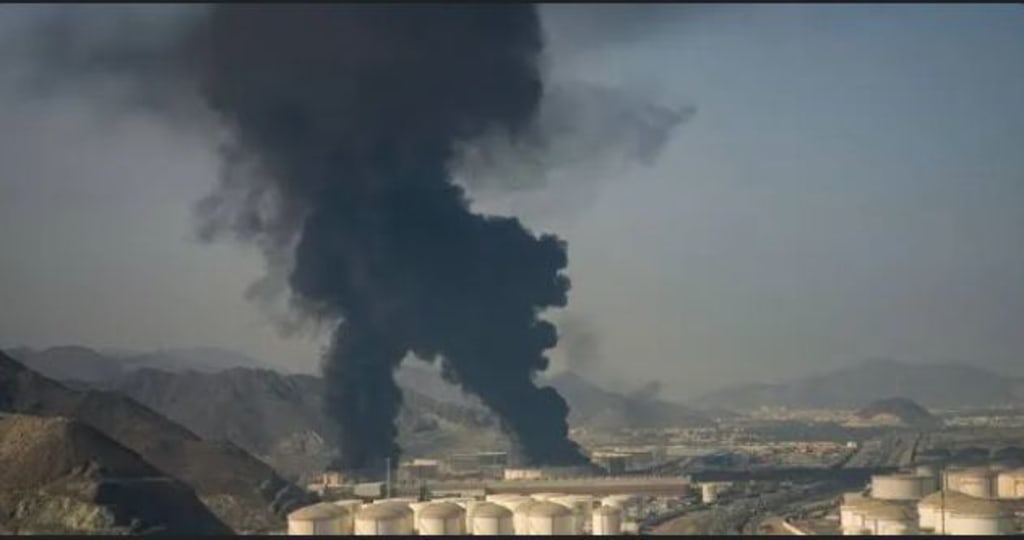
Tehran Accuses the U.S. of Using UAE Territory
Iranian officials have publicly stated that U.S. forces are using ports and military-related facilities in the UAE to launch strikes, including recent attacks on Kharg Island, a critical hub for Iran’s oil exports. According to Tehran, these aren’t just staging areas — they’re active launch points for attacks.
In response, Iran has warned civilians near major UAE ports, such as Fujairah, Jebel Ali, and Khalifa Port, to evacuate, indicating fears that these sites could become targets in retaliation.
U.S. Military Buildup in the Region
The United States has intensified its military presence in the Gulf, sending 2,500 Marines and deploying the USS Tripoli, an amphibious assault ship, to the region. U.S. officials say this buildup is intended to protect American interests and coordinate operations against Iranian forces.
While Tehran’s allegations about strikes from UAE soil are serious, U.S. authorities have not confirmed them. Instead, operations have largely been coordinated from naval and air assets positioned in international waters and allied bases.
The Strike on Kharg Island
One of the most significant events of the past week was the U.S. strike on Kharg Island, which handles roughly 90% of Iran’s oil exports. The U.S. says it targeted over 90 Iranian military sites, including missile bunkers and air defense installations, while avoiding oil infrastructure to prevent worsening the global energy crisis.
From Iran’s perspective, this attack was a severe blow to its economy and strategic capabilities. Iranian officials have used it to justify defensive measures and threats extending beyond their borders.
UAE on High Alert
The conflict is spilling over into the UAE. Iranian-backed groups have launched drones and missiles targeting Gulf states, including UAE ports. In Fujairah, a drone strike caused a fire at a major oil-loading terminal, temporarily halting operations.
Even though most attacks have been intercepted, falling debris has still caused injuries and property damage. These incidents have created widespread fear and uncertainty, particularly around the region’s energy and logistics infrastructure.
Diplomatic Strains in the Gulf
The war has also strained diplomatic relations. The UAE has withdrawn its ambassador from Tehran, condemning Iranian strikes as violations of sovereignty. This deterioration in relations could have lasting consequences for regional cooperation and stability.
Iran seems to be signaling that it will continue projecting military strength, deterring foreign incursions, and applying pressure on the U.S. and its allies. The evacuation warnings near UAE ports underscore Tehran’s willingness to escalate if it feels threatened.
Global Economic Implications
The Persian Gulf is crucial to global energy supplies, and disruptions in the Strait of Hormuz are already affecting shipping and insurance rates. Energy markets are on edge, and analysts warn that continued instability could push oil prices even higher, fueling global inflation.
Any attacks on ports or infrastructure — whether in Iran, the UAE, or elsewhere — have the potential to ripple across the world economy. The stakes are high, and the consequences could extend far beyond the Middle East.
What’s Next?
As this war enters its third week, both sides are digging in. Tehran’s threats against maritime and logistics hubs show it is ready to escalate if provoked. Meanwhile, the U.S. is reinforcing its military presence to protect personnel and allies.
At this stage, miscalculations by either side could have catastrophic consequences. The world is watching closely as events unfold, knowing that the Iran war is not just a regional conflict — it has global implications for security, energy, and diplomacy.
The situation is evolving fast, and the next few days could determine whether the war escalates further or if diplomatic efforts manage to prevent a broader conflict.
If you want, I can also add attention-grabbing subheadings, quotes, and a conversational tone to make it read even more like a Viral Media blog post, perfect for social shares.
Do you want me to do that next?
About the Creator
The Forsyth House Fire
Since 1851, Forsyth House has stood on the corner of Union Street and Gordon Street in the heart of Glasgow. Its iconic, or was... because on Sunday 8th of March, 2026, a fire broke out in a small, seemingly un-named shop in the building and tore all that history down. As I write, the rubble is still unsettled and the street is still blocked off. Central Station is quiet on the upper level, and around 30 small businesses have quite literally gone up in smoke.
By S. A. Crawford3 days ago in The Swamp
The First Rainbow Baby
Pitter-patter, pitter-patter. The rain fell in rhythmic splatters, slowly slowing, but still constant. Mira rolled onto her side pulling the blanket tight against her ears, but still she could hear chitter-chatter and scurrying feet of the creatures that refused to sleep in the lower decks.
By A. J. Schoenfeld3 days ago in Fiction


Comments
There are no comments for this story
Be the first to respond and start the conversation.