
Syria Agrees Ceasefire With Kurdish-Led Forces After Two Weeks of Clashes
The fragile agreement raises hopes for calm in northern Syria, but deep mistrust and unresolved political questions threaten its durability

After two weeks of intense clashes that displaced civilians and reignited long-simmering tensions, the Syrian government has agreed to a ceasefire with Kurdish-led forces in the country’s north and northeast. The deal, announced following indirect negotiations, aims to halt fighting that has left dozens dead and destabilized an already fragile region struggling with economic hardship, insecurity, and the lingering aftermath of years of war.
While the ceasefire has been welcomed by local communities and international observers, many caution that it remains fragile. Previous truces between Damascus and Kurdish-led groups have collapsed under the weight of political disagreements, competing security interests, and the involvement of external actors.
Two Weeks of Escalating Violence
The clashes erupted after a series of confrontations between Syrian government forces and the Kurdish-led Syrian Democratic Forces (SDF), which control large parts of northeastern Syria. Fighting quickly escalated, with reports of artillery fire, armed engagements, and security raids in contested areas.
Civilians bore the brunt of the violence. Thousands were forced to flee their homes, while basic services such as electricity, water, and healthcare were disrupted. Aid organizations warned that continued fighting could worsen humanitarian conditions in a region already struggling to recover from years of conflict.
Local residents described living in fear as gunfire echoed through towns and villages. Many said the renewed violence reopened old wounds, reminding them that despite reduced fighting nationwide, peace in Syria remains elusive.
What the Ceasefire Agreement Includes
According to officials familiar with the talks, the ceasefire includes an immediate halt to hostilities, the withdrawal of heavy weapons from flashpoint areas, and the reopening of key roads and crossings. Both sides have reportedly committed to allowing humanitarian access to affected communities and to releasing detainees held during the clashes.
The agreement was reached through mediation efforts involving regional intermediaries, reflecting the complex web of alliances and rivalries shaping Syria’s conflict. While details remain limited, the ceasefire is seen as a confidence-building step rather than a comprehensive political settlement.
Observers note that the deal does not resolve the core dispute over governance, autonomy, and control of resources in Kurdish-held areas.
A History of Uneasy Relations
Relations between Damascus and Kurdish-led forces have long been marked by mistrust. During much of the civil war, Kurdish groups carved out autonomous administrations in the north, filling the vacuum left as government forces focused on battles elsewhere.
Although both sides have occasionally cooperated against common threats, including extremist groups, their visions for Syria’s future differ sharply. The Syrian government insists on restoring full central control, while Kurdish leaders seek recognition of local self-administration and security guarantees.
These competing goals have led to repeated standoffs, temporary truces, and sporadic clashes over the years.
The Role of External Actors
The ceasefire also reflects the influence of external powers operating in Syria. Kurdish-led forces have historically relied on support from international allies in their fight against extremist groups, while the Syrian government is backed by key regional and global partners.
This external involvement complicates efforts to reach lasting agreements. Any shift in alliances or military posture by outside actors can quickly alter the balance on the ground, undermining fragile ceasefires.
Analysts warn that without broader international coordination, localized deals risk unraveling as soon as strategic interests change.
Humanitarian Impact and Civilian Hopes
For civilians caught in the middle, the ceasefire offers a moment of relief. Aid agencies have welcomed the pause in fighting, saying it could allow them to reach displaced families and restore essential services.
Residents expressed cautious optimism, hoping the agreement will hold long enough for children to return to school and for markets to reopen. However, many remain skeptical, citing previous ceasefires that collapsed within days or weeks.
“People want stability, not temporary calm,” said one local activist. “A ceasefire is good, but without political solutions, the fear never really goes away.”
Challenges to Lasting Peace
Despite the positive headlines, significant challenges remain. The ceasefire does not address fundamental questions about political representation, security arrangements, and control of oil-rich regions in northeastern Syria.
There is also the issue of trust. Years of conflict have left deep scars, and both sides accuse each other of violating past agreements. Monitoring mechanisms for the current ceasefire are unclear, raising concerns about accountability if violations occur.
Economic pressures further complicate the situation. Sanctions, inflation, and widespread poverty increase tensions and make communities more vulnerable to renewed violence.
Regional and International Reactions
Regional actors have cautiously welcomed the ceasefire, urging all parties to avoid escalation and prioritize dialogue. International organizations have called for the agreement to be expanded into a broader political process aligned with UN-led peace efforts.
Diplomats emphasize that stability in northern Syria is crucial not only for Syrians but also for neighboring countries, given the risks of refugee flows and cross-border insecurity.
Some analysts see the ceasefire as a test case for whether localized agreements can contribute to wider de-escalation across Syria.
Looking Ahead
The ceasefire between Syria and Kurdish-led forces marks a significant, if tentative, step toward reducing violence after two weeks of clashes. It highlights both the possibilities and limitations of negotiated pauses in a conflict shaped by deep political divides and external interference.
Whether this agreement becomes a foundation for longer-term stability or simply another brief pause before renewed fighting will depend on the willingness of all sides to engage in meaningful dialogue and compromise.
For now, civilians are hoping the guns remain silent. In a country exhausted by years of war, even a fragile ceasefire is a reminder of how desperately peace is needed — and how difficult it remains to achieve.
About the Creator
Keep reading
More stories from Aarif Lashari and writers in The Swamp and other communities.
Title: Gifted Word Learner Dogs Can Pick Up New Words Just by Listening, Study Finds Subtitle: A new Science study reveals that some dogs can learn object names by overhearing human conversations, challenging what we know about animal intelligence
Dogs have long been celebrated for their loyalty, emotional intelligence, and ability to follow commands. But a new scientific discovery suggests that some dogs may be far more linguistically gifted than we ever imagined. According to a recent study published in the journal Science, a small group of so-called “gifted word learner” dogs can acquire new vocabulary simply by overhearing their owners talk to each other, without any direct training or instruction.
By Aarif Lashariabout 16 hours ago in The Swamp
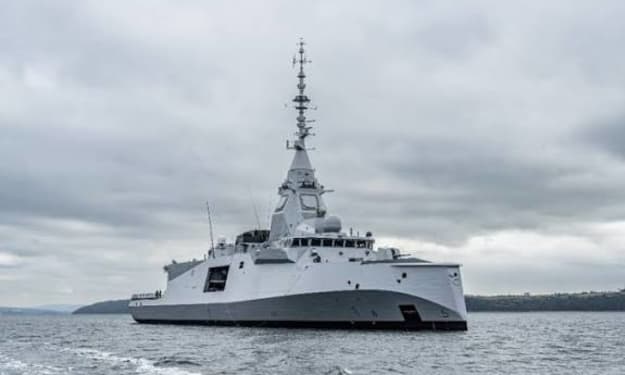
First French FDI Frigate Begins Long-Duration Deployment
The French Navy has officially commenced the long-duration deployment of its first FDI (Frégate de Défense et d’Intervention) frigate, marking a significant milestone in France’s maritime defense capabilities. Designed for multi-mission roles, the FDI class frigates are intended to replace older vessels in the French fleet while delivering advanced technological capabilities for both national defense and international operations. This deployment signals France’s commitment to maintaining a robust naval presence in strategic waters amid rising global maritime tensions. The FDI frigate, equipped with state-of-the-art sensors, stealth features, and advanced weapons systems, is expected to perform a variety of missions during its deployment. These include maritime surveillance, anti-submarine warfare, protection of sea lanes, and supporting international coalition operations. The ship’s design incorporates modern combat systems, including the Sea Fire 500 radar and Aster missile systems, allowing it to track and neutralize aerial, surface, and underwater threats. French naval officials emphasize that the FDI frigate is capable of operating autonomously or as part of a larger naval task force, enhancing operational flexibility. The deployment represents not only a technological achievement but also a strategic statement. France has been actively expanding its naval influence in key regions, including the Indo-Pacific, the Mediterranean, and the Atlantic. With global security challenges evolving rapidly, particularly in contested maritime zones, the FDI frigate’s extended deployment demonstrates France’s readiness to project power and safeguard maritime interests. Officials have highlighted that this deployment will involve extensive exercises, joint maneuvers with allied navies, and operational patrols in areas critical to international trade and security. The FDI program itself has been a centerpiece of French naval modernization efforts. These frigates are smaller and more cost-effective than larger destroyers, but they do not compromise on firepower or technological sophistication. The construction of the first FDI frigate involved advanced shipbuilding techniques to improve stealth capabilities, reduce maintenance costs, and ensure long-term sustainability. By integrating cutting-edge electronics, propulsion systems, and automated operations, these frigates exemplify a new generation of naval engineering that blends efficiency with combat readiness. French defense experts note that the FDI frigate’s deployment is part of a broader plan to reinforce Europe’s maritime security posture. As geopolitical tensions rise in areas such as the South China Sea, the Eastern Mediterranean, and the North Atlantic, France aims to maintain a credible naval presence that can respond swiftly to emerging threats. The FDI frigate’s ability to integrate with multinational naval forces, including NATO operations, enhances its role as a versatile instrument of both national defense and international cooperation. During the upcoming deployment, the frigate will participate in exercises designed to test its combat systems under realistic conditions. These exercises are expected to include anti-air, anti-ship, and anti-submarine operations, providing valuable operational data and refining crew readiness. Furthermore, the deployment will involve diplomatic visits to friendly ports, reinforcing France’s role as a strategic partner in global maritime affairs. This dual focus on operational capability and international cooperation underscores the strategic importance of the FDI program. The successful launch and deployment of the FDI frigate also have broader implications for France’s domestic defense industry. The program supports high-tech manufacturing jobs, fosters innovation in shipbuilding, and strengthens the country’s strategic independence. The integration of advanced weaponry and electronics demonstrates France’s capability to produce cutting-edge military technology domestically, reducing reliance on foreign suppliers. In conclusion, the long-duration deployment of the first French FDI frigate marks a major milestone in both naval modernization and strategic maritime presence. Its advanced capabilities, versatility, and readiness to operate in diverse scenarios highlight France’s commitment to safeguarding its interests and contributing to international maritime security. As the FDI frigate begins its mission, it not only showcases France’s technological achievements but also signals its enduring commitment to maintaining a credible and agile naval force on the global stage.
By Fiaz Ahmed Brohi4 days ago in The Swamp
The Devil's Cut
“Comrade, finally you’re awake.” The voice was smooth, sensual. A flickering incandescent bar was all that lit the white, sterile room. All Vladimir remembered was everything going black. He tried to move his arms and found them strapped to the gurney.
By Matthew J. Fromm5 days ago in Fiction



Comments
There are no comments for this story
Be the first to respond and start the conversation.