
Sudan’s Bloodied Sands Expose a Massacre of Thousands
How satellite images reveal terror on the ground — a city’s red earth telling of mass killings, siege, and a humanitarian crisis ignored.

**Sudan’s Bloodied Sands Expose a Massacre of Thousands**
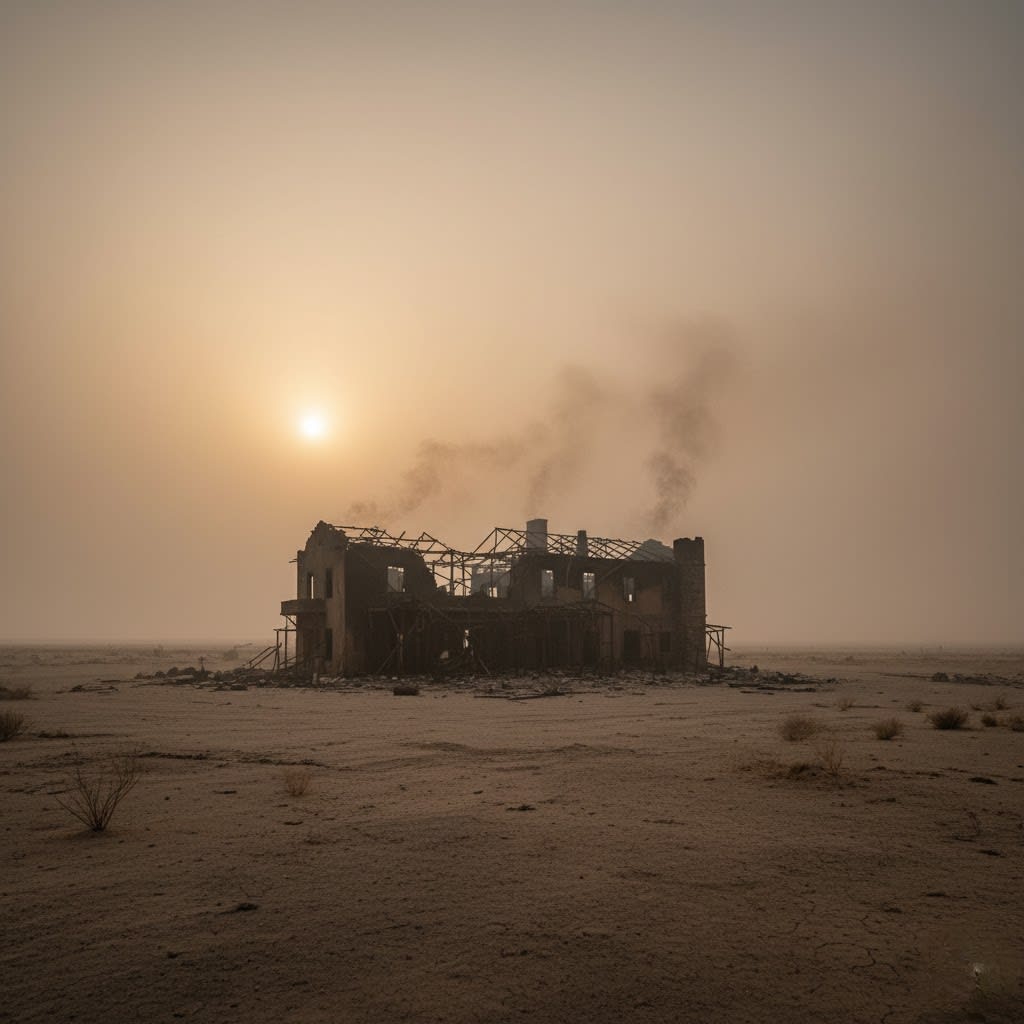
In the dusty sun-baked landscape of El Fasher, in Sudan’s Darfur region, the ground has become a silent witness to horrors most refuse to see. Patches of reddish soil stretch across the city’s outskirts — the result, experts say, of mass bloodshed. ([telegraph.co.uk][1]) After the paramilitary Rapid Support Forces (RSF) seized control on October 26, 2025, the city’s sand shifted from pale gold to shocking red in images taken from satellites. Bodies clustered in open terrain, unexplained pools of crimson stained the ground, and analysts found the marks of executions, clearance operations, and terror. ([Peoples Dispatch][2])
For more than 500 days, El Fasher, once the last stronghold of the national army in North Darfur, was under siege. The RSF built fortifications, cut off food and aid, and surrounded tens of thousands of civilians. When the city finally fell, it was not simply a military collapse — it was a human catastrophe. ([Peoples Dispatch][2]) Witnesses speak of door-to-door killings, civilians shot while fleeing, hospitals turned into killing fields, and whole neighborhoods emptied of life. In one hospital alone, around 460 patients and companions were reportedly killed by the RSF after they stormed the maternity ward. ([SBS Australia][3])
The number of dead remains uncertain, but some estimates place the toll in the thousands. The Yale Humanitarian Research Lab found human-sized objects amidst the red soil and RSF vehicles nearby — evidence consistent with mass executions. ([Peoples Dispatch][2]) The pattern mirrors earlier ethnic violence in Darfur, raising fears that the atrocity is not isolated but part of a broader campaign of targeted killings. ([al-monitor.com][4])
Outside the devastated city, the world has watched through screens. Videos purportedly showing child soldiers committing killings, reports of women and girls raped at gunpoint, and displaced survivors telling of famine, fear, and flight. The UN calls the violence “horrific” and warns that the seeds of genocide may have been sown again. ([theguardian.com][5])
Why does the sand remember what many refuse to learn? Because when violence is extreme and swift it leaves marks no posterity can hide. The red stains are not just proof of what happened — they are a message to the world: this cannot be ignored. Yet despite satellite evidence and urgent UN appeals, the global response remains muted. One UN official said, “Blood on the sand, blood on our hands.” ([Peoples Dispatch][2])
For the people in El Fasher, this is more than data. It is loss of home, security, and loved ones. Villages emptied, hospitals desecrated, survivors fleeing with nothing but trauma and questions. There is no refuge when your city is the battlefield and your body the target. The besieged were trapped between siege tactics and brutal takeover. Close to 260,000 civilians were estimated to be in the city when it was taken. ([telegraph.co.uk][1])
What happens now is unclear. The RSF has promised investigations; analysts are doubtful. Aid agencies scramble to gain access. The silence of the world grows louder in the face of layers of denial, confusion, and lack of open access. But the sand does not lie. It remembers.
This moment cracks open the question of how the global community treats some wars as front page, others as footnotes. The massacre in El Fasher was not sudden — it followed a predictable pattern of siege, starvation, and clearance of civilian communities. But its scale and visibility bring it into new light.
The sand of El Fasher will bear this mark for generations. Blood stains fade with rain, but memory does not wash away so easily. The question for humanity is: will we remember? Will we act? Or will the red sands lie silent again, hidden from consequence?
About the Creator
Keep reading
More stories from Kashif Wazir and writers in The Swamp and other communities.
Meta Begins Removing Australian Children from Instagram and Facebook
Meta, the company that owns Instagram and Facebook, has started removing Australian children from its platforms as part of a new effort to make social media safer. This major step has surprised many parents and young users, but Meta says it is necessary to protect children from online dangers. The company is now enforcing stricter age rules, and thousands of accounts belonging to underage users are expected to be removed in the coming weeks.
By Kashif Wazir3 months ago in The Swamp
The Forsyth House Fire
Since 1851, Forsyth House has stood on the corner of Union Street and Gordon Street in the heart of Glasgow. Its iconic, or was... because on Sunday 8th of March, 2026, a fire broke out in a small, seemingly un-named shop in the building and tore all that history down. As I write, the rubble is still unsettled and the street is still blocked off. Central Station is quiet on the upper level, and around 30 small businesses have quite literally gone up in smoke.
By S. A. Crawford3 days ago in The Swamp


Comments
There are no comments for this story
Be the first to respond and start the conversation.