
Sudan Atrocities Are ‘Hallmarks of Genocide,’ UN Says
A Crisis the World Can No Longer Ignore

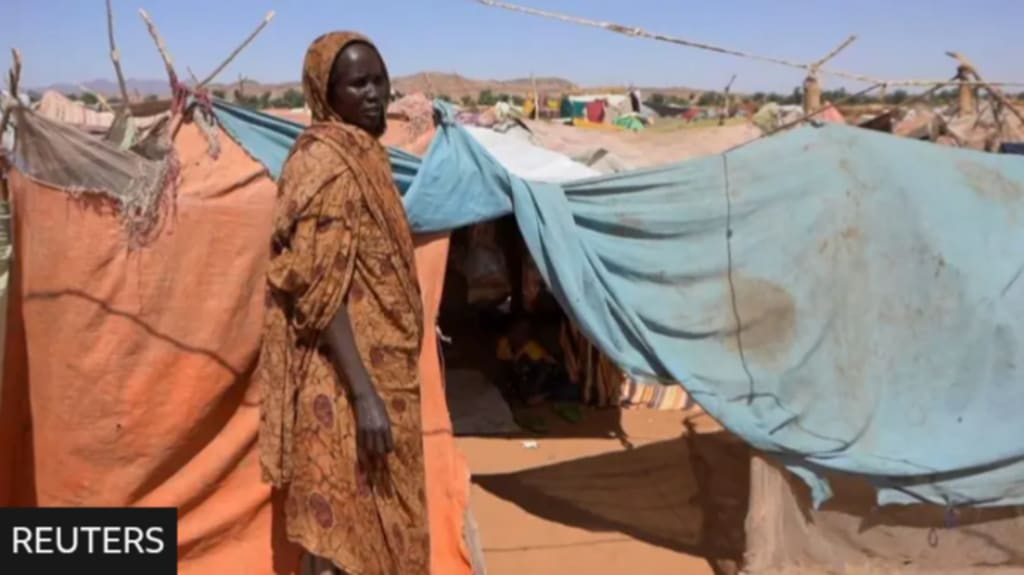
The international community has once again been shaken by devastating findings from the United Nations regarding the ongoing war in Sudan. According to a newly released UN investigation, the atrocities committed in the Darfur region, particularly in the city of El-Fasher, display what experts describe as the “hallmarks of genocide.”
These findings are not only alarming but tragically familiar. Darfur has long been a symbol of suffering and ethnic violence, and now history appears to be repeating itself. The report paints a grim picture of systematic killings, sexual violence, forced displacement, and deliberate starvation tactics targeting non-Arab communities.
A City Under Siege
For more than a year, El-Fasher endured a brutal siege by the paramilitary group known as the Rapid Support Forces (RSF). Food, water, and medical supplies were deliberately cut off, leaving civilians trapped with little chance of survival.
When the RSF finally took control of the city in late 2025, the violence escalated dramatically. Survivors described days of chaos in which armed fighters stormed homes, set buildings on fire, and executed civilians in the streets. Thousands fled with nothing but the clothes they were wearing, while many others were unable to escape at all.
Witnesses spoke of families being separated, men taken away and never seen again, and women subjected to horrific acts of sexual violence. Entire neighborhoods were reduced to rubble, and mass graves began to appear on the outskirts of the city.
What Makes This Genocide?
Under international law, genocide is not defined solely by mass killing. It includes acts intended to destroy a group based on ethnicity, race, or religion. These acts can include:
Killing members of the group
Causing serious physical or mental harm
Creating living conditions meant to destroy the group
Preventing births
Forcibly transferring children
The UN investigation concluded that multiple criteria were met in Darfur. The violence was not random. It followed clear patterns of ethnic targeting, primarily against the Fur and Zaghawa communities, two of Darfur’s largest non-Arab groups.
Survivors reported being asked their ethnic identity at checkpoints. Those identified as non-Arab were beaten, raped, or killed. These testimonies, supported by satellite images and video evidence, strongly suggest that the violence was intentional and systematic rather than accidental or purely military in nature.
Sexual Violence as a Weapon
One of the most disturbing findings of the report is the widespread use of sexual violence. Women and girls, some as young as eight and others elderly, were raped and abused by fighters. These attacks were not isolated incidents but part of a broader campaign of terror.
Human rights experts note that sexual violence has long been used in conflicts as a tool of humiliation and control. In Darfur, it appears to have been weaponized to fracture families and destroy entire communities from within.
In many cases, women who belonged to Arab groups were spared, while those from non-Arab groups were targeted. This selective brutality further reinforces the conclusion that the violence was driven by ethnic hatred.
A Humanitarian Catastrophe
Beyond the killings and assaults, the siege of El-Fasher triggered a massive humanitarian crisis. Hospitals were destroyed or shut down. Aid convoys were blocked. Children began dying from hunger and disease.
Millions across Sudan are now displaced, living in overcrowded camps with little access to clean water, food, or healthcare. Famine looms in several regions, and aid organizations warn that without immediate international intervention, the death toll will rise sharply.
What makes this tragedy even more painful is that much of it was preventable. Early warnings were issued months before the city fell, but global attention remained limited, distracted by other conflicts and political crises.
International Response and Accountability
The UN’s findings have prompted renewed calls for justice. Several countries have imposed sanctions on senior RSF leaders, accusing them of orchestrating a campaign of ethnic violence. Human rights groups are demanding that those responsible be brought before international courts.
There is also growing pressure on the UN Security Council to act decisively. Proposals include establishing safe humanitarian corridors, increasing monitoring missions, and launching formal criminal investigations.
Yet political realities complicate these efforts. Sudan’s conflict is entangled in regional power struggles, and foreign interests have made unified action difficult. Despite the evidence, accountability remains slow and uncertain.
Echoes of Darfur’s Dark Past
For many observers, the situation in El-Fasher feels like a chilling echo of the Darfur genocide of the early 2000s. Back then, the world vowed “never again.” But two decades later, similar patterns of violence are unfolding in the same region, against the same communities.
The UN report serves as a painful reminder that unresolved injustice has consequences. When perpetrators are not held accountable, violence becomes cyclical.
Why This Matters Now
Labeling these atrocities as bearing the hallmarks of genocide is not just symbolic. It carries legal and moral weight. It signals that the world is witnessing crimes of the highest order and that urgent action is required.
If the international community fails to respond, Sudan risks descending further into chaos, with more lives lost and more generations scarred by trauma. Silence and inaction would make the world complicit in one of the gravest crimes known to humanity.
Final Thoughts
Sudan’s tragedy is not just a regional issue; it is a global moral test. The suffering in Darfur demands attention, compassion, and action. The UN’s warning should not fade into another forgotten headline.
History will remember what was done — and what was not — when the warning signs of genocide were once again laid bare.
About the Creator
Sajida Sikandar
Hi, I’m Sajida Sikandar, a passionate blogger with 3 years of experience in crafting engaging and insightful content. Join me as I share my thoughts, stories, and ideas on a variety of topics that matter to you.
Keep reading
More stories from Sajida Sikandar and writers in The Swamp and other communities.
Vatican Says It Will Not Participate in Trump’s ‘Board of Peace’
The Holy See has made its position clear: it will not take part in former U.S. President Donald Trump’s newly announced initiative known as the “Board of Peace.” The decision, quietly confirmed by Vatican officials, has sparked discussion across diplomatic and religious circles about the limits of political partnerships and the role of faith institutions in global conflict resolution.
By Sajida Sikandara day ago in The Swamp
Why Black History Matters in America?
The United States of America is celebrating their 250th anniversary in 2026. I'm proud to be an American and as someone who was born here, I wouldn't imagine myself living anywhere else. This is a country where opportunities are possible. Where anyone can be successful in anything they desire to do. Equality, community, and togetherness are the backbones of what America is and should be about. However, we have an administration who wants to erase and disregard those who have made positive, meaningful impacts in our country, specifically Black figures, such as Martin Luther King, Jr., Rosa Parks, and Maya Angelou. President Trump and his administration have been constantly complaining and fighting against what they call the "Woke agenda". They use this excuse as a distraction from other issues they refuse to address, such as the high cost of living, climate change, and inflation. That equality is dividing America, when in reality, it's bringing us together. Being woke is not tied to a specific political party. No matter where you stand on the political spectrum, you can still care about other people and their plights. Compassion and empathy for others isn't tied to a political party, either. We were taught as children to treat others the way we want to be treated and not judge others because they're different from us. Caring about others isn't a personal attack on your beliefs. It doesn't make you any less of a person. People who are easily offended over African American figures, past or present, or anything related to it, are grasping at straws. Current and future generations need to know who people like Harriet Tubman and Shirley Chisholm were, especially in the classroom. Black History is part of American History. It should be recognized, not hidden or forgotten. Besides, you can't shield children from everything, just because your feelings are easily hurt.
By Mark Wesley Pritchard 18 days ago in The Swamp
Mexico and Canada Plan Joint Action on Critical Minerals
Mexico and Canada are preparing to deepen cooperation on critical minerals in a move aimed at strengthening North America’s supply chains and reducing dependence on overseas sources, particularly China. The initiative reflects growing global competition over materials essential for clean energy technologies, electric vehicles, and advanced manufacturing. Officials from both countries confirmed that talks are underway to coordinate exploration, investment, and processing strategies for minerals such as lithium, nickel, cobalt, and rare earth elements. These materials are vital for batteries, renewable energy systems, and defense technologies, making them central to national security and economic planning. Strategic Motivation The joint effort comes as governments worldwide seek to secure reliable access to critical minerals amid rising geopolitical tensions and increasing demand driven by the transition to green energy. Mexico and Canada view cooperation as a way to align policies, attract private investment, and create a more resilient regional supply network. Canada already plays a major role in global mining and has identified critical minerals as a cornerstone of its industrial strategy. Mexico, meanwhile, holds significant untapped mineral reserves, including lithium deposits that have drawn international attention. By coordinating their approaches, the two countries hope to complement each other’s strengths — Canada’s mining expertise and Mexico’s geological potential. Canadian officials have emphasized that closer collaboration with Mexico could help diversify sources of supply while promoting higher environmental and labor standards across the mining sector. Mexican authorities have highlighted the importance of using mineral resources to support domestic development while participating more fully in North American industrial supply chains. Focus on Lithium and Battery Materials One of the central pillars of the joint plan is lithium, a key ingredient in electric vehicle batteries. Mexico has designated lithium as a strategic resource and has moved to increase state involvement in its extraction and management. Canada, meanwhile, is seeking to expand its lithium production and processing capacity to support its growing electric vehicle industry. Analysts say a coordinated approach could accelerate investment in refining and processing facilities, which remain a bottleneck in the global supply chain. At present, much of the world’s critical mineral processing takes place in China, leaving Western economies vulnerable to disruptions or political leverage. By working together, Mexico and Canada aim to encourage the development of regional processing hubs that would reduce reliance on distant suppliers and create high-value industrial jobs. Trade and Diplomatic Implications The plan also aligns with broader North American trade objectives under the United States-Mexico-Canada Agreement (USMCA). While the United States is not formally part of the bilateral initiative, officials acknowledge that Washington would benefit from stronger coordination between its two neighbors. Industry groups have welcomed the announcement, noting that predictable regulatory frameworks and cross-border cooperation are essential for large-scale mining and infrastructure projects. However, some environmental organizations have cautioned that mineral development must not come at the expense of ecosystems or local communities. In Mexico, where mining has historically faced opposition from indigenous and rural groups, the government has pledged that any new projects will be subject to strict environmental oversight and social consultation. Canada has similarly stressed its commitment to sustainable mining practices and partnerships with First Nations. Challenges Ahead Despite shared goals, the partnership faces obstacles. Differences in regulatory systems, investment rules, and state involvement could complicate coordination. Mexico’s recent moves to increase government control over strategic resources have raised concerns among some foreign investors, while Canada’s mining sector remains largely private-driven. Infrastructure gaps also pose a challenge. Transporting and processing minerals requires extensive rail, port, and energy networks, particularly in remote areas. Both governments will need to mobilize public and private financing to support these developments. Another key issue is workforce development. Mining and processing critical minerals require specialized skills, and both countries are exploring training programs to prepare workers for expanding industries linked to clean energy and advanced manufacturing. A Regional Vision Officials describe the initiative as part of a longer-term vision to position North America as a competitive and secure supplier of critical minerals in an increasingly fragmented global economy. With demand for electric vehicles and renewable energy projected to surge over the next decade, access to raw materials is expected to become even more strategically important. “Critical minerals are the backbone of the energy transition,” one Canadian official said. “Working with Mexico allows us to build a stronger, more secure regional supply chain that benefits both our economies.” Mexican authorities echoed that sentiment, saying cooperation would help ensure that resource development contributes to national growth while supporting regional integration. Looking Ahead Formal agreements are expected to be announced later this year, outlining specific areas of cooperation such as joint geological surveys, information sharing, and investment incentives. If successful, the partnership could serve as a model for broader continental coordination on resources vital to the future economy. As global competition intensifies, Mexico and Canada’s joint action on minerals signals a strategic shift toward collaboration over competition — a move designed to secure their place in the evolving landscape of clean energy and high-tech industries.
By Fiaz Ahmed 3 days ago in The Swamp
At My Wits’ End
Life is about taking out the trash and calling it trash because you have every reason to. It wasn't meant to be linear, they say. But the times you tried to make it straight led to problems, and you didn’t have the tools to put any of it to use. You don't put your right shoes on the right feet; you put the left shoes on the left feet. The grey hardened slab will trip you up anyway.
By Caitlin Charltona day ago in Humans



Comments
There are no comments for this story
Be the first to respond and start the conversation.