
Stuck Between the U.S. and Russia: Canada Must Prove It Can Defend Its Arctic Territory
Arctic Sovereignty, Security Challenges, and Legal Imperatives in an Era of Geopolitical Contestation
Introduction
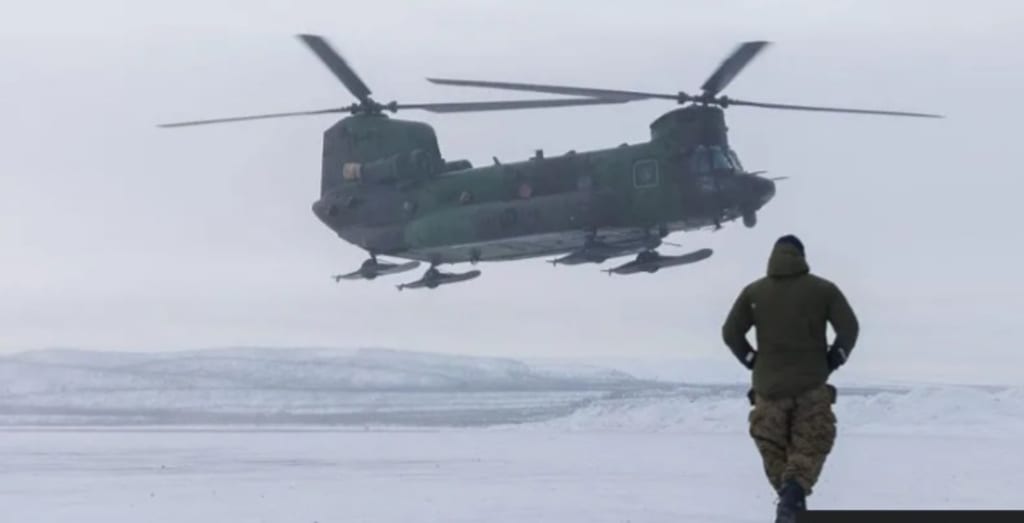
For Canada, the Arctic is far more than frozen landscapes and remote Indigenous communities: it is a vast expanse of sovereign territory central to national identity, security, and future prosperity. With Russia’s expanding military footprint to the north and growing U.S. strategic interest, Ottawa stands at a geopolitical crossroads. As climate change opens waterways and unlocks resources, Canada must demonstrate that it can defend its Arctic territory—legally, politically, and militarily—against external pressures and competing ambitions. �
marshallcenter.org
The Arctic’s Changing Geopolitical Landscape
Historically, the Arctic was a region of low tension, where cooperation among the Arctic states—Canada, the U.S., Russia, Denmark (Greenland), Norway, Sweden, Finland, and Iceland—under forums such as the Arctic Council helped manage environmental, scientific, and economic issues. However, this cooperative dynamic has weakened, in part due to Russia’s invasion of Ukraine and subsequent geopolitical fractures. �
marshallcenter.org
Melting sea ice has significantly increased access to Arctic shipping routes, most notably the Northwest Passage, which Canada considers its internal waters under international law. Greater accessibility means more strategic interest from global powers and greater complexity in defending sovereign claims. �
marshallcenter.org
Russia’s Arctic Military Buildup
Russia’s military investments in the Arctic dwarf those of other Arctic states. With more than 40 icebreakers, including nuclear‑powered vessels, and numerous bases and long‑range aviation assets, Moscow has signaled that it views the High North as essential to its defense and power projection. �
TASS
Outside experts highlight that Russia’s capabilities—ranging from hypersonic missiles to a robust submarine fleet—pose long‑term challenges to Canada's northern defenses and broader North American security. �
natoassociation.ca
This build‑up is not merely symbolic. Russia’s military posture complicates any rapid response by Western forces and raises questions about the effectiveness of existing deterrence frameworks. Russia’s enhanced Arctic footprint underscores the urgency for Canada to bolster its own capabilities if it is to defend its Arctic claims credibly.
Canada’s Strategic Dilemma: Sovereignty vs. Capability
Ottawa recognizes the stakes. Recent policy documents emphasize increased military and infrastructure investment to uphold sovereignty. Canada is investing billions into modernizing continental defense under the Canada‑U.S. NORAD pact, including enhanced radars, early warning systems, and air and missile defense networks. �
nationaldefensemagazine.org
However, according to defense analysts, even robust NORAD modernization does not necessarily create a credible stand‑alone defense of the Canadian Arctic. Current systems often focus on southern approaches and continental defense rather than northern territorial control. �
thesimonsfoundation.ca
Moreover, critics argue that Canada’s military presence and infrastructure in the Arctic remain underdeveloped, with limited permanent bases, austere transportation networks, and long procurement timelines for critical assets such as submarines or ice‑capable patrol ships. �
Legal and Diplomatic Dimensions
From a legal perspective, Canada must defend its territorial claims not only militarily but also through robust diplomatic engagement. Under the United Nations Convention on the Law of the Sea (UNCLOS), states can assert claims over continental shelves—but enforcement depends on international recognition, domestic control, and visible presence.
Canada has ratified UNCLOS and consistently maintained that the Northwest Passage constitutes “internal waters,” a position contested in the past by maritime powers that promote freedom of navigation. Ensuring that this legal claim matches on‑the‑ground (and sea/air) control will require sustained investment and credible enforcement measures. �
marshallcenter.org
Collaborative frameworks, such as the Arctic Search and Rescue Agreement, highlight peaceful cooperation among Arctic states, but these treaties are distinct from military‑security arrangements and do not cover sovereignty disputes. �
Wikipedia
Canada also participates in the ICE Pact with the U.S. and Finland, aimed at boosting Arctic icebreaker production to counter Russian and Chinese influence—an example of how legal, economic, and defense cooperation can reinforce Canada’s sovereign posture. �
Wikipedia
Alliances: NORAD and NATO
Alliance cooperation is a cornerstone of Canada’s Arctic strategy. NORAD’s ongoing modernization reflects deeper bilateral defense integration with the United States. Meanwhile, the expansion of NATO to include Finland and Sweden has strengthened the alliance’s northern flank, even as NATO’s mandate generally excludes territorial disputes. �
nationaldefensemagazine.org
However, alliance support is not a substitute for effective national defense. Legal scholars caution that relying solely on alliances for Arctic sovereignty may weaken Ottawa’s bargaining position in disputes and diminish Canada’s strategic autonomy.
Indigenous Rights and Arctic Policy
Canada’s Arctic sovereignty strategy must also account for Indigenous rights and governance. Many Arctic communities—Inuit and other Indigenous peoples—possess long‑standing legal and cultural ties to the land and water. Their inclusion in policymaking strengthens Canada’s internal legal claims and demonstrates respect for domestic law frameworks, including treaties and constitutional recognition of Indigenous rights.
Policy Recommendations for Legal and Defense Communities
For lawmakers, military planners, and legal professionals advising Ottawa or allied governments, key priorities include:
Expanding Permanent Arctic Presence: Increased investment in infrastructure—airfields, ports, radar stations, and year‑round bases—to support sustained operations.
Legal Enforcement of Sovereignty Claims: Ensuring legal instruments such as fisheries enforcement, search and rescue, and customs control align with territorial assertions.
Alliance Coordination with Autonomy: Balancing cooperative defense under NORAD and NATO with independent capabilities that signal sovereign control.
Indigenous Partnership: Integrating Indigenous authorities and knowledge into Arctic governance frameworks to strengthen legal legitimacy and community resilience.
Multi‑Domain Surveillance: Investing in satellite, aerial, and maritime monitoring to prevent unauthorized incursions and uphold international law.
Conclusion
Canada’s Arctic is no longer an overlooked region of ice and snow. It has become a theater of strategic competition where the interests of major powers intersect. Demonstrating that Canada can defend its Arctic territory is crucial—not only for sovereignty and security but also for upholding international law and strengthening national identity. This task demands political resolve, legal clarity, alliance cooperation, and strategic investment. The Arctic’s future hinges on Canada’s ability to match its legal claims with credible presence and capability—proving that Ottawa can protect what it claims as its own in an increasingly contested northern frontier.
About the Creator
Keep reading
More stories from Ayesha Lashari and writers in The Swamp and other communities.
Tragic Loss in Sydney Harbour: 12‑Year‑Old Dies After Shark Attack
Sydney, 24 January 2026 — A 12‑year‑old boy has died in hospital from critical injuries sustained in a shark attack in Sydney Harbour last week, leaving his family and community devastated and prompting renewed discussion about public safety and legal safeguards on waterways. The young victim, identified by family as Nico Antic, succumbed to his injuries on Saturday evening after spending nearly a week in Sydney Children’s Hospital fighting for his life. �
By Ayesha Lashariabout 21 hours ago in The Swamp
Almost 60% of Kyiv Without Power as Russian Strikes Shatter Grid
Kyiv, the capital of Ukraine, is facing a humanitarian and infrastructural crisis after recent Russian missile strikes severely damaged the city’s power grid. Reports indicate that nearly 60% of Kyiv residents are without electricity, leaving millions struggling to cope with freezing temperatures, disrupted water supply, and widespread uncertainty. The attacks, which targeted key energy facilities, underscore the growing intensity of the ongoing conflict and its devastating effects on civilians. Targeting the Lifelines of the City The Russian strikes specifically hit electricity substations, transmission lines, and power distribution hubs, effectively paralyzing Kyiv’s ability to maintain a stable power supply. Ukrainian officials have described the attacks as “strategic and calculated”, aimed at crippling not only energy infrastructure but also the day-to-day functioning of the capital. “This is not just an attack on buildings; it is an attack on people’s lives,” said a senior Ukrainian energy official. “Without power, hospitals struggle, water pumping stations halt, and millions of families are left in darkness.” Winter Compounds the Crisis The timing of the strikes could not have been worse. Kyiv is currently enduring bitterly cold winter temperatures, with averages hovering around -10°C to -15°C. With the electricity grid down, central heating systems in residential and public buildings are failing, and the lack of power is affecting water heating and cooking facilities. Local authorities have urged residents to stay indoors, bundle up, and limit electricity usage where generators are available. Emergency shelters have been opened to accommodate those most vulnerable to the cold, including the elderly, children, and individuals with health conditions. Impact on Public Services The power outage has caused a cascade of disruptions across essential services. Hospitals are running on backup generators, but fuel supplies are limited, raising concerns about the continuity of care for critical patients. Public transportation, which relies on electrically powered systems, has been slowed or temporarily halted, stranding commuters and disrupting city logistics. Water supply networks are also affected, as many pumping stations depend on electricity. Residents in affected neighborhoods report intermittent water supply, while supermarkets and pharmacies are struggling to maintain operations due to refrigeration failures. Schools have been temporarily closed, and businesses are grappling with interruptions to their operations, further straining an economy already weakened by prolonged conflict. Ukrainian Response and Repairs Ukrainian energy teams are working around the clock to restore power. Mobile repair units have been deployed, and local engineers are attempting to reroute electricity to the most critical areas, including hospitals, shelters, and emergency response centers. While some districts have regained limited power, officials warn that full restoration could take days due to the extensive damage and continued threat of further attacks. President Volodymyr Zelenskyy has called on international partners to provide emergency energy support, including portable generators, fuel supplies, and technical expertise. International Reactions The international community has expressed concern and condemnation over the targeting of civilian infrastructure. The United Nations has called for the protection of essential services, emphasizing that attacks on energy grids violate international humanitarian law and disproportionately affect civilians. Neighboring countries, including Poland and Romania, are reportedly coordinating with Ukraine to supply emergency electricity and fuel, while humanitarian organizations are mobilizing resources to assist displaced families and those struggling in freezing conditions. Humanitarian Toll For ordinary Kyiv residents, the crisis is deeply personal. Families huddle under blankets, schools remain closed, and many are forced to rely on candles and makeshift heating methods. Social media posts from the city highlight the emotional toll, with parents expressing concern for their children, and elderly residents facing life-threatening conditions in the absence of heat. Volunteer groups are stepping in, distributing warm clothing, food, and portable heaters. Community solidarity has emerged as a critical lifeline, with neighbors helping each other navigate the challenges of a city plunged into darkness. Strategic Implications The strikes on Kyiv’s power grid are part of a broader campaign to weaken Ukraine’s infrastructure and morale. Analysts suggest that targeting energy networks not only creates immediate suffering but also strains long-term recovery efforts. As winter continues, the resilience of Kyiv’s residents and emergency services will be tested, highlighting the ongoing human cost of the conflict. Conclusion The recent Russian strikes that left nearly 60% of Kyiv without power underscore the vulnerability of urban centers during wartime. While Ukrainian authorities are working tirelessly to restore electricity and provide humanitarian aid, the situation remains precarious. The city faces not only a physical blackout but also a chilling reminder of the broader consequences of conflict on civilian life. As international attention focuses on Kyiv, the world witnesses both the destruction wrought by modern warfare and the resilience of a population determined to endure, even in the harshest conditions.Start writing...
By Fiaz Ahmed 3 days ago in The Swamp
📢 Raise Your Voice Thread: 01/22/2026
Our “Raise Your Voice Threads” are hosted most alternating Thursdays at 12PM ET to offer creators more avenues to uncover exceptional stories on Vocal. As we are continuously searching for fresh creators and inspiring stories, this thread provides an opportunity to exchange and discuss the stories that have moved and motivated us on Vocal.
By Raise Your Voice by Vocal2 days ago in Resources




Comments
There are no comments for this story
Be the first to respond and start the conversation.