
Stock Market Flash Crash
Uncovering the culprit behind the market mayhem
Too long to read?
Key Takeaways:
1. Japan's surprise rate hike sparked the flash crash: The BoJ's unexpected move caught even major financial institutions off guard, triggering a chain reaction that led to the market downturn.
2. The Yen carry trade created a perfect storm: The divergence in interest rates and the subsequent carry trade set the stage for the flash crash.
3. Global interest rates and currency values are intimately linked: The sudden rate hike Japan highlighted the interconnectedness of global markets, demonstrating how a single event can have far reaching consequences.
On August 5, 2024, the stock market witnessed a heart-stopping flash crash, with the S&P 500 plummeting 3% in a single day. The sudden downturn left investors reeling, wondering what had triggered the unexpected drop. While the stock market has since recovered, the ghosts of the event still linger causing investors to ask: what caused this brief but intense market chaos?
To understand the events leading up to the flash crash, we need to explore the complex web of global interest rates, currency fluctuations, and investor speculation. It is a story of how a seemingly isolated decision by the Bank of Japan (BoJ) had a ripple effect culminating in a brief but intense market storm.
In the middle of 2022, the United States of America and most of the world raised interest rates to combat inflation. This policy decision was intended to reduce borrowing, cool down the economy and keep prices in check. However, Japan, who is a significant player in the global economy, bucked the trend. The BoJ kept its interest relatively steady, close to zero. This created an attractive opportunity for investors.
The divergences in interest rates sparked the yen carry trade, a popular strategy among institutional investors. Big money borrowed the cheap Yen, invested in US Equities (like Nvidia stock) and pocketed the difference between the low borrowing costs and higher returns. This trade became a lucrative and speculative venture with many institutions jumping on the band wagon.
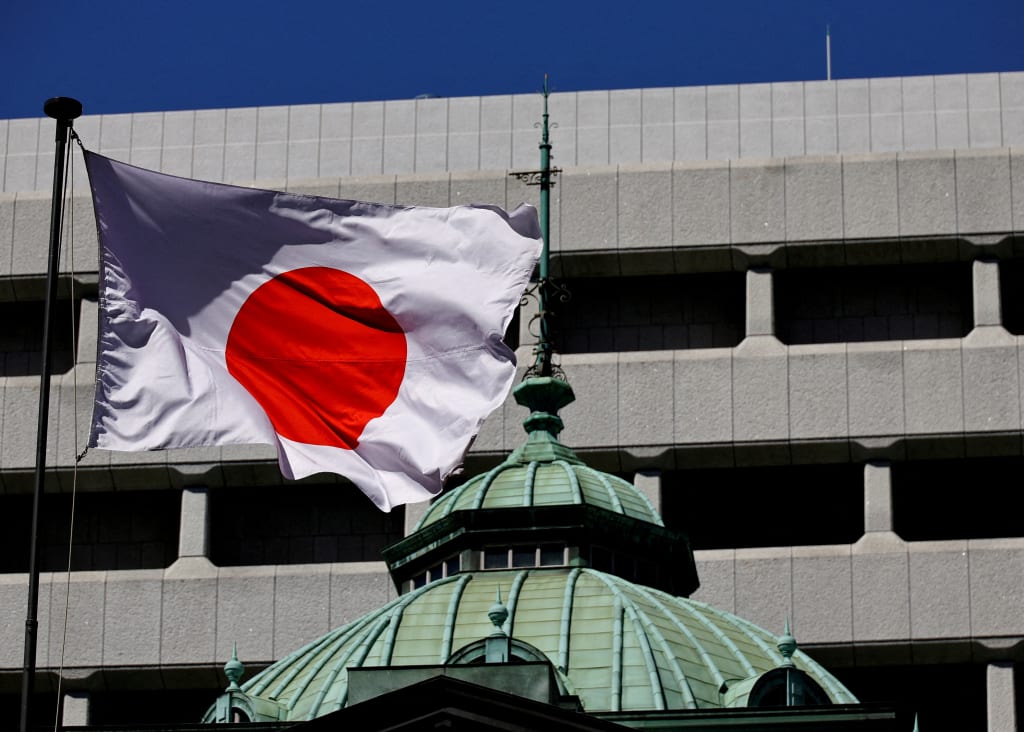
Fast forward to August 5 of this year. The Bank of Japan surprised the world with a sudden rate hike catching big money off guard. This unexpected move made servicing the debt more expensive, prompting institutions to scramble and sell assets to meet their debt obligations. What they sold were a combination of speculative assets across the board, such as: Nvidia, Tesla, Apple, Amazon, Bitcoin, Ethereum. That is why nearly every asset tanked that day. This also caused an increase in demand for the native currency of Japan, the Yen since that was the currency required to pay the debt. This demand increase caused a rapid price increase in the Yen making it more expensive, therefore investors had to sell more assets than originally anticipating to cover their costs.
The resulting selling pressure led to the flash crash , leaving markets reeling. The S&P 500 dropped 3% in a single day , a significant move for a market that typically experiences gradual changes. The sudden downturn highlighted the interconnectedness of global markets and the unpredictable nature of institutional investor sentiment.
In Conclusion. the August 5 flash crash serves as reminder of the complex dynamics at play in global markets. As investors, it is essential to stay vigilant and adapt to changing market conditions. By understanding the factors that contributed to this brief but intense market event, we can better navigate the ever-changing landscape of global finance.
About the Creator
Keep reading
More stories from Asset Alchemist and writers in The Swamp and other communities.
A Gathering of Evil Bosses
“I’m the queen of chin jutting while I smooth my hair, attacking, insulting, and deflecting to protect my appointer.” “Oh, please, Blondi, my hair is curled, highlighted, and longer than yours. I feature television commercials telling immigrants that we will give them a free plane ride home, and if they voluntarily turn themselves in, they will be allowed to legally apply for re-entry. It runs everywhere, and I look good in it! You can’t compete because of your blond hair. Mine is nicer, and my lips are prettier than yours.”
By Andrea Corwin 14 days ago in The Swamp
U.S. Fuel Tanker Hit at Bahrain Port
A U.S. fuel tanker operating at the strategic port of Bahrain was struck in what officials described as a targeted incident, heightening security concerns in one of the world’s most sensitive maritime regions. The tanker, supplying fuel to American and allied naval forces, was damaged while docked during routine logistical operations. No fatalities were reported, but the incident has triggered an immediate security review and raised fresh alarms over the vulnerability of critical supply lines in the Gulf. According to preliminary statements from regional authorities, the tanker was conducting scheduled refueling support for vessels of the U.S. Navy when the impact occurred. Investigators are still determining whether the strike was caused by a drone, a small explosive device, or another form of attack. Officials have not publicly identified any group responsible, though intelligence agencies are treating the incident as deliberate rather than accidental. Bahrain hosts the headquarters of the U.S. Fifth Fleet, making its ports and infrastructure critical hubs for operations across the Arabian Gulf, Red Sea, and Indian Ocean. Any disruption to fuel supply or port security carries major implications not only for U.S. forces but also for commercial shipping routes that pass through nearby waters. Witnesses at the port reported a loud blast followed by smoke rising from the tanker’s midsection. Emergency crews quickly secured the area, and the vessel was evacuated for inspection and damage control. Firefighting teams managed to prevent further escalation, and port operations were temporarily suspended as a precautionary measure. U.S. military officials confirmed that the tanker sustained structural damage but remained stable, with no major fuel leakage detected. “The safety of our personnel and the security of our facilities remain our top priority,” a Pentagon spokesperson said. “We are working closely with Bahraini authorities to determine the source and intent of this incident.” The strike comes amid growing regional tensions linked to conflicts in the Middle East, where maritime assets have increasingly become targets of indirect warfare. Over the past year, several attacks on commercial vessels and military supply ships have been reported in nearby waters, often attributed to proxy groups seeking to pressure Western powers. Security analysts say fuel tankers are especially attractive targets because they represent both logistical lifelines and symbolic assets. “Hitting a fuel tanker sends a message,” said one regional defense expert. “It doesn’t just threaten a ship; it challenges the operational endurance of naval forces in the region.” Bahrain’s government issued a statement condemning the incident and reaffirming its commitment to protecting international forces and commercial shipping. The country has long positioned itself as a stable partner in regional security efforts, hosting multinational naval commands and participating in joint patrols to safeguard maritime corridors. The economic impact of such an attack could be significant if similar incidents continue. Insurance premiums for ships operating in the Gulf have already risen due to geopolitical risks, and any perception that major ports are unsafe could disrupt trade and energy supplies. Bahrain’s port facilities play a key role in servicing not only military vessels but also regional commerce tied to oil and gas exports. Diplomatic sources indicate that Washington is consulting with allies to strengthen port defenses and expand surveillance around key installations. Additional counter-drone systems and patrol vessels may be deployed in response to the incident, while intelligence sharing among regional partners is expected to intensify. For the United States, the strike underscores the fragile balance between maintaining a military presence in the region and avoiding escalation. While officials have stopped short of announcing retaliatory measures, they have made clear that further attacks on U.S. assets would not be tolerated. As investigations continue, the incident at Bahrain port serves as a stark reminder of how quickly regional instability can spill into critical infrastructure. Whether the tanker strike proves to be an isolated act or part of a wider pattern will shape security policy in the Gulf in the weeks ahead. For now, both U.S. and Bahraini authorities are focused on restoring normal operations while tightening defenses against any future threats.
By Fiaz Ahmed about 13 hours ago in The Swamp
Pearl
1980 something. we all hung out at Pearl and you and i were nothing special, or so i thought. i mean we all danced, drenched in our own sweat, our own saline solution of fear, too many beers, shots, laughter, tears, fucks in the bathroom and i don't know when we began to be afraid. do you?
By ROCK aka Andrea Polla (Simmons)7 days ago in Fiction




Comments
There are no comments for this story
Be the first to respond and start the conversation.