
Step-Free Access Coming to More Railway Stations
How barrier-free travel is transforming public transport and making journeys fairer for everyone

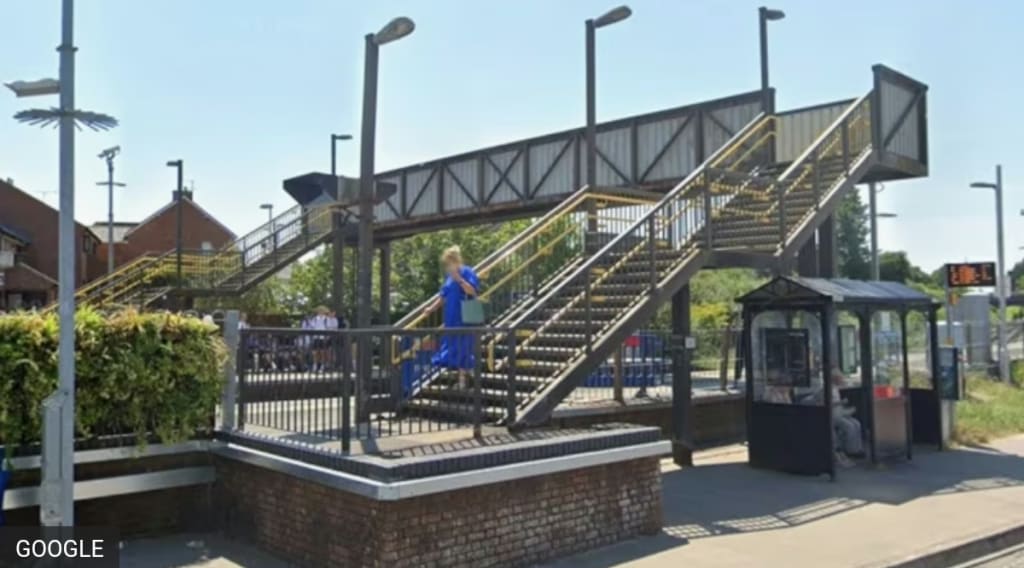
For millions of people, catching a train isn’t just about timetables and ticket prices — it’s about access. Steep staircases, broken lifts, and narrow platforms can turn a simple journey into an exhausting or even impossible task. That’s why the announcement that step-free access is coming to more railway stations is being welcomed as a long-overdue breakthrough for inclusive transport.
This move isn’t just about ramps and elevators. It represents a broader shift in how governments and transport authorities think about mobility, equality, and the everyday needs of passengers.
What Does Step-Free Access Actually Mean?
Step-free access means that passengers can travel from the station entrance to the train platform without using stairs. This usually involves:
Lifts or elevators
Ramps with gentle gradients
Level access between platforms and trains
Wider ticket gates for wheelchairs, prams, and luggage
For wheelchair users, elderly passengers, parents with strollers, travelers with heavy luggage, and people with temporary injuries, step-free access isn’t a luxury — it’s a necessity.
Why This Change Matters So Much
Public transport is meant to be for everyone, yet many railway stations were designed decades ago, long before accessibility standards were taken seriously. As a result, countless passengers have faced daily obstacles just trying to get to work, school, or medical appointments.
Step-free access changes that reality. It allows people to travel independently, without needing assistance or planning complex routes around accessible stations. For many, it restores dignity and freedom.
Beyond individual convenience, accessible stations also help communities by encouraging more people to use public transport instead of cars, reducing congestion and emissions.
Who Benefits the Most?
While step-free access is often associated with wheelchair users, the benefits extend far wider.
Older adults can travel without fear of falling on stairs
Parents with young children can move easily with strollers
People with temporary injuries can continue daily routines
Travelers with luggage can navigate stations more comfortably
In reality, almost everyone benefits from better station design at some point in their lives.
A Long-Overdue Upgrade to Aging Infrastructure
Many railway networks around the world are over a century old. While they are engineering marvels, they were built at a time when accessibility simply wasn’t a priority. Retrofitting these stations is not easy — it requires major structural changes, careful planning, and significant investment.
That’s why progress has often been slow. However, growing public pressure, legal requirements, and awareness around disability rights have pushed accessibility higher up the agenda.
Recent funding commitments signal that transport authorities are finally treating accessibility as essential infrastructure, not an optional upgrade.
The Economic Case for Accessibility
While installing lifts and ramps requires upfront spending, the long-term economic benefits are substantial.
Accessible stations attract more passengers, increasing ticket revenue. They also reduce the need for staff assistance and special arrangements, cutting operational costs. On a broader level, improved accessibility enables more people to participate in the workforce, education, and social life.
Inclusion isn’t just morally right — it’s economically smart.
Challenges Still Remain
Despite the positive momentum, challenges remain. Some stations face space constraints that make installing lifts difficult. Others struggle with maintenance, leading to broken elevators that undermine the whole purpose of step-free access.
There’s also the issue of consistency. A journey is only truly accessible if every part of it is step-free. One inaccessible station can break the entire travel chain.
Advocacy groups continue to stress that upgrades must be reliable, well-maintained, and clearly communicated to passengers.
Listening to the Voices That Matter
One encouraging aspect of recent accessibility projects is increased consultation with disabled passengers and advocacy groups. Their lived experiences provide insights that planners often overlook.
For example, lift placement, signage clarity, and platform-train gaps may seem minor on paper, but they make a huge difference in real life. When users are involved in the design process, the results are far more practical and effective.
What This Means for the Future of Public Transport
Step-free access is more than an upgrade — it’s a signal of how public transport is evolving. As cities grow and populations age, inclusive design will become even more important.
Future stations are increasingly being built with universal design principles, ensuring accessibility from day one rather than as an afterthought. This shift reflects a growing understanding that accessibility benefits everyone, not just a minority.
Why This Matters to the Wider Community
Even if you don’t personally need step-free access today, chances are you will at some point — or someone close to you will. Accidents, aging, pregnancy, or illness can change mobility overnight.
Accessible transport systems make communities more connected, resilient, and humane. They send a clear message that everyone belongs, regardless of physical ability.
Final Thoughts
The expansion of step-free access to more railway stations is a powerful reminder that progress doesn’t always come in flashy innovations. Sometimes, it comes in the form of a working lift, a smooth ramp, or a level platform.
These changes may seem small, but for millions of people, they mean freedom, independence, and dignity. As more stations become accessible, public transport moves closer to what it should always have been — a system designed for everyone.
About the Creator
Muhammad Hassan
Muhammad Hassan | Content writer with 2 years of experience crafting engaging articles on world news, current affairs, and trending topics. I simplify complex stories to keep readers informed and connected.
Keep reading
More stories from Muhammad Hassan and writers in The Swamp and other communities.
Google’s Gemini Sees Skyrocketing Business Sales
Artificial intelligence is no longer a futuristic concept reserved for tech giants and research labs. In 2026, AI has firmly planted itself at the center of everyday business operations — and Google’s Gemini is emerging as one of the biggest winners in this transformation. Over the past year, Gemini’s business sales have skyrocketed, signaling a major shift in how companies adopt, trust, and invest in AI-driven solutions.
By Muhammad Hassan2 months ago in The Swamp
Parallel Protests
I haven't written for quite some time, but I have A LOT of thoughts about yesterday's protest rally against our government's involvement and complicity in America's war on Iran, on the harbourside of my home city Bristol, and I need to put them somewhere. My gorgeous girlfriend is always a loving and listening ear and sharing it all with her will always be a healthy and happy way of processing the mental and emotional weight, but getting it straight in my brain to share means writing it all down in straight lines, so, here we are and thanks for being here.
By Steph Cole10 days ago in The Swamp
My Village Has Become Deserted: How Russia’s War Is Emptying Its Rural Communities
Subtitle: Conflict, conscription, and economic collapse are driving residents away from Russia’s countryside, leaving once-lively villages silent and abandoned.In many remote villages across Russia, the effects of the ongoing war with Ukraine are being felt far from the front lines. While the world often focuses on military developments and geopolitical tensions, rural communities inside Russia are quietly experiencing a different kind of devastation—depopulation. In countless small settlements scattered across the country’s vast countryside, residents say their villages are slowly emptying as young men leave for war, families relocate to cities, and local economies collapse. In the small farming village of Novaya Zarya in western Russia, longtime resident Marina Petrovna remembers when the streets were filled with children and tractors moved steadily through nearby fields. Today, the silence is overwhelming. “My village has become deserted,” she says. “Every year there are fewer houses with lights on at night.” Since the start of the war in 2022, many rural areas have seen a sharp decline in population. Young men have been mobilized into the military or have volunteered for service, often leaving behind elderly parents and abandoned homes. Some families have fled to cities or even abroad, fearing further mobilization or seeking economic stability. Demographic decline was already a serious problem in rural Russia before the war began. According to analysts, many villages had been losing residents for decades as young people migrated to urban centers such as Moscow and Saint Petersburg in search of better jobs, education, and healthcare. The war has accelerated this trend dramatically. Local officials in several regions report that schools have closed due to falling enrollment, while clinics struggle to remain open with limited staff. In some places, buses that once connected villages to nearby towns no longer run because too few people remain to justify the service. Economically, the situation has also deteriorated. Agriculture, which is the backbone of many rural communities, depends heavily on manual labor. With a significant number of working-age men gone, farms are struggling to plant and harvest crops. Some fields now lie untouched, slowly returning to wilderness. The social fabric of village life is also unraveling. Community gatherings, traditional festivals, and local markets have become rare. In villages where dozens of families once lived, only a handful of elderly residents remain. They often rely on neighbors for support, but even those networks are weakening. Experts say the problem may worsen if the conflict continues. Russia’s rural regions already face an aging population and declining birth rates. War casualties, migration, and economic hardship could deepen these demographic challenges for years to come. Sociologists warn that entire settlements could disappear. In parts of Siberia and the Russian Far East, villages have already been officially removed from maps after losing all permanent residents. Similar fates may await others if current trends continue. Despite the hardships, some residents remain determined to stay. For older villagers, leaving their homes and farmland is unthinkable. “Our parents and grandparents built this place,” says Petrovna. “Even if the village becomes empty, this is still our home.” The Russian government has announced several rural development programs in recent years, aiming to modernize infrastructure and encourage people to remain in smaller communities. However, critics argue that wartime priorities and economic sanctions have limited the impact of these initiatives. For now, the quiet transformation of rural Russia continues largely unnoticed by the outside world. While battles rage hundreds or even thousands of kilometers away, the consequences are reshaping everyday life in villages across the country. As night falls in Novaya Zarya, only a few houses glow faintly in the darkness. Where laughter, farm work, and village gatherings once defined daily life, there is now a growing stillness—an echo of a countryside slowly fading away.
By Fiaz Ahmed 5 days ago in The Swamp




Comments
There are no comments for this story
Be the first to respond and start the conversation.