
Starmer’s “Sorry” Rings Hollow as Mandelson Scandal Deepens: Labour in Turmoil
Prime Minister apologises over controversial appointment, but party unrest grows
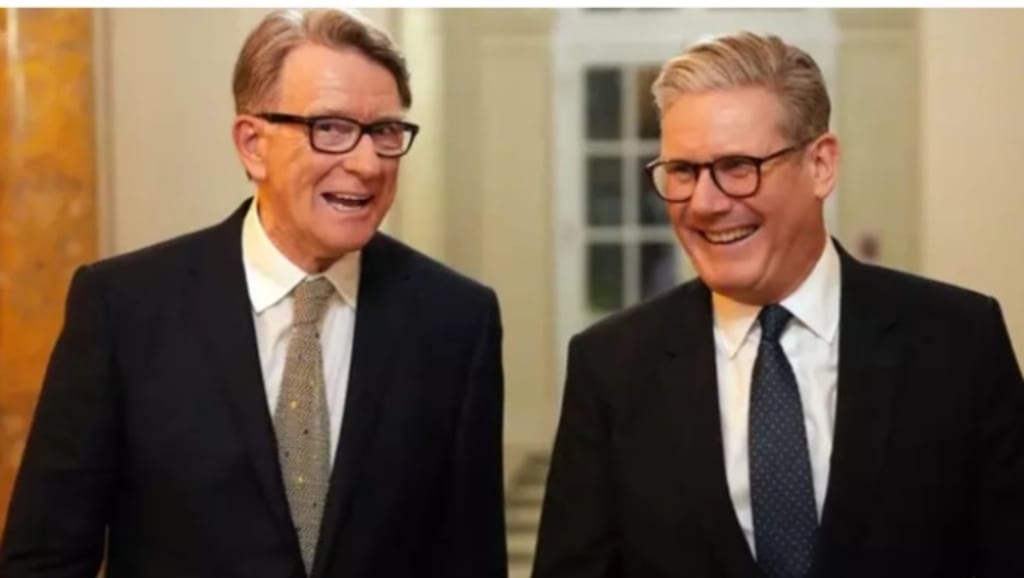
UK Prime Minister Sir Keir Starmer has issued a highly anticipated apology for appointing former Labour grandee Lord Peter Mandelson as British ambassador to the United States — an appointment that has sparked intense fury within his own party and threatens the stability of his leadership.
At Prime Minister’s Questions (PMQs) this week, Starmer acknowledged he was wrong to trust Mandelson’s assurances about his relationship with convicted sex offender Jeffrey Epstein, saying he was “sorry for believing Mandelson’s lies and for appointing him.” The apology extended to the victims of Epstein, whom Starmer said had been let down by those in power.
However, the apology — one of the most serious of his tenure — has done little to calm the storm. Many Labour MPs now describe the scandal as a leadership crisis, with some openly questioning whether Starmer can continue as party leader.
The Controversial Appointment and Public Backlash
The roots of the crisis lie in Starmer’s decision to approve Lord Mandelson, a veteran Labour politician and former Cabinet minister, as the UK’s ambassador to Washington. Mandelson’s appointment came despite evidence that his ties with Jeffrey Epstein continued after Epstein’s 2008 conviction for sexual offences — a detail that most expected to be disqualifying.
Downing Street initially attempted to restrict the release of documents relating to Mandelson’s appointment, claiming national security and diplomatic considerations. But in the face of mounting pressure from Labour MPs — particularly former deputy prime minister Angela Rayner — the government backed down, agreeing to let Parliament’s Intelligence and Security Committee oversee the release of the files.
This move was widely seen as a credible U-turn, underscoring how much control Starmer has already lost over the narrative.
“I am Sorry”: Starmer’s Attempt at Damage Control
In a poignant statement during PMQs, Starmer addressed survivors of Epstein’s abuse directly:
“The victims of Epstein have lived with trauma that most of us can barely comprehend… I want to say this: I am sorry. Sorry for what was done to you. Sorry that so many people with power failed you. Sorry for having believed Mandelson’s lies and appointed him.”
Starmer emphasised that his government would continue to pursue accountability and uphold the integrity of public life, insisting that justice must be sought even amid political turmoil.
Despite the gravity of the remarks, Labour MPs remain restless, feeling the apology addresses only the moral dimension of the scandal, without answering deeper questions about judgement, vetting processes, and internal decision-making within No. 10.
Backbench Backlash: Labour MPs Turn on Starmer
While the public apology was intended to draw a line under the crisis, it instead ignited further anger from the party’s backbenches.
Labour MPs have expressed deep frustration not only with Starmer but also with his chief of staff, Morgan McSweeney, who is reported to have been a key advocate for Mandelson’s appointment. Some MPs have demanded McSweeney’s resignation, describing him as a liability who has damaged the party’s reputation.
One backbencher described the situation as “indefensible,” saying Labour had knowingly placed a figure with troubling associations into one of the most powerful diplomatic posts. Others warned that Starmer’s leadership may not survive the crisis.
A Leadership Under Threat
The repercussions for Starmer have been immediate. Some Labour MPs now say his days as prime minister are “numbered,” warning that his grip on the party has weakened after a series of missteps.
Pressure has mounted especially because of the perceived attempt by Downing Street to control the narrative around the Mandelson documents — an episode many MPs fear looks like a cover-up rather than transparency.
Some MPs have suggested that a confidence vote or leadership challenge could be on the horizon if the party cannot agree on a way forward, risking distraction from key domestic issues and upcoming elections.
Government Response: Loyalty and Damage Limitation
Amid the internal turmoil, some of Starmer’s closest allies have publicly defended his position. Housing Secretary Steve Reed argued that Starmer acted decisively once the truth emerged and blamed the vetting process for failing to flag deeper ties.
Nevertheless, even Reed’s assurances have done little to settle the broader unrest within the party, with many Labour figures privately questioning whether the government’s explanation will hold up under sustained scrutiny.
What Comes Next? A Party at a Crossroads
As the Mandelson scandal continues to unfold, the opposition Conservatives and smaller parties are capitalising on Labour’s instability. They have called for full transparency and suggested that Starmer’s authority has been fatally undermined.
For many Labour MPs, the coming weeks will be a test of whether their party can move past a controversy that has rekindled debates about elite privilege, accountability, and public trust. Starmer’s apology may be seen as both a necessary acknowledgement of failure and a turning point in his leadership — but whether it is enough to save his premiership is still fiercely contested.
About the Creator
Keep reading
More stories from Ayesha Lashari and writers in The Swamp and other communities.
YouTube Just Blocked This Popular Hack for Free Background Play
In a move that has sparked widespread frustration across the internet, YouTube has officially blocked a widely used hack that allowed free users to play videos in the background — a feature that was once exclusive to YouTube Premium subscribers. This change, rolled out quietly across mobile web browsers, marks a significant shift in how the platform enforces its subscription benefits. What Was the Hack? For years, YouTube Premium users have enjoyed features such as ad‑free viewing, downloads, and background playback — the ability to keep videos playing even when the app is minimized or the phone screen is turned off. Free users, unwilling to pay, found clever workarounds. By opening YouTube in third-party browsers like Samsung Internet, Brave, Vivaldi, or Microsoft Edge, they could bypass the Premium paywall and keep audio playing while multitasking. This loophole, cherished by listeners who use YouTube like a music or podcast app, no longer works. Google has updated YouTube’s mobile web experience so that background audio stops when the display goes dark or the browser is minimized if the user is not a Premium subscriber. Official Confirmation from YouTube Reports confirmed by Google show that the company has deliberately updated the mobile web experience to make background playback exclusive to Premium subscribers. A YouTube spokesperson told Android Authority: “Background playback is a feature intended to be exclusive for YouTube Premium members.” This change affects mobile browsers on both Android and iOS devices. Even when playing videos through browsers like Samsung Internet or Vivaldi, audio cuts off shortly after the screen turns off — mimicking the behavior of the official YouTube app’s restrictions. Why It Matters YouTube’s move is clearly aimed at driving more users toward Premium subscriptions, which cost around $13.99/month in the United States and £12.99/month in the UK. These subscriptions bundle perks like ad-free viewing and background playback — features once accessible through browser workarounds. Background playback is a high-value feature for users who listen to music, news, or podcasts while on the move. By gating it behind a paywall, YouTube increases the perceived value of Premium and nudges free users toward paying. Users’ Reactions The response online has been largely negative. Many free users expressed frustration on social media, calling the change “anti-consumer” because background playback was a core convenience. Tech forums have seen debates about alternatives, with some users exploring browser tweaks or third-party apps. However, most workarounds are unreliable or violate YouTube’s terms of service. Interestingly, the Brave browser team has shared guidance on how users might temporarily restore background playback, though this may not last due to YouTube’s server-side enforcement. How the Block Works YouTube’s enforcement appears to be server-side, rather than browser-specific. It checks whether an account has the right to background play before allowing audio to continue when the device is locked. Once a non-Premium account is detected, playback stops within seconds, and lock screen media controls are removed. This system makes it hard for browsers to bypass the restriction, as it relies on real-time entitlement validation. What This Means for the Future This crackdown is part of a broader trend: streaming services increasingly gate what was once free behind subscription walls. As ad revenue slows and competition grows, platforms like YouTube push more aggressively for paid conversions. For users, the message is clear: reliable background playback now requires YouTube Premium. Workarounds may exist but are temporary and unstable. Conclusion YouTube’s decision to block the popular background play hack marks a turning point in how the platform balances free access with subscription incentives. While the move makes business sense, many free users are disappointed. Whether it pushes users to Premium or to competing platforms remains to be seen. One thing is certain: the era of free background play on mobile devices is officially over — at least for most users. ✅ Tip for Bloggers:
By Ayesha Lashariabout 11 hours ago in The Swamp
Why Black History Matters in America?
The United States of America is celebrating their 250th anniversary in 2026. I'm proud to be an American and as someone who was born here, I wouldn't imagine myself living anywhere else. This is a country where opportunities are possible. Where anyone can be successful in anything they desire to do. Equality, community, and togetherness are the backbones of what America is and should be about. However, we have an administration who wants to erase and disregard those who have made positive, meaningful impacts in our country, specifically Black figures, such as Martin Luther King, Jr., Rosa Parks, and Maya Angelou. President Trump and his administration have been constantly complaining and fighting against what they call the "Woke agenda". They use this excuse as a distraction from other issues they refuse to address, such as the high cost of living, climate change, and inflation. That equality is dividing America, when in reality, it's bringing us together. Being woke is not tied to a specific political party. No matter where you stand on the political spectrum, you can still care about other people and their plights. Compassion and empathy for others isn't tied to a political party, either. We were taught as children to treat others the way we want to be treated and not judge others because they're different from us. Caring about others isn't a personal attack on your beliefs. It doesn't make you any less of a person. People who are easily offended over African American figures, past or present, or anything related to it, are grasping at straws. Current and future generations need to know who people like Harriet Tubman and Shirley Chisholm were, especially in the classroom. Black History is part of American History. It should be recognized, not hidden or forgotten. Besides, you can't shield children from everything, just because your feelings are easily hurt.
By Mark Wesley Pritchard 4 days ago in The Swamp
Tributes Pour in for Birmingham Politician Waseem Zaffar Following Sudden Death at 44
The city of Birmingham and communities across the UK are in shock following the sudden death of Waseem Zaffar, a respected politician and councillor, who passed away at the age of 44. Tributes have flooded in from colleagues, constituents, and community leaders, all highlighting his dedication, energy, and commitment to public service.
By Aarif Lashari5 days ago in The Swamp


Comments
There are no comments for this story
Be the first to respond and start the conversation.