
Spain Cracks Down on Social Media for Under‑16s: Pedro Sánchez Sparks Global Debate
Madrid’s Bold Plan to Ban Minors from Social Networks Ignites International Discussion on Child Safety, Tech Accountability, and Digital Rights
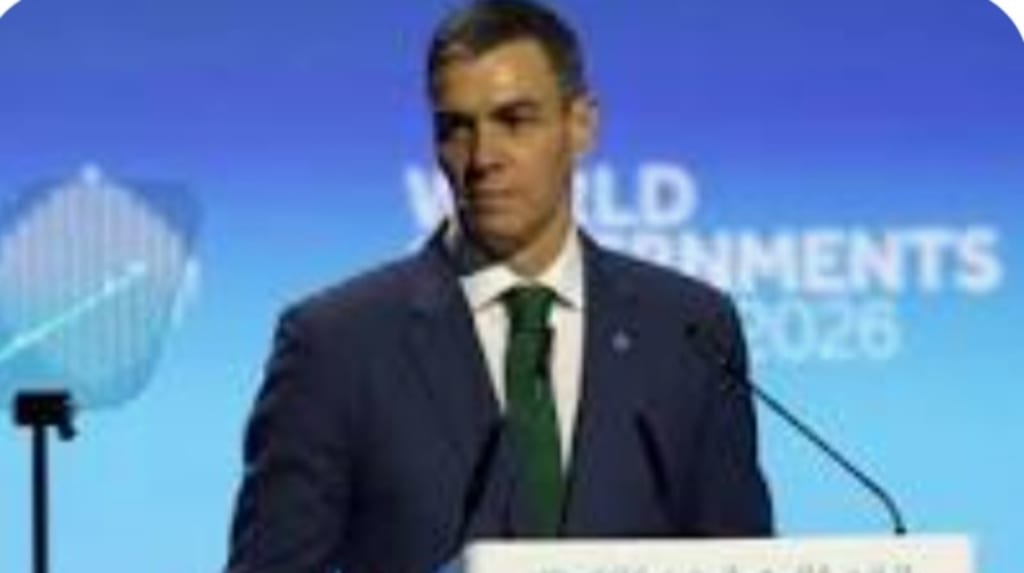
Spain has just taken a bold step that’s shaking up the global conversation about children and social media. On February 3, 2026, Prime Minister Pedro Sánchez announced a plan to ban social media access for all users under 16. This decision isn’t just about Instagram or TikTok—it’s about redefining the responsibilities of tech giants, the role of governments, and the future of digital childhood.
While the move has garnered applause from parents and child safety advocates, it has also sparked criticism from tech companies, digital rights experts, and even international observers. Here’s what you need to know about Spain’s latest digital crackdown.
Why Spain is Taking Action
According to Sánchez, social networks have become a kind of digital Wild West. Children are exposed to harmful content, cyberbullying, addictive algorithms, and even illegal material like AI-generated deepfakes. “Our children are exposed to a space they were never meant to navigate alone,” he said during his speech at the World Government Summit in Dubai.
The plan requires robust age verification systems on all major platforms, including Meta (Facebook and Instagram), TikTok, and X (formerly Twitter). Simple checkbox systems, like those currently in use, will no longer suffice. If companies fail to comply, they could face heavy fines—and even criminal liability for executives responsible for allowing illegal or hateful content to circulate.
This makes Spain one of the first European countries to take such a hard line on under-16 social media use, following Australia’s similar law introduced in late 2025.
The Public and Political Response
In Spain, the move has generally been welcomed by the public. Polls suggest that most Spaniards support restrictions designed to protect children from harmful content and social pressure. Child advocacy organizations have praised the initiative as a long-overdue step to hold social media companies accountable.
However, the law faces political and legal hurdles. Sánchez’s coalition government lacks a clear parliamentary majority, meaning passing the legislation will require negotiation with opposition parties. Legal experts also caution that strict age verification may conflict with European privacy laws and require the collection of sensitive data.
Global Repercussions
Spain’s announcement has immediately attracted international attention. France, Denmark, and the UK have already discussed similar restrictions for minors, and Sánchez said Spain has joined a “Coalition of the Digitally Willing,” a group of European countries committed to coordinated digital regulation.
The tech industry, however, has reacted strongly. Elon Musk publicly criticized Sánchez on X, calling him a “tyrant” and a “fascist totalitarian.” Such sharp pushback reflects the tension between regulators and tech companies over how much control governments should exert over online platforms—particularly concerning freedom of speech, privacy, and digital innovation.
Supporters vs. Critics
Supporters
Supporters argue that social media companies have prioritized profits over safety for too long. They view Spain’s move as a moral and social necessity to protect children from online addiction, cyberbullying, and exposure to harmful content.
Critics
Opponents counter that banning social media oversimplifies a complex problem. They suggest better solutions could include digital literacy programs, parental controls, and educational initiatives. Critics also warn that minors may circumvent bans and migrate to less regulated platforms, reducing the law’s effectiveness. Privacy advocates are particularly concerned about age-verification methods that could intrude into personal data.
What This Means for Children Worldwide
If Spain’s law passes, it could set a global precedent. Countries around the world are struggling to balance child protection with online freedom. Spain’s approach could inspire stricter regulations—or serve as a cautionary tale if implementation proves difficult.
At its core, the debate challenges societies to answer a crucial question: How do we protect children in a world dominated by algorithms and social media platforms designed to capture attention?
The Road Ahead
Sánchez’s government plans to introduce the bill as early as next week. Platforms will have to comply with robust age-verification measures, and executives could be held criminally liable for content that violates the law.
For parents, educators, and tech watchers, Spain’s move signals a shift toward active government oversight of digital spaces where children are most vulnerable. For tech companies, it’s a warning that Europe may soon adopt some of the strictest regulations in the world.
Whether the law ultimately passes, and how effective it will be in practice, remains uncertain. But the conversation it has sparked about the balance between digital freedom, safety, and corporate accountability is likely to shape policy debates worldwide for years to come.
Key Takeaways:
Spain plans to ban social media for under-16s, requiring strong age verification.
Social media executives could face criminal liability for illegal content.
Public opinion in Spain largely supports the move, but legal and privacy concerns remain.
Tech companies and figures like Elon Musk have strongly opposed the plan.
Spain’s approach could influence digital child protection policies globally.
Spain’s decision is not just a national issue—it’s a global conversation about the future of childhood in the digital era. As more countries watch closely, the world is asking: should governments step in where social media companies have failed, or is this the start of a new era of digital restrictions that could redefine online freedom for all?
About the Creator
Keep reading
More stories from Ayesha Lashari and writers in The Swamp and other communities.
Tragedy in the Aegean: At Least 14 Migrants Killed After Collision With Greek Coastguard Vessel
At least fourteen migrants lost their lives after a crowded migrant boat collided with a Greek coastguard patrol vessel late Tuesday night off the eastern Aegean island of Chios, Greek authorities confirmed. The incident has sent shockwaves through local communities, humanitarian groups, and European policymakers, underlining the deadly risks that migrants face while attempting perilous sea crossings to reach the European Union.
By Ayesha Lashari3 days ago in The Swamp
Why Black History Matters in America?
The United States of America is celebrating their 250th anniversary in 2026. I'm proud to be an American and as someone who was born here, I wouldn't imagine myself living anywhere else. This is a country where opportunities are possible. Where anyone can be successful in anything they desire to do. Equality, community, and togetherness are the backbones of what America is and should be about. However, we have an administration who wants to erase and disregard those who have made positive, meaningful impacts in our country, specifically Black figures, such as Martin Luther King, Jr., Rosa Parks, and Maya Angelou. President Trump and his administration have been constantly complaining and fighting against what they call the "Woke agenda". They use this excuse as a distraction from other issues they refuse to address, such as the high cost of living, climate change, and inflation. That equality is dividing America, when in reality, it's bringing us together. Being woke is not tied to a specific political party. No matter where you stand on the political spectrum, you can still care about other people and their plights. Compassion and empathy for others isn't tied to a political party, either. We were taught as children to treat others the way we want to be treated and not judge others because they're different from us. Caring about others isn't a personal attack on your beliefs. It doesn't make you any less of a person. People who are easily offended over African American figures, past or present, or anything related to it, are grasping at straws. Current and future generations need to know who people like Harriet Tubman and Shirley Chisholm were, especially in the classroom. Black History is part of American History. It should be recognized, not hidden or forgotten. Besides, you can't shield children from everything, just because your feelings are easily hurt.
By Mark Wesley Pritchard 6 days ago in The Swamp
Lately, I'm empty
Lately, I feel an emptiness inside of me that doesn’t make any sense. I was fine a week ago and now I’m numb to the pain that I’ve been carrying around. Numb to the idea of me existing. I wish I could go to a place where I can hear happy positive thoughts and surround myself with joy. The medication I’m on doesn’t seem to work anymore. I still feel pain from existing, why am I here anyways? Merely to exist. I don’t feel like I’m making any differences being here.
By Cerina Galvan4 days ago in Confessions



Comments
There are no comments for this story
Be the first to respond and start the conversation.