
Social Security’s Day of Reckoning Is Nearly Here
As America’s most important retirement program approaches a critical financial deadline, lawmakers face growing pressure to act.

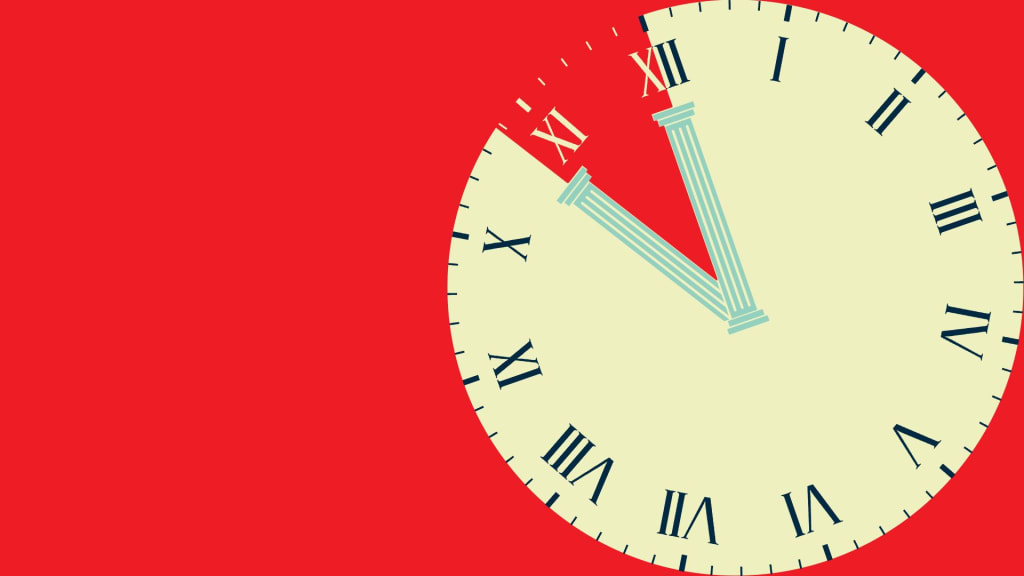
For decades, economists and policymakers have warned that the United States Social Security system would eventually face a point of financial crisis. Today, that moment is fast approaching. Recent projections show that Social Security’s trust funds—responsible for paying out retirement, disability, and survivor benefits—will begin running short of money within the next decade. If no action is taken, millions of Americans could see reduced payments, delayed benefits, or sweeping structural changes to the program.
This looming challenge has ignited new debate across the country. With an aging population, a shrinking ratio of workers to retirees, and rising political polarization, the future of America's most relied-upon social program hangs in the balance.
A System Under Growing Pressure
Social Security was created in 1935 to provide financial stability to older Americans and vulnerable individuals. For generations, it operated on a simple structure: workers contribute payroll taxes, and those funds are used to pay current beneficiaries. When revenue exceeded expenses, the surplus went into trust funds.
However, the math behind that model is now failing.
The Baby Boomer generation—one of the largest in U.S. history—is retiring at a rapid pace. At the same time, birth rates are falling, meaning fewer workers are entering the labor force. This has created a widening financial gap. According to the latest Social Security Trustees report, the combined trust funds may be depleted by 2033 or 2034. After that point, the program will only be able to pay about 75%–80% of scheduled benefits unless Congress intervenes.
This “day of reckoning” has long been predicted, but policymakers have repeatedly avoided addressing the issue due to political risk.
Why the Crisis Is Escalating Now
Several factors are accelerating the approaching shortfall:
1. Aging Population
Americans are living longer, which increases the number of years they collect benefits. As life expectancy rises, costs climb.
2. Declining Birth Rates
A shrinking workforce means fewer payroll taxes to support retirees. In the 1960s, there were around five workers for every beneficiary; today, there are fewer than three.
3. Wage Stagnation
Stagnant wages limit payroll tax revenue growth, affecting how quickly the trust funds can replenish themselves.
4. Rising Disability and Early Retirement Claims
Economic uncertainty, health challenges, and the long-term effects of the pandemic have driven more people to claim disability or early benefits sooner than expected.
Combined, these factors create an imbalance that the current system was never designed to withstand.
What Happens If Nothing Is Done?
If lawmakers fail to act before the trust funds are exhausted, Social Security will not disappear—but the consequences will be significant.
Possible outcomes include:
Automatic benefit cuts of up to 20–25%
Higher retirement age to reduce long-term costs
Reduced cost-of-living adjustments (COLA)
Tighter eligibility requirements for disability benefits
Changes to spousal or survivor benefits
For the roughly 70 million Americans who rely on Social Security, even a modest reduction would have life-altering effects. Nearly half of retirees depend on Social Security for the majority of their income, and for many, it is their only financial safety net.
Why Politicians Avoid the Conversation
Social Security is often called the “third rail” of American politics—touch it, and your career may be over. Any change, whether raising taxes or cutting benefits, risks backlash from voters.
Republicans and Democrats both agree the program must be preserved, but they deeply disagree on how:
Democrats favor raising taxes on high earners and preserving or expanding benefits.
Republicans advocate for reducing long-term costs through gradual benefit changes and raising the retirement age.
This political divide has stalled reform for decades.
Potential Solutions on the Table
Multiple proposals exist, though none have gained enough bipartisan support to pass. Some of the major ideas include:
1. Raise or eliminate the payroll tax cap
Currently, income above a certain level is not taxed for Social Security. Lifting this cap could significantly extend the program’s life.
2. Gradually increase the retirement age
Supporters argue that people now live longer than when the system was created. Critics say this unfairly impacts workers in physically demanding jobs.
3. Adjust benefits for high-income retirees
Means-testing benefits could reduce payouts for wealthier seniors.
4. Expand legal immigration
Increasing the workforce would help generate more payroll tax revenue.
5. Create investment-based trust funds
Some propose allowing a portion of Social Security funds to be invested in the stock market for higher returns.
Each solution has trade-offs, and none are universally popular.
The Clock Is Ticking
The Social Security crisis is no longer a distant theoretical problem. It now sits just years away. Economists warn that the longer Congress waits, the more drastic the eventual solution will need to be. Acting sooner would allow gradual adjustments, protecting current retirees while reshaping the system for future generations.
For millions of Americans, Social Security represents peace of mind in retirement. But unless lawmakers confront the challenge with urgency and cooperation, the day of reckoning may arrive faster than anyone expects.
Conclusion
Social Security remains one of the most important and foundational programs in the United States. But its future is at risk. As the trust funds move toward depletion, political leaders must choose between difficult solutions or devastating consequences. The coming years will determine whether the nation preserves a promise made nearly a century ago—or allows one of America’s greatest social achievements to fall into crisis.
About the Creator
Asad Ali
I'm Asad Ali, a passionate blogger with 3 years of experience creating engaging and informative content across various niches. I specialize in crafting SEO-friendly articles that drive traffic and deliver value to readers.
The Forsyth House Fire
Since 1851, Forsyth House has stood on the corner of Union Street and Gordon Street in the heart of Glasgow. Its iconic, or was... because on Sunday 8th of March, 2026, a fire broke out in a small, seemingly un-named shop in the building and tore all that history down. As I write, the rubble is still unsettled and the street is still blocked off. Central Station is quiet on the upper level, and around 30 small businesses have quite literally gone up in smoke.
By S. A. Crawford2 days ago in The Swamp
"For Your Convenience"
So, I have this thing where I'm a little unhinged from time to time. I went from having zero filter as a child to not speaking up at all in my teens and early twenties. I think I'm starting to find a balance, but occasionally, I pop off and don't know how to say things "nicely"... I guess.
By Sara Wilson3 days ago in The Swamp
A Transparent Look at Vocal Challenges and Top Stories
Almost three years ago, we shared a resource article that served as a place for people to suggest new challenge prompts. We thought it would be a good idea to refresh that thread, and take the opportunity to answer a few common questions about top stories, how challenges are judged and how submissions are reviewed.
By Vocal Curation Team3 days ago in Resources



Comments
There are no comments for this story
Be the first to respond and start the conversation.