
Silver Price Forecast: Why the Pullback From $120 Could Fuel the Next Rally
As silver retreats from record highs, analysts see potential for a renewed surge driven by industrial demand, inflation hedging, and market sentiment.
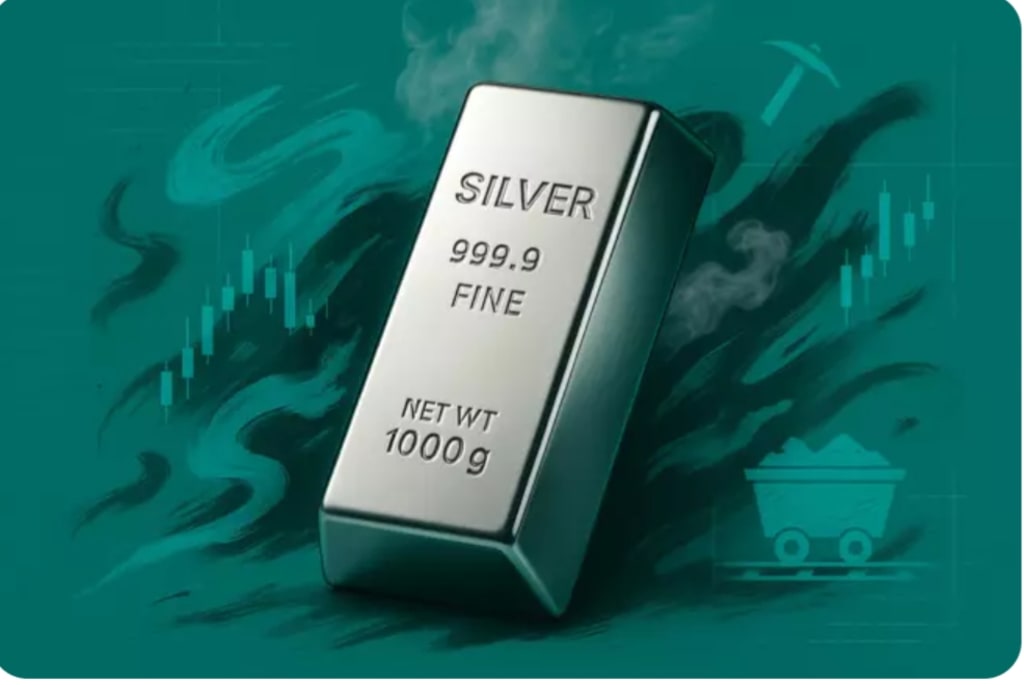
Silver has experienced a dramatic journey in recent months, briefly touching $120 per ounce before retreating to lower levels. While the pullback has sparked concerns among investors, many analysts argue that this correction could set the stage for a stronger rally. Market dynamics, global economic trends, and the unique characteristics of silver as both an industrial metal and a financial hedge suggest that the metal’s story is far from over.
Understanding the Recent Pullback
The surge toward $120 was fueled by a combination of factors: rising inflation fears, growing demand from the renewable energy and electronics sectors, and speculative trading in commodities markets. However, no rally is linear. Profit-taking, short-term market corrections, and global economic uncertainties contributed to the recent pullback.
Market analysts note that silver, unlike gold, has a dual role as both a precious metal and an industrial commodity. This means its price reacts not only to financial trends like inflation and currency fluctuations but also to the health of industrial sectors such as solar energy, electronics, and automotive manufacturing.
“Corrections in silver are natural and healthy for the market,” said a senior commodities analyst. “Pullbacks from high levels often shake out weak hands and lay the foundation for a more sustainable upward trend.”
Industrial Demand as a Key Driver
One of the strongest bullish signals for silver is its industrial demand. The global shift toward renewable energy technologies, particularly solar panels and electric vehicles, has increased silver consumption. Silver is a critical component in photovoltaic cells, and the growth of solar energy projects worldwide continues to underpin long-term demand.
Similarly, the electronics sector relies heavily on silver for conductors, sensors, and other components. As industries recover from recent supply chain disruptions and expand production, the demand for silver is expected to rise steadily. Analysts argue that these industrial fundamentals could offset the effects of short-term speculative pullbacks.
Inflation and Safe-Haven Appeal
In addition to industrial use, silver remains a popular hedge against inflation and currency devaluation. Central banks around the world have been maintaining accommodative monetary policies, and rising inflation in major economies has prompted investors to look for assets that retain value.
While gold often takes center stage as an inflation hedge, silver offers an attractive alternative due to its lower price point and potential for higher percentage gains. Historical data suggests that silver tends to outperform during periods of monetary uncertainty, making it a preferred choice for investors seeking both protection and growth potential.
Market Sentiment and Technical Factors
Technical analysts point to several factors indicating that the recent pullback could be temporary. Silver prices often move in cycles, and corrections following rapid gains are common. Current support levels, combined with strong demand indicators, suggest that the market could rebound in the near term.
Moreover, investor sentiment in commodities markets shows renewed optimism. Exchange-traded funds (ETFs) backed by silver, along with increasing physical purchases in major consuming countries, point to underlying confidence in the metal’s medium- to long-term outlook.
Potential Risks to Consider
Despite the bullish signals, investors should remain cautious. Silver prices are sensitive to global economic shifts, interest rate policies, and geopolitical tensions. A sudden strengthening of the U.S. dollar, for instance, could put downward pressure on silver. Similarly, unexpected slowdowns in industrial demand or changes in government incentives for renewable energy could impact prices.
Nonetheless, most analysts agree that while short-term volatility is likely, the metal’s fundamental drivers remain robust. Pullbacks should not be viewed solely as negative signals but as potential entry points for strategic investment.
Strategic Outlook for Investors
For investors looking to capitalize on silver’s trajectory, experts recommend a balanced approach. Dollar-cost averaging, diversifying between physical silver, ETFs, and mining equities, and monitoring key technical levels can help manage risk while positioning for potential gains.
“Corrections in the market are opportunities,” said a portfolio strategist. “For investors who understand silver’s dual role as an industrial metal and financial asset, dips are the moments to build positions before the next leg up.”
Conclusion: The Road Ahead
The recent retreat from $120 per ounce in silver is a normal part of market dynamics, not a signal that the rally is over. Industrial demand, inflation hedging, and investor sentiment continue to provide strong support for the metal. While risks remain, the pullback could act as a catalyst for the next leg of the rally, offering strategic opportunities for investors who are prepared and informed.
As global economies navigate inflation, energy transitions, and market volatility, silver is poised to remain a key player in both industrial and financial arenas. Far from signaling the end, the correction from $120 may be the beginning of a new, sustainable upward trend.
-
About the Creator
Keep reading
More stories from Sadaqat Ali and writers in The Swamp and other communities.
Saudi Arabia Joins Egypt, Turkey, UAE, Oman, Qatar, and Other Middle Eastern Countries in Facing Significant Travel Changes and Potential Visa Delays This Year as the US Imposes a New Visa Policy and Biometric Entry-Exit System
Travel between the Middle East and the United States is set to undergo notable changes this year as Washington rolls out a new visa policy alongside an expanded biometric entry-exit system. Saudi Arabia has now joined countries such as Egypt, Turkey, the United Arab Emirates, Oman, Qatar, and others in facing the impact of these measures, which are expected to lead to longer visa processing times, additional documentation requirements, and heightened scrutiny for travelers.
By Sadaqat Aliabout 6 hours ago in The Swamp
Why Black History Matters in America?
The United States of America is celebrating their 250th anniversary in 2026. I'm proud to be an American and as someone who was born here, I wouldn't imagine myself living anywhere else. This is a country where opportunities are possible. Where anyone can be successful in anything they desire to do. Equality, community, and togetherness are the backbones of what America is and should be about. However, we have an administration who wants to erase and disregard those who have made positive, meaningful impacts in our country, specifically Black figures, such as Martin Luther King, Jr., Rosa Parks, and Maya Angelou. President Trump and his administration have been constantly complaining and fighting against what they call the "Woke agenda". They use this excuse as a distraction from other issues they refuse to address, such as the high cost of living, climate change, and inflation. That equality is dividing America, when in reality, it's bringing us together. Being woke is not tied to a specific political party. No matter where you stand on the political spectrum, you can still care about other people and their plights. Compassion and empathy for others isn't tied to a political party, either. We were taught as children to treat others the way we want to be treated and not judge others because they're different from us. Caring about others isn't a personal attack on your beliefs. It doesn't make you any less of a person. People who are easily offended over African American figures, past or present, or anything related to it, are grasping at straws. Current and future generations need to know who people like Harriet Tubman and Shirley Chisholm were, especially in the classroom. Black History is part of American History. It should be recognized, not hidden or forgotten. Besides, you can't shield children from everything, just because your feelings are easily hurt.
By Mark Wesley Pritchard 7 days ago in The Swamp
What’s New in Android’s February 2026 Google System Updates
Years after the death of Jeffrey Epstein, the political, legal, and social fallout from his crimes continues to ripple through the highest levels of power. In the latest development, former President Bill Clinton and former Secretary of State Hillary Clinton have agreed to testify before a House investigation examining Epstein’s network and the conduct of powerful figures connected to him. Their decision comes just ahead of a potential contempt of Congress vote, raising the stakes in an inquiry that has already reignited intense public scrutiny.
By Zahid Hussain6 days ago in The Swamp



Comments
There are no comments for this story
Be the first to respond and start the conversation.