
Shadow Wars: How the Iran-Israel Conflict Keeps the Middle East on Edge
From Covert Attacks to Open Threats—Why This Long-Simmering Rivalry Risks a Global Tipping Point
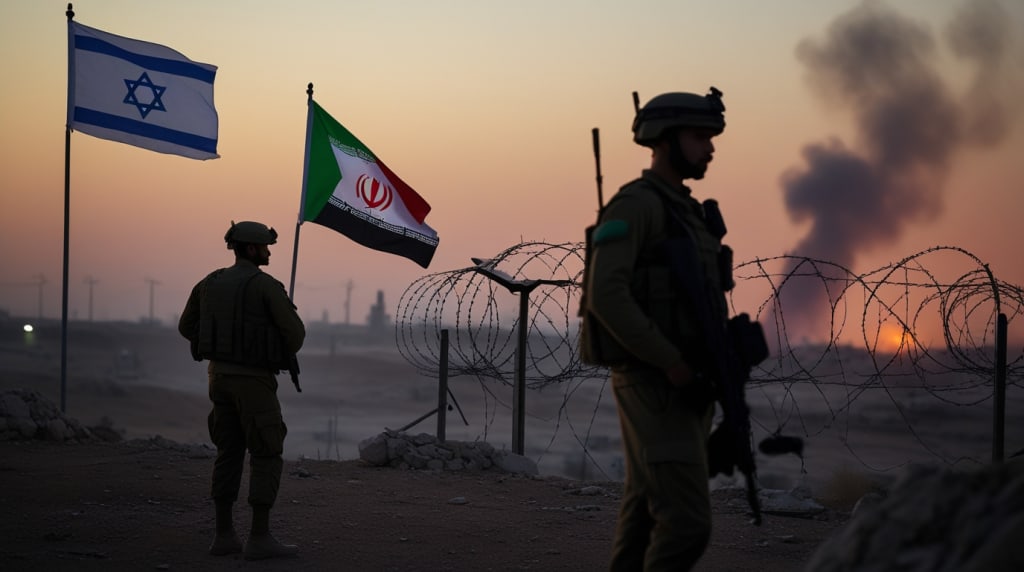
For many years, the Middle East has been a venue of political objectives, religious fighting, and outside influence. The conflict between Iran and Israel, however, is especially fierce and worrisome. This conflict is distinguished not just by nuclear threats and military campaigns but also by covert anxieties and muted talks. Though the international community usually pays attention during major flares, for millions in the region this constant strain is just part of daily life.
A Conflict Without a Battlefield
Unlike conventional wars, the Iran-Israel dispute hardly plays out by direct fighting. Rather, it shows as a "shadow war," defined by cyberattacks, focused assassinations, airstrikes, and proxy conflicts taking place in other countries. Both countries have been involved in conflict from Syria and Lebanon to Iraq and Gaza without formally declaring a complete war. This produces a particularly dangerous scenario since the lack of regulations implies that even one strike could conceivably develop into a regional crisis.
What’s Driving the Rivalry?
We have to go back a few decades to understand the stress in the area. Following its Islamic Revolution in 1979, Iran took a firm stance against Israel, aggressively supporting militant groups like Hezbollah in Lebanon and Hamas in Gaza—all of whom are staunch opponents of Israel. Israel, on the other hand, sees Iran's pursuit of nuclear weapons as a direct and real danger. The Israeli authorities worry that a nuclearcapable Iran could possibly destroy their country, especially as Iranian leaders have openly sought the annihilation of Israel.
But, it's not just about ideological convictions. Iran hopes to be the main power in the Middle East; Israel, backed by Western countries including the U.S., presents a major obstacle to realizing that goal.
The Human Cost Behind the Headlines
Although leaders use elaborate political maneuvers, regular people suffer most from the repercussions. Harsh economic sanctions in Iran, mostly connected to nuclear concerns, have caused great difficulties. Food and medical expenses have spiraled sharply. Access to world resources remains restricted. Still, people keep going, combining tradition and strength in the face of an unknown future.
Conversely, Israeli citizens constantly battle the fear of rocket strikes . Families residing near to the borders often have barely a few seconds to find safety when air raid sirens sound. While adults battle exhaustion, children experience protracted suffering. Though the Iron Dome intercepts many missiles, it cannot completely alleviate the surrounding terror.
In Gaza and Lebanon, the circumstances are even more terrible as they frequently find themselves in the line of fire . These areas turn into reluctant battlegrounds wherein innocent lives are lost among proxy fights and essential infrastructure is destroyed.
The Role of the World
Particularly the United States as well as other Western nations have been fighting over this issue for decades. One of its most vital friends, Israel receives political support and military assistance from the United States. Simultaneously, it has tried to limit Iran's nuclear ambitions via discussions like the 2015 JCPOA accord on Iran's nuclear program, although these efforts have often failed.
One little glimmer of hope was the agreement that released sanctions in return for nuclear activity limitations. But after ex-President Donald Trump pulled the United States from the agreement in 2018, tensions grew and Iran reactivated its uranium enrichment operations. Since then, both nations have been considering the possibility of conflict in balance with conversations.
Moreover, Russia and China have aggressively supported Iran, making already complex coalitions even more difficult. With more global powers participating, the chance of escalation outside the region grows exponentially.
Recent Flare-Ups: Why Now?
Conflict has grown between 2024 and 2025. Reports suggest that Israel has repeatedly launched aerial attacks on Syrian Iranian weaponry facilities. Iran, meanwhile, claims Israel is targeting its nuclear facilities and even killing prominent scientists. Whenever one party launches an assault, the other responds—sometimes right away, sometimes with a delay.
These occurrences are intentional signals targeted at the global audience, strong enough to draw attention but meticulously controlled to avoid an allout war , not random acts. With numerous erratic variables at work, though, one error might have catastrophic repercussions.
What Would War Look Like?
Should a large-scale conflict erupt between Israel and Iran, the effects would extend well beyond their nations. Prices for oil would soar dramatically. Countless people could be forced to flee. Proxy groups might launch assaults on American military installations nearby. Nations such as Saudi Arabia, Turkey, and even those in NATO could find themselves embroiled in the conflict.
In a world already burdened by climate crises, recovering from the pandemic, and facing economic challenges, another war in the Middle East might be the last thing anyone desires.
Is There a Path to Peace?
Still going on is diplomacy despite apparently dire conditions. Casual conversations go on. Two neutral countries, Oman and Switzerland, have previously assisted in negotiations among others. Significantly, both Israel and Iran recognize the heavy price of conflict. Given that it is encircled by hostile nations, Israel cannot afford a full-blown war with Iran. Equally, Iran understands that as it battles internal problems and sanctions, provoking a concerted Western reaction might be disastrous.
Additionally hopeful are the next generations. Numerous young people in Iran and Israel are getting bored of endless conflicts. They esteem stability, freedom, and jobs more than they do ideological disagreements. Perhaps the people will start pushing for a solution if their leaders are unable to do so.
Conclusion: A War in Waiting
The war between Israel and Iran is a serious matter impacting many people and has the possibility of developing into a larger conflict; it is not only a news story. Although it's simple to get engrossed in the specifics of policy and politics, we should not overlook the people affected by this circumstance. Imagine mothers putting their children in safe bunkers, fathers coping with shortages and power outages, and teenagers wanting peace in a world of constant violence.
Though this battle mainly happens outside sight, its consequences are intensely felt. We may all be confronted with the brutal truth of a war nobody wants yet which will affect everyone if global attention is not quickly focused on this disaster.
About the Creator
Keep reading
More stories from Shahjahan Kabir Khan and writers in The Swamp and other communities.
When Innovation Clashes with Ego: Elon Musk vs. Donald Trump
The feud between ex-President Donald Trump and tech entrepreneur Elon Musk is especially fascinating in a time dominated by viral tweets and strong personalities. Two well-known personalities in modern America—one grounded in politics and the other in technology—are embroiled in an unexpected public conflict that says more about future debates than it does about politics itself.
By Shahjahan Kabir Khan7 months ago in The Swamp
Diesel Generator Market Size and Forecast 2025–2033
Introduction The global energy ecosystem is undergoing rapid transformation, driven by rising electricity demand, expanding industrial activity, and the urgent need for power reliability. In this context, diesel generators—often regarded as traditional power solutions—continue to play a vital and irreplaceable role across industries and geographies. Despite the accelerating transition toward renewable energy, diesel generators remain a cornerstone of backup and off-grid power systems due to their reliability, scalability, and operational efficiency.
By Marthan Sir4 days ago in The Swamp


Comments (1)
The Iran-Israel conflict's 'shadow war' is complex. It's been going on for decades with no clear end in sight.