
Scientists Update Their Prediction of How Close We Are to the End of the World.
Doomsday Clock

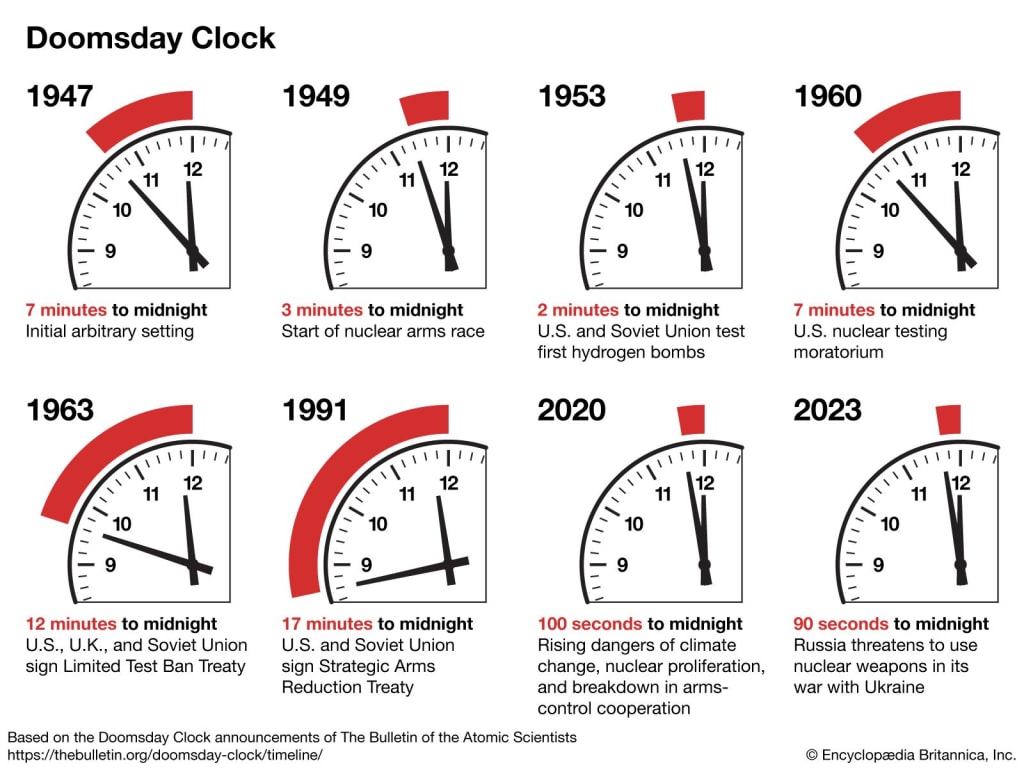
Scientists Update Their Prediction of How Close We Are to the End of the World.
In a world increasingly defined by climate crises geopolitical tensions and technological advancements the question of how close humanity is to the brink of collapse has never been more pressing. The Doomsday Clock a symbolic timepiece maintained by the Bulletin of the Atomic Scientists serves as a barometer for humanity’s proximity to global catastrophe. In 2023 scientists updated their prediction offering a sobering assessment of the risks we face. This article explores the latest update to the Doomsday Clock the factors influencing its movement and what it means for the future of our planet.
The Doomsday Clock A Brief History
The Doomsday Clock was first introduced in 1947 by the Bulletin of the Atomic Scientists a group of researchers who had worked on the Manhattan Project during World War II. Initially the clock was designed to represent the threat of nuclear war with midnight symbolizing global annihilation. Over time its scope expanded to include other existential threats such as climate change biological hazards and emerging technologies like artificial intelligence.
The clock’s hands are adjusted annually based on the assessment of leading scientists and experts. The closer the clock is to midnight the greater the perceived risk of global catastrophe. In 2023 the clock was set at 90 seconds to midnight the closest it has ever been to the symbolic point of no return.
The 2023 Update: 90 Seconds to Midnight
In January 2023 the Bulletin of the Atomic Scientists announced that the Doomsday Clock would remain at 90 seconds to midnight the same setting as the previous year. While the clock did not move forward this decision was far from reassuring. According to the Bulletin the lack of progress in addressing critical global threats has left humanity in a time of unprecedented danger.
The decision to keep the clock at 90 seconds to midnight reflects the ongoing and interconnected risks posed by nuclear weapons climate change and disruptive technologies. The Bulletin’s statement highlighted several key factors contributing to this precarious situation.
1) Nuclear Threats: The war in Ukraine has heightened tensions between nuclear armed states particularly Russia and NATO countries. Russia’s repeated threats to use nuclear weapons and the suspension of key arms control agreements have raised the specter of a nuclear conflict. Meanwhile North Korea continues to expand its nuclear capabilities and Iran’s nuclear program remains a source of international concern.
2) Climate Change: Despite growing awareness of the climate crisis global efforts to reduce greenhouse gas emissions have fallen short. The world is on track to exceed the Paris Agreement’s target of limiting global warming to 1.5°C above pre industrial levels with devastating consequences for ecosystems food security and human health. Extreme weather events, such as hurricanes wildfires and floods are becoming more frequent and severe underscoring the urgency of the situation.
3) Biological Risks: The COVID 19 pandemic exposed the world’s vulnerability to biological threats. While the immediate crisis has subsided the risk of future pandemics remains high due to factors such as zoonotic disease transmission antimicrobial resistance, and inadequate global health infrastructure.
4) Emerging Technologies: Advances in artificial intelligence cyber warfare and biotechnology present both opportunities and risks. Misuse of these technologies could lead to unintended consequences including the destabilization of societies the erosion of privacy, and the potential for catastrophic accidents.
A Call to Action
The Bulletin of the Atomic Scientists emphasizes that the Doomsday Clock is not meant to inspire despair but to spur action. The organization calls on world leaders scientists and citizens to take immediate steps to address the existential threats facing humanity.
Nuclear Disarmament: Renewing diplomatic efforts to reduce nuclear arsenals and strengthen arms control agreements is essential to lowering the risk of nuclear war. Dialogue between the United States Russia and other nuclear armed states must be prioritized.
Climate Mitigation: Accelerating the transition to renewable energy investing in climate resilience and holding governments and corporations accountable for their emissions are critical to combating climate change. International cooperation as seen in the recent COP28 summit must be intensified.
Pandemic Preparedness: Strengthening global health systems improving disease surveillance and ensuring equitable access to vaccines and treatments are vital to preventing future pandemics. The World Health Organization and other international bodies must be adequately funded and supported.
Responsible Innovation: Developing ethical guidelines and regulatory frameworks for emerging technologies can help mitigate their risks. Collaboration between governments industry and academia is necessary to ensure that technological advancements benefit humanity as a whole.
The Role of the Public
While governments and institutions play a crucial role in addressing global threats individuals also have the power to make a difference. Raising awareness advocating for policy changes and adopting sustainable practices are ways that ordinary citizens can contribute to a safer and more equitable world. The Bulletin of the Atomic Scientists encourages people to engage with these issues and hold leaders accountable for their actions or inaction.
The Doomsday Clock’s setting of 90 seconds to midnight is a stark reminder of the fragility of our world. It underscores the urgent need for collective action to address the existential threats that loom over humanity. While the challenges are immense they are not insurmountable. By working together we can turn back the clock and build a future defined by peace sustainability and resilience. The time to act is now before it’s too late.
About the Creator
Adnan Rasheed
Author & Creator | Writing News , Science Fiction, and Worldwide Update| Digital Product Designer | Sharing life-changing strategies for success.
Keep reading
More stories from Adnan Rasheed and writers in The Swamp and other communities.
Lana Del Rey and Selena Gomez: The Truth Behind Immigration Debate Rumors
Lana Del Rey and Selena Gomez: The Truth Behind Immigration Debate Rumors In a recent viral video Selena Gomez expressed her emotional response to former President Donald Trump’s strict immigration policies. The video which quickly circulated across social media platforms showed the singer tearing up as she criticized the separation of children from their families and their subsequent deportation. This incident reignited discussions on immigration issues drawing widespread attention and sparking a mix of support and criticism.
By Adnan Rasheed12 months ago in The Swamp
The Devil's Cut
“Comrade, finally you’re awake.” The voice was smooth, sensual. A flickering incandescent bar was all that lit the white, sterile room. All Vladimir remembered was everything going black. He tried to move his arms and found them strapped to the gurney.
By Matthew J. Fromm5 days ago in Fiction



Comments (2)
Hello, just wanna let you know that if we use AI, then we have to choose the AI-Generated tag before publishing 😊
Fascinating predictions! Good work