
Saudi Aramco’s Berri Oilfield Targeted by Drone Attack
Drone strike near key Saudi oilfield raises fears over security of global energy supplies. Attack on major Aramco facility highlights rising threats to Gulf oil infrastructure. Security concerns grow after drones target strategic oil production site in eastern Saudi Arabia. Incident at Berri oilfield underscores vulnerability of critical energy facilities. Tensions in the Middle East spill into energy sector with drone strike on Saudi oil operations.

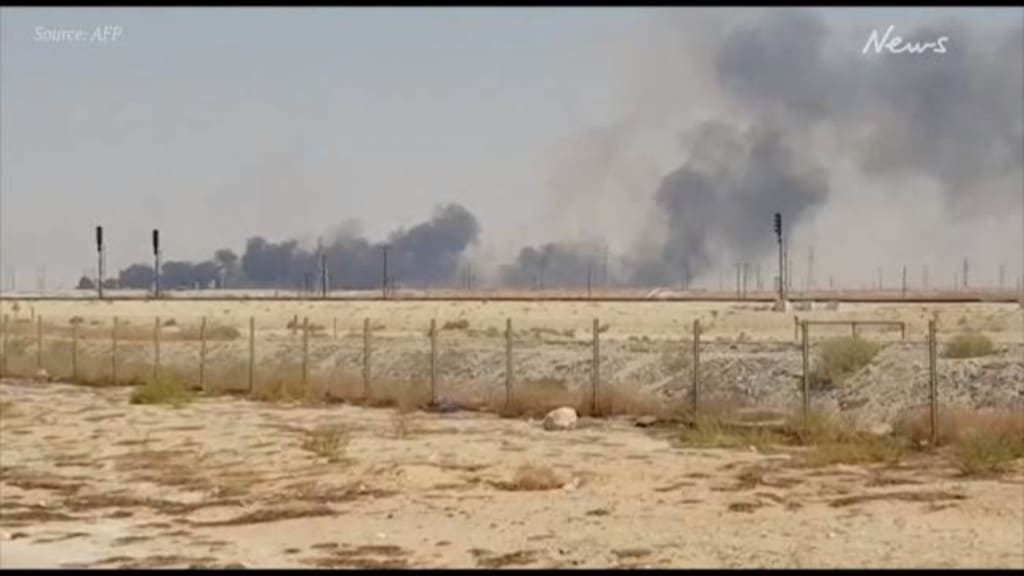
A drone attack targeting a major oil facility operated by Saudi Aramco has heightened fears about the vulnerability of energy infrastructure in the Gulf region. The incident reportedly struck near the Berri Oilfield, one of Saudi Arabia’s significant production sites located along the eastern coastline of the kingdom.
According to regional security sources, several unmanned aerial vehicles approached the oilfield during the early hours of the morning, triggering air defense responses. While Saudi authorities have not confirmed the full extent of the damage, initial reports suggest that the attack caused limited disruption to operations. Emergency teams were quickly deployed to assess the site and ensure that production systems remained intact.
The Berri oilfield plays a strategic role in Saudi Arabia’s energy sector. Situated in the Eastern Province, the field contributes a substantial portion of crude oil output and is connected to key processing facilities and export terminals. The facility is also close to important shipping routes that move millions of barrels of oil toward global markets each day.
Security analysts believe the drone strike represents another example of how energy infrastructure has become a frequent target amid ongoing tensions in the Middle East. Oil facilities across the region have faced periodic threats from armed groups and geopolitical rivalries, particularly during periods of heightened regional conflict.
Although no group immediately claimed responsibility for the attack, speculation quickly emerged among regional observers. Previous incidents targeting Saudi energy installations have been linked to the Houthi movement, which has carried out missile and drone operations against Saudi territory during the prolonged conflict in Yemen. However, officials emphasized that investigations are still underway and that attribution has not been confirmed.
Saudi Aramco released a brief statement acknowledging the incident while reassuring global markets that oil production remains stable. “The company’s facilities are operating normally, and there has been no significant interruption to supply,” a spokesperson said. The statement also noted that safety procedures were activated immediately after the drones were detected.
The attack has once again highlighted the strategic importance of Saudi Arabia’s energy infrastructure to global oil supply. As the world’s largest oil exporter, the kingdom plays a crucial role in balancing international energy markets. Any disruption to its production or export capacity can quickly influence global oil prices.
Energy markets reacted cautiously to the reports. Traders monitored developments closely, with oil prices showing slight volatility as investors weighed the potential impact on supply chains. Analysts noted that even minor incidents near major oilfields can generate uncertainty, particularly during periods of geopolitical instability.
The Gulf region has experienced several high-profile attacks on oil infrastructure in recent years. Perhaps the most dramatic occurred in 2019 when drones and missiles struck major processing facilities, temporarily disrupting a significant portion of Saudi oil output. That event demonstrated how relatively small unmanned systems could threaten critical energy assets.
Since then, Saudi Arabia has invested heavily in advanced defense systems designed to detect and intercept drones and missiles before they reach strategic installations. These measures include enhanced radar coverage, improved air defense coordination, and additional physical protection around vital facilities.
Despite these precautions, security experts say the evolving nature of drone technology continues to pose challenges. Smaller, low-flying drones can sometimes evade traditional defense systems, making them an increasingly attractive tool for groups seeking to disrupt energy infrastructure.
For Saudi Arabia, protecting facilities like the Berri oilfield is essential not only for national revenue but also for maintaining stability in global energy markets. The country remains a central player within OPEC, where production decisions influence oil prices worldwide.
Investigations into the latest attack are ongoing, with Saudi authorities working alongside regional security partners to determine how the drones reached the area and whether additional threats remain. Officials have promised to strengthen defensive measures around strategic oil infrastructure if necessary.
While the immediate damage appears limited, the incident underscores the fragile security environment surrounding some of the world’s most critical energy resources. For global markets and policymakers alike, the attack serves as a reminder that geopolitical tensions in the Middle East can quickly ripple across international energy supply chains.
About the Creator
Fiaz Ahmed
I am Fiaz Ahmed. I am a passionate writer. I love covering trending topics and breaking news. With a sharp eye for what’s happening around the world, and crafts timely and engaging stories that keep readers informed and updated.
Keep reading
More stories from Fiaz Ahmed and writers in The Swamp and other communities.
Global Trade’s Lifelines: 6 Shipping Lanes That Keep the World Economy Moving
Maritime shipping lanes are the unsung lifelines of global trade. Roughly 90% of the world’s goods—from electronics and oil to food and raw materials—travel by sea, navigating a network of strategic shipping corridors that connect producers to consumers across continents. Disruptions along these routes can ripple across the global economy, impacting supply chains, energy prices, and trade flows. Here are six critical shipping lanes that underpin international commerce: 1. The Strait of Hormuz Located between Oman and Iran, the Strait of Hormuz is a narrow passage through which roughly 20% of the world’s oil supply passes. Tankers from Gulf nations rely on this corridor to transport crude to Europe, Asia, and the Americas. Heightened regional tensions can quickly drive up oil prices, as recent conflicts and military posturing have shown. 2. The Suez Canal The Suez Canal connects the Mediterranean Sea to the Red Sea, allowing ships to bypass the lengthy voyage around Africa’s Cape of Good Hope. The canal handles approximately 12% of global trade, making it one of the most strategically important maritime routes. The 2021 blockage by the container ship Ever Given demonstrated how a single incident can stall billions of dollars in goods. 3. The Strait of Malacca Between Malaysia and Indonesia, the Strait of Malacca serves as the main artery for ships traveling between the Indian Ocean and the Pacific. Around 25% of all traded goods pass through this narrow channel, including oil, electronics, and commodities. Its vulnerability to congestion or piracy has prompted constant monitoring and security initiatives. 4. The Panama Canal Connecting the Atlantic and Pacific Oceans, the Panama Canal facilitates the rapid movement of goods between Asia and the Americas. For decades, the canal has shortened transit times and reduced fuel costs for shipping companies. Recent expansions allow larger vessels to pass through, accommodating the growth of global containerized trade. 5. The English Channel One of the busiest shipping lanes in the world, the English Channel links the United Kingdom to continental Europe. Nearly 500 ships pass daily, carrying everything from raw materials to finished products. Its strategic position near Europe’s industrial and financial hubs makes it crucial for European commerce, especially during Brexit-related logistical shifts. 6. The Bab el-Mandeb Strait Connecting the Red Sea to the Gulf of Aden, the Bab el-Mandeb Strait sits between Djibouti and Yemen. About 4.8 million barrels of oil daily flow through this route, alongside other key commodities. Regional instability, piracy, and conflict in nearby areas have raised concerns over potential disruptions. Why These Routes Matter Global shipping lanes are not just pathways for goods—they are economic arteries that sustain industry, employment, and geopolitical influence. Even minor blockages can trigger cascading effects, delaying shipments, inflating prices, and disrupting production cycles. For instance, disruptions in the Suez Canal or Strait of Hormuz often lead to surging oil prices and logistical bottlenecks worldwide. Shipping companies, governments, and international organizations invest heavily in monitoring, securing, and maintaining these corridors. Advances in maritime technology, satellite navigation, and coordinated international patrols help mitigate risks such as piracy, geopolitical tensions, and accidents. Challenges Ahead Despite these safeguards, global shipping remains vulnerable. Rising geopolitical tensions, climate change, and evolving security threats could jeopardize these vital routes. Analysts warn that the reliance on a handful of narrow corridors makes the global economy susceptible to unforeseen shocks. Diversifying routes and improving maritime infrastructure are considered key strategies for resilience. The lifelines of global trade are more than just shipping lanes—they are critical components of the modern economy, linking markets, nations, and people. Protecting them ensures not only the smooth flow of goods but also global economic stability, energy security, and international cooperation. As trade volumes continue to grow and international tensions rise, these six corridors will remain under scrutiny, reminding the world just how interconnected and fragile the modern global supply chain truly is.
By Fiaz Ahmed a day ago in The Swamp
Parallel Protests
I haven't written for quite some time, but I have A LOT of thoughts about yesterday's protest rally against our government's involvement and complicity in America's war on Iran, on the harbourside of my home city Bristol, and I need to put them somewhere. My gorgeous girlfriend is always a loving and listening ear and sharing it all with her will always be a healthy and happy way of processing the mental and emotional weight, but getting it straight in my brain to share means writing it all down in straight lines, so, here we are and thanks for being here.
By Steph Cole6 days ago in The Swamp
Amazon UAE Data Center Hit by Drone Attack
In an era where data powers economies and cloud computing underpins daily life, the idea that a data center could become a target of war feels unsettling. Yet this is exactly what happened when drone attacks damaged cloud facilities operated by Amazon in the Middle East. The incident, which struck data centers in the United Arab Emirates and neighboring Bahrain, marks a new chapter in how geopolitical conflict can disrupt not only physical infrastructure but also the digital services millions rely on every day.
By Sajida Sikandar5 days ago in The Swamp



Comments
There are no comments for this story
Be the first to respond and start the conversation.