
Salma al Shehab's Release Punishment for Raising Her Voice for Women's Rights in Saudi Arabia.
Salma Al Shihab Release

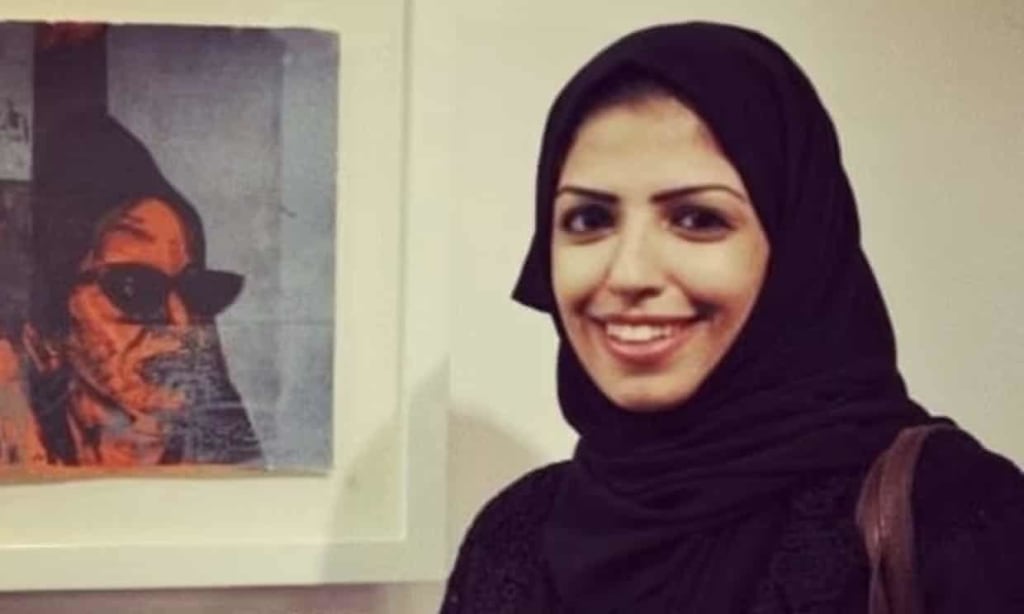
Salma al Shehab's Release Punishment for Raising Her Voice for Women's Rights in Saudi Arabia.
Salma al Shehab a Leeds University dental student and mother of two has been released from prison in Saudi Arabia after being sentenced to an astonishing 34 years in jail for tweets supporting women’s rights. Her release while a significant development comes with ongoing challenges including a travel ban that prevents her from leaving Saudi Arabia and reuniting with her children in the UK. Al Shehab’s case has drawn international attention and condemnation shedding light on the Saudi government’s relentless crackdown on dissent, particularly against women activists and members of the Shia Muslim minority to which she belongs.
Al Shehab was arrested in January 2021 while on holiday in Saudi Arabia. Her crime. Posting and retweeting messages advocating for women’s rights and expressing solidarity with prominent Saudi women’s rights activists including Loujain al Hathloul who was also imprisoned for her activism. Initially sentenced to six years in prison al Shehab’s punishment was shockingly increased to 34 years in 2022 following an appeal by prosecutors. They accused her of using social media to cause public unrest and destabilize civil and national security. This draconian sentence which also included a 34 year travel ban was widely denounced by human rights organizations as one of the longest ever imposed on a peaceful activist in Saudi Arabia.
Her release though a relief to her family and supporters is bittersweet. Al Shehab remains under a travel ban meaning she cannot return to the UK to continue her studies or reunite with her two young children who have been living in Leeds without her. Lina al Hathloul head of monitoring and advocacy at the ALQST human rights organization and sister of Loujain al Hathloul emphasized the emotional and psychological toll of the travel ban. “The travel ban is a tool to keep people in constant fear. It’s a heavy burden a constant threat of potential arrest and it’s unbearable for those living under it she said. Al Hathloul also revealed that al Shehab’s husband divorced her while she was in prison a pattern she noted is common among women activists in Saudi Arabia where divorces are often filed without the women’s knowledge or consent. She is being released under very sad circumstances, but it is still better than spending 34 years in prison al Hathloul added.
The international community has been vocal in its criticism of al Shehab’s case. Brian Tronic of the US based NGO Freedom House described her sentencing as a grave miscarriage of justice and called for the immediate lifting of her travel ban. Al Shehab’s unjust and arbitrary punishment is emblematic of a fundamentally broken Saudi justice system where trials are not fair defendants have alarmingly few rights and allegations of torture and abuse by police and prison officials are commonplace he said. Amnesty International’s Middle East researcher Dana Ahmed echoed these sentiments stating that al Shehab’s imprisonment was solely for exercising her right to freedom of expression. She was jailed just because she tweeted in support of women’s rights and retweeted Saudi women’s rights activists. This is a blatant violation of international human rights law Ahmed said.
Saudi Arabia has not officially acknowledged al Shehab’s release and the Saudi embassy in London has not responded to requests for comment. The UK Foreign Office stated that it is monitoring the situation and remains committed to raising issues related to freedom of speech and human rights globally. Al Shehab’s case has also drawn attention to the plight of Saudi Arabia’s Shia Muslim minority, to which she belongs. Shia Muslims have long reported systemic discrimination in the Sunni majority kingdom and activists argue that her harsh sentence may have been influenced by her religious background. The Saudi government has consistently denied allegations of religious discrimination but Shia activists and international human rights groups have documented numerous cases of persecution including arbitrary arrests unfair trials and restrictions on religious practices.
While al Shehab’s release is a positive step human rights organizations have emphasized that many other activists remain imprisoned in Saudi Arabia for similar charges. Among them are individuals like Mohammed al Rabea a teacher sentenced to death for his social media activity and Nourah bint Saeed al Qahtani a woman sentenced to 45 years in prison for her tweets. These cases underscore the ongoing challenges faced by those advocating for reform in the kingdom particularly women who continue to face severe restrictions on their rights and freedoms. Despite Crown Prince Mohammed bin Salman’s efforts to present Saudi Arabia as a modernizing nation the reality for activists and dissidents remains grim.
The international community has been urged to maintain pressure on Saudi Arabia to release all political prisoners ensure fair trials and uphold human rights standards. For now al Shehab’s supporters are focused on securing her freedom to travel and reunite with her family as she seeks to rebuild her life and continue her academic pursuits. Her case serves as a stark reminder of the risks faced by those who dare to speak out in Saudi Arabia and the urgent need for systemic change in a country where freedom of expression remains a distant dream for many. As the world watches the battle for justice for Salma al Shehab and countless others continues with hope that their courage will one day lead to a more just and equitable society.
About the Creator
Adnan Rasheed
Author & Creator | Writing News , Science Fiction, and Worldwide Update| Digital Product Designer | Sharing life-changing strategies for success.
Keep reading
More stories from Adnan Rasheed and writers in The Swamp and other communities.
MrBeast’s Incredible Feat: Spending 100 Hours Inside the Great Pyramids and Burying $10,000 Worth of Gold in the Sphinx.
MrBeast’s Incredible Feat: Spending 100 Hours Inside the Great Pyramids and Burying $10,000 Worth of Gold in the Sphinx Famous YouTuber MrBeast whose real name is Jimmy Donaldson has once again stunned the world with his latest adventure. He spent 100 hours inside the Great Pyramids of Giza exploring secret locations that are usually off limits to the public. He documented this extraordinary journey on his YouTube channel leaving millions of viewers amazed. But that’s not all MrBeast took things to the next level by burying $10,000 worth of gold inside the Sphinx. This move sparked curiosity worldwide as ancient legends suggest that a hidden temple filled with gold lies beneath the Sphinx.
By Adnan Rasheed11 months ago in The Swamp
Popular Sports Apparel Retail Chain Files Chapter 11 Bankruptcy
In a surprising move that has sent shockwaves through the retail and sports industries, a popular sports apparel chain has filed for Chapter 11 bankruptcy. The announcement marks a major turning point for a brand that has long been a go-to destination for athletes and casual shoppers alike. While the company continues to operate during bankruptcy proceedings, the filing highlights broader challenges facing brick-and-mortar retail in an era of e-commerce and changing consumer habits.
By Muhammad Hassanabout 14 hours ago in The Swamp



Comments
There are no comments for this story
Be the first to respond and start the conversation.