
Russia Turns to India and Sri Lanka for a Way Out of Its Labor Crisis
🔹 Formal & News Style Moscow seeks South Asian workers to offset workforce shortages Labor agreements aim to ease pressure on Russia’s strained economy New migration strategy reflects shifting geopolitical ties Demographic decline forces Russia to look abroad for workers 🔹 Neutral & Analytical Why Russia is diversifying its migrant labor sources Economic strain drives outreach to India and Sri Lanka A new chapter in Russian labor migration 🔹 Catchy & Impactful A workforce from afar South Asia steps into Russia’s labor gap Searching for workers beyond Central Asia

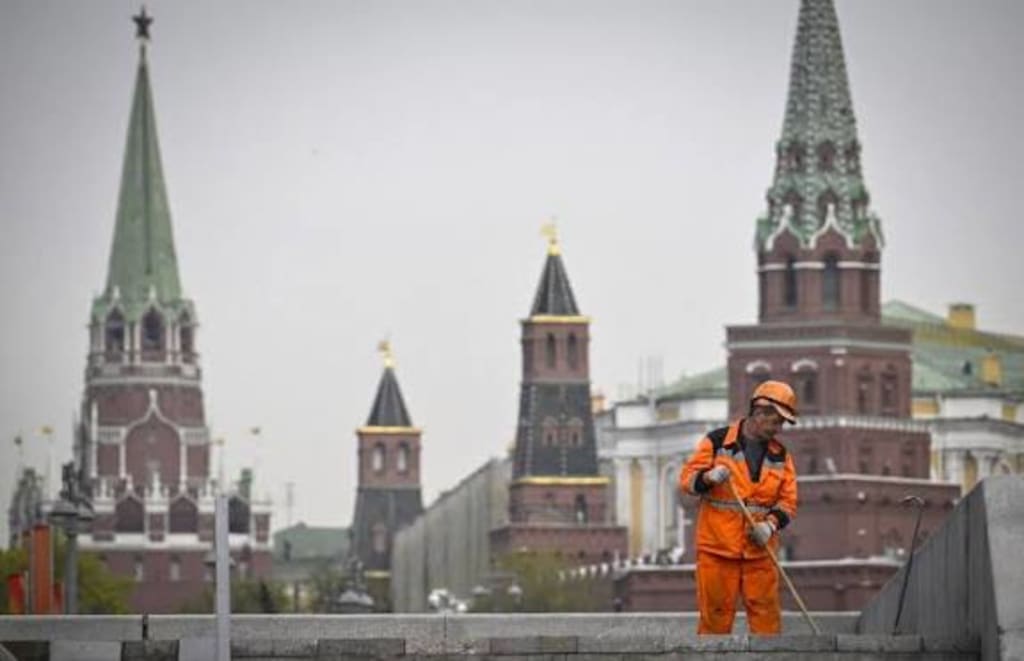
Russia is increasingly turning to South Asian countries, particularly India and Sri Lanka, to address a growing labor shortage that has begun to strain key sectors of its economy. Facing demographic decline, workforce losses linked to the war in Ukraine, and tighter migration rules for Central Asian workers, Moscow is seeking new sources of manpower to sustain construction, manufacturing, and service industries.
Officials in Russia have acknowledged that the country’s labor market is under severe pressure. With unemployment at historic lows and millions of workers absorbed into military service or defense-related industries, employers are struggling to fill vacancies. The government now views foreign labor recruitment as a strategic necessity rather than a temporary solution.
A Shift in Migration Strategy
For decades, Russia relied heavily on migrant workers from former Soviet republics such as Uzbekistan, Tajikistan, and Kyrgyzstan. These workers filled low-paying jobs in construction, transport, retail, and municipal services. However, stricter migration controls, rising social tensions, and security concerns have reduced the flow of labor from Central Asia.
In response, Russian companies and state agencies have begun exploring recruitment agreements with India and Sri Lanka, countries with large working-age populations and established overseas labor networks. Recent delegations and bilateral talks have focused on simplifying visa processes, setting up training centers, and ensuring language and skills preparation for potential workers.
An official from Russia’s Ministry of Labor said the goal is to create “orderly and regulated migration channels” that can meet economic needs while maintaining domestic stability.
Why India and Sri Lanka?
India offers a vast labor pool with experience in construction, engineering, healthcare, and information technology. Sri Lanka, meanwhile, has a long history of sending workers abroad, particularly to the Middle East, and has built systems to manage overseas employment.
Both countries are also seeking foreign job opportunities for their citizens as part of their economic strategies. Remittances from overseas workers are a crucial source of income for Sri Lanka, while India continues to promote international labor mobility through bilateral agreements.
Experts say Russia’s outreach reflects a broader realignment of labor markets driven by geopolitics. “Russia is diversifying its migrant workforce in the same way it has diversified its trade partners since Western sanctions intensified,” said a regional migration analyst. “South Asia is emerging as a key alternative.”
Economic Pressures at Home
Russia’s labor shortage is most visible in construction and manufacturing, where delays and rising wages have increased project costs. Major infrastructure developments and housing projects have slowed due to a lack of skilled and unskilled workers.
The service sector has also been affected, with restaurants, delivery companies, and municipal services reporting staff shortages. Employers have raised wages to attract domestic workers, but this has added to inflationary pressures.
Demographic trends further complicate the situation. Russia’s working-age population has been shrinking for years due to low birth rates and an aging society. The war in Ukraine has accelerated these trends by removing large numbers of men from the civilian workforce.
Challenges and Risks
While recruiting workers from India and Sri Lanka may ease immediate labor shortages, it also presents challenges. Language barriers, cultural differences, and legal protections for foreign workers must be addressed to prevent exploitation and workplace disputes.
Human rights groups have warned that migrant workers in Russia already face discrimination and limited access to legal support. Expanding recruitment without strong safeguards could increase vulnerability to abuse.
There are also political sensitivities. Some Russian politicians have expressed concern that large-scale migration could fuel social tensions. Balancing economic needs with domestic opinion will be a key test for the Kremlin.
Looking Ahead
Russia’s turn toward South Asia highlights the depth of its labor crisis and the country’s changing international relationships. If agreements with India and Sri Lanka move forward, they could reshape migration patterns that have long defined Russia’s workforce.
For Moscow, the priority is clear: keep its economy functioning despite demographic decline and geopolitical isolation. For India and Sri Lanka, the opportunity lies in providing jobs abroad while strengthening diplomatic ties with a major power.
Whether this strategy succeeds will depend on how well Russia manages integration, worker protections, and long-term demographic planning. What is certain is that labor migration has become another front in Russia’s effort to adapt to a rapidly changing global and domestic landscape.
About the Creator
Fiaz Ahmed
I am Fiaz Ahmed. I am a passionate writer. I love covering trending topics and breaking news. With a sharp eye for what’s happening around the world, and crafts timely and engaging stories that keep readers informed and updated.
Keep reading
More stories from Fiaz Ahmed and writers in The Swamp and other communities.
February 6, 2026 – Trump Administration News, Congress Still in Funding Stalemate
The Trump administration faced renewed pressure on Thursday as negotiations in Congress over federal funding remained deadlocked, raising the prospect of another partial government shutdown and intensifying political tensions in Washington. Despite several days of closed-door talks between congressional leaders and White House officials, lawmakers failed to reach an agreement on a spending package that would keep the government fully funded beyond the current deadline. The impasse reflects deep divisions over immigration enforcement, defense spending, and domestic program budgets. President Donald Trump addressed the situation briefly from the White House, urging Republicans and Democrats to “put the country first” while maintaining that his administration would not compromise on what he described as “essential national security priorities.” “We need a budget that protects our borders, supports our military, and respects taxpayers,” Trump said. “Congress must act responsibly.” Key Disputes Driving the Stalemate At the center of the disagreement is funding for border security and immigration enforcement. Republicans are pushing for expanded allocations for physical barriers and increased staffing at the southern border, while Democrats are insisting on protections for social programs and humanitarian aid for migrants. Another major obstacle is defense spending. Senate Republicans have proposed a significant increase in military funding, citing global security challenges, while House Democrats argue that the proposal would come at the expense of healthcare, education, and environmental initiatives. The result has been a stalemate that neither side appears willing to break without concessions from the other. “Right now, both parties are entrenched,” said one senior congressional aide familiar with the negotiations. “There’s very little trust, and every issue has become symbolic of a much larger political fight.” Economic and Public Impact If a deal is not reached soon, hundreds of thousands of federal employees could face furloughs, and key government services may be disrupted. Previous shutdowns have affected air travel, national parks, and processing of federal benefits. Business leaders and economists have warned that prolonged uncertainty could slow economic growth and rattle financial markets already coping with inflation concerns and international instability. “This is not just a political issue,” said an economist at a Washington-based policy institute. “It has real consequences for families, workers, and investor confidence.” Public opinion polls suggest growing frustration with both parties. Many Americans blame Congress for failing to compromise, while others point to the White House’s firm stance on immigration and spending as contributing to the gridlock. Political Strategy and Messaging The funding fight also carries significant political implications for the Trump administration and congressional leaders ahead of upcoming midterm elections. Both sides are attempting to shape the narrative for voters. Republicans have framed the stalemate as evidence of Democratic resistance to border security and national defense. Democrats, meanwhile, accuse the administration of holding government operations hostage to advance partisan goals. House Minority Leader said in a statement that “Americans deserve stability, not manufactured crises,” while a senior Republican senator countered that “security and fiscal responsibility are not optional.” Behind the scenes, moderate lawmakers from both parties have tried to revive bipartisan talks, proposing short-term funding extensions to buy time for negotiations. So far, these proposals have failed to gain enough support. White House Response Administration officials say the president remains open to discussions but will not approve a budget that excludes key priorities. Senior advisers have held multiple meetings with congressional leaders, but no breakthrough has been announced. The Office of Management and Budget has begun preparing contingency plans in case a shutdown occurs, including guidance for federal agencies on essential services. “The president expects Congress to do its job,” a White House spokesperson said. “We are ready to sign a responsible funding bill as soon as one is sent to his desk.” Looking Ahead With the deadline approaching, pressure is mounting on lawmakers to reach at least a temporary agreement. Analysts warn that continued deadlock could deepen political polarization and further erode public trust in government institutions. For now, Washington remains in a familiar cycle of negotiations, accusations, and uncertainty. Whether compromise will emerge or another shutdown will unfold remains unclear. What is certain is that the funding stalemate has become a defining test for the Trump administration’s relationship with Congress — and a measure of how much cooperation is still possible in an increasingly divided political climate.
By Fiaz Ahmed a day ago in The Swamp
Why Black History Matters in America?
The United States of America is celebrating their 250th anniversary in 2026. I'm proud to be an American and as someone who was born here, I wouldn't imagine myself living anywhere else. This is a country where opportunities are possible. Where anyone can be successful in anything they desire to do. Equality, community, and togetherness are the backbones of what America is and should be about. However, we have an administration who wants to erase and disregard those who have made positive, meaningful impacts in our country, specifically Black figures, such as Martin Luther King, Jr., Rosa Parks, and Maya Angelou. President Trump and his administration have been constantly complaining and fighting against what they call the "Woke agenda". They use this excuse as a distraction from other issues they refuse to address, such as the high cost of living, climate change, and inflation. That equality is dividing America, when in reality, it's bringing us together. Being woke is not tied to a specific political party. No matter where you stand on the political spectrum, you can still care about other people and their plights. Compassion and empathy for others isn't tied to a political party, either. We were taught as children to treat others the way we want to be treated and not judge others because they're different from us. Caring about others isn't a personal attack on your beliefs. It doesn't make you any less of a person. People who are easily offended over African American figures, past or present, or anything related to it, are grasping at straws. Current and future generations need to know who people like Harriet Tubman and Shirley Chisholm were, especially in the classroom. Black History is part of American History. It should be recognized, not hidden or forgotten. Besides, you can't shield children from everything, just because your feelings are easily hurt.
By Mark Wesley Pritchard 7 days ago in The Swamp
Today’s Wordle Sunday February 8 – Hints, Clues, and Answer for #1695
Wordle has become more than just a word game — it’s a daily ritual for millions of players across the globe. Every morning, people grab their phones, open the New York Times Wordle page, and take on the challenge of solving a five-letter mystery in six tries or less. If you’re here searching for today’s Wordle Sunday February 8, you’re in the right place. In this blog, we’ll walk through Wordle #1695 step by step. You’ll find gentle hints, clever clues, and — if you scroll far enough — the final answer. Whether you’re stuck on your last guess or just want to confirm your win, this guide has you covered. What Is Today’s Wordle? For those new to the game, Wordle is a daily word puzzle where players must guess a secret five-letter word. After each guess, tiles change color to show how close you are: Green means the letter is correct and in the right spot Yellow means the letter is in the word but in the wrong position Gray means the letter is not in the word at all On Sunday, February 8, Wordle puzzle #1695 presents a word that’s deceptively simple yet tricky enough to trip up players who overlook repeated letters. Today’s Wordle #1695 – Hints Without Spoilers If you’re not ready to see the answer yet, start with these spoiler-free hints. They’re designed to guide you without giving everything away. General Hints The word contains five letters It starts with the letter “E” There are two vowels in the word One letter appears twice The word is commonly used as both a verb and a noun Meaning-Based Clue The word means to fix something firmly into a surrounding surface or to place something deeply within something else. If you’re still guessing, think about words related to inserting, planting, or attaching something securely. Strategy Tips for Solving Today’s Puzzle Sunday Wordles can feel slightly more challenging, especially if the solution includes repeated letters. Many players subconsciously avoid guessing words with double letters early on, which can slow progress. Here’s how you could logically approach Wordle #1695: Start with a vowel-heavy word to identify common letters early Pay attention to tile feedback — yellow letters often give away the structure Don’t rule out repeated letters just because they didn’t appear in earlier guesses Think about word usage, not just spelling — Wordle often favors common everyday words If you noticed an early “E” showing up in green or yellow, that’s a strong signal in today’s puzzle.
By Jameel Jamaliabout 5 hours ago in The Swamp




Comments
There are no comments for this story
Be the first to respond and start the conversation.