
Russia Sends 3 Iranian Satellites into Orbit, Report Says — A Strategic Leap in Space Cooperation
“The mission highlights growing strategic cooperation between Russia and Iran in space technology and global influence.”

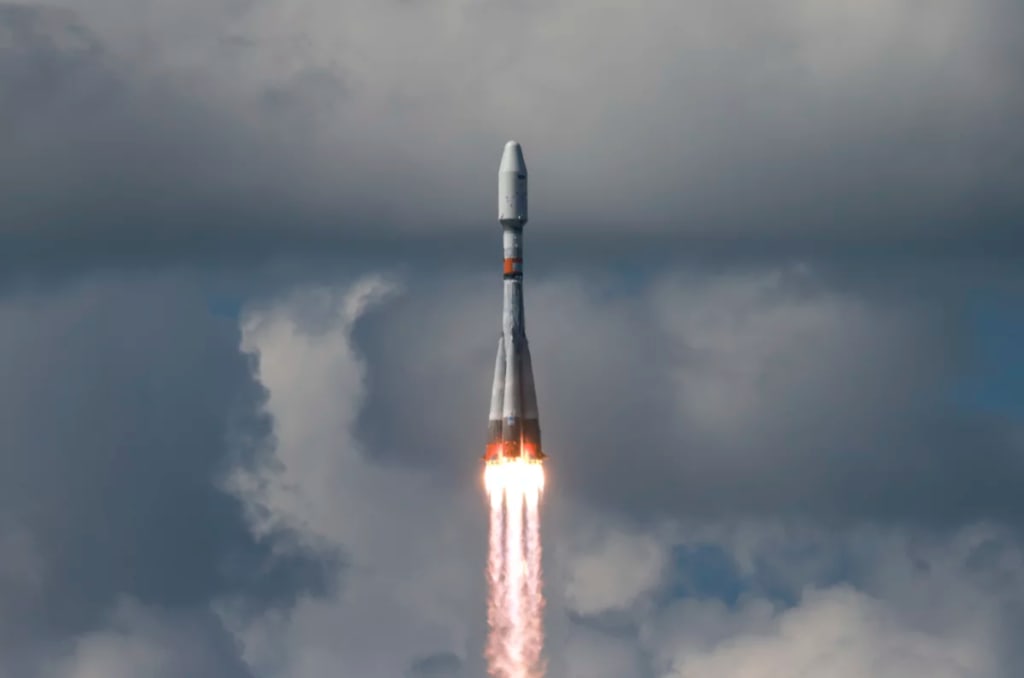
On December 28, 2025, Russia successfully launched and placed three Iranian satellites into orbit — marking another milestone in the expanding space cooperation between Moscow and Tehran. According to Iranian state television and multiple international news reports, the three satellites — Paya, Kowsar, and Zafar-2 — were lofted into space aboard a Russian Soyuz-2.1b rocket from the Vostochny Cosmodrome in Russia’s Far East. �
AP News +1
This mission represents the second time in 2025 that Russia has helped Iran deploy satellites into orbit, underscoring the deepening strategic partnership between the two nations. �
euronews
🚀 The Launch: Details and Significance
The Soyuz rocket carrying the Iranian payload took off from Vostochny, a key Russian spaceport designed to reduce dependency on the Baikonur Cosmodrome in Kazakhstan and to boost Russia’s independent space launch capabilities. �
AP News
Once in space, the satellites were placed into a low Earth orbit approximately 500 kilometres above the planet. Among the three:
Paya is the heaviest and most advanced of the group at about 150 kilograms, making it the largest Iranian satellite Iran has ever placed into orbit.
Kowsar weighs around 35 kilograms, while details on Zafar-2’s weight were not fully disclosed. �
KPBS Public Media
These satellites are designed primarily for remote sensing and communications — collecting imagery and data that can be used for agriculture, environmental monitoring, water resource management, and natural resource mapping. Their imaging capabilities reportedly offer resolution up to 3 metres, and they are expected to remain operational for several years. �
KPBS Public Media
🛰️ Iran’s Growing Space Ambitions
Iran’s space program has steadily advanced over the past decade despite significant international pressure and sanctions. While Iran has developed and launched its own small satellites in the past, its reliance on Russian launch services for orbit insertion continues to be a practical necessity — especially for larger and more sophisticated spacecraft. �
Iran News Daily
According to Iranian officials, the satellites were designed and built in Iran, reflecting growing domestic capabilities in spacecraft manufacturing. In comments following the launch, Iran’s Space Agency highlighted the role of universities, government agencies, and private companies in the satellites’ development — signaling a broader push to strengthen Iran’s space industry and indigenous technological expertise. �
Iran News Daily
This collaborative launch also marked one of the most complex multi-satellite deployments undertaken by the Iranian space program to date, as three domestically developed satellites were placed into orbit in a single mission. �
Tehran Times
🤝 Russia–Iran Strategic Ties in Space
The satellite launch was more than a scientific or technological achievement — it was a symbolic display of the growing Russo-Iranian alliance. The two countries signed a “strategic partnership” treaty earlier in 2025, and their cooperation has extended beyond space to include broader political and military dimensions. �
euronews
Russia’s willingness to support Iran’s space ambitions comes at a time of heightened tensions with the United States and some Western nations. Tehran has faced sustained criticism over its missile and satellite programs, which critics argue could have dual-use applications tied to ballistic missile development. U.S. officials have previously stated that Iran’s satellite launches could potentially violate United Nations Security Council resolutions related to missile technology — although related sanctions expired in 2023. �
GBH
By helping launch Iranian satellites, Russia is not just providing technical assistance — it is also sending a geopolitical message about its alliances and its role in shaping a multipolar world order in which Western influence, particularly that of the United States, is contested.
🌍 Broader Implications and Future Outlook
The mission reflects a broader trend in space cooperation where countries outside traditional Western-led space networks are forging new partnerships. Russia, which has faced its own challenges in maintaining global leadership in space, is seeking to leverage such collaborations to secure its position and sustain its launch industry amid geopolitical headwinds. �
euronews
For Iran, satellite capabilities — especially in Earth observation — have immediate civil and economic benefits, from monitoring agricultural output to responding to natural disasters. Long term, these technologies contribute to national pride and prestige, while gradually building a foundation for more advanced aerospace goals. �
KPBS Public Media
Looking ahead, observers will be watching whether Iran continues to expand its launch frequency, possibly diversifying beyond Russian boosters (such as developing indigenous launch vehicles) and how its evolving space program intersects with regional and global geopolitics.
🧠 Conclusion
The December 28 satellite launch marks a significant milestone for Iranian space ambitions and showcases a sophisticated level of Russia-Iran cooperation in space exploration. What began as a practical technical partnership has grown to embody broader geopolitical currents, reflecting deeper diplomatic ties and shared interests in an increasingly contested global landscape. With these three satellites now orbiting Earth, both nations have reaffirmed their commitment to expanding their presence beyond our planet — and to steering the future of space collaboration on their terms. �
euronews
About the Creator
Muhammad Hassan
Muhammad Hassan | Content writer with 2 years of experience crafting engaging articles on world news, current affairs, and trending topics. I simplify complex stories to keep readers informed and connected.
Keep reading
More stories from Muhammad Hassan and writers in The Swamp and other communities.
Tragedy Abroad: Canadian Couple Found Dead While Vacationing in the Dominican Republic
It was supposed to be a joyful holiday getaway for Alain Noël and Christine Sauvé, a loving couple from Gatineau, Quebec. Instead, what should have been a relaxing vacation turned into a heartbreaking tragedy. On Boxing Day, December 26, 2025, the couple was found dead in their vacation home in Villa Riva, Dominican Republic, leaving their family, friends, and community in shock. The Discovery According to family reports, the couple’s son discovered them unresponsive and immediately contacted local authorities. Initial information from officials confirmed that the deaths were sudden, and the exact cause remains unknown. While authorities have ruled out foul play, autopsies have been ordered, and results could take several weeks to arrive. Family members described the shock and confusion. Christine’s niece, Patricia Sauvé, called the situation “unimaginable,” noting that both Alain and Christine were healthy and active just days before. Even more heartbreaking, the couple had video-called family on Christmas Day, appearing cheerful and full of holiday spirit. Family Speaks Out Gilles Sauvé Jr., Christine’s brother, shared the family’s devastation publicly: “They died in their sleep during the night of December 25th to 26th. We are waiting for more information and ask for privacy during this very difficult time.” Global Affairs Canada has confirmed it is assisting the family and coordinating with local authorities. While consular assistance is in place, the department emphasized that details remain limited to protect the family’s privacy. Community Mourns The couple were well-loved in Gatineau. Friends remember Alain as a sociable, lively person who was always involved in local events, while Christine was known for her warmth and generosity. Many have taken to social media to share condolences, remembering the couple’s kindness and the positive impact they had on everyone around them. Their story has struck a chord, particularly because it happened during the holidays — a time usually reserved for family, joy, and celebration. The suddenness of their deaths has left loved ones struggling with grief and unanswered questions. What Happened? As of now, the cause of death remains unknown. Local authorities in the Dominican Republic have transported the bodies to the National Institute of Forensic Sciences in Santo Domingo for further examination. Family members report that officials indicated there is no evidence of suicide or murder, but the autopsy will provide more concrete answers. This uncertainty makes the situation even more painful. Family members are left not only mourning the loss but also waiting for closure, unsure of what exactly happened to their loved ones. Lessons for Travelers While this incident may be unique, it highlights the importance of health and safety while traveling abroad. The Dominican Republic is a favorite destination for Canadians and international tourists because of its beaches, warm climate, and cultural attractions. However, even routine health issues can become serious when far from home. Travel experts recommend that tourists: Carry comprehensive travel and medical insurance. Stay informed about local health and safety advisories. Maintain regular contact with family while abroad. Have emergency plans in place for unexpected situations. Even healthy individuals can face unexpected complications, and taking preventive measures can make a crucial difference in emergencies. Remembering Alain and Christine Alain and Christine had been planning to spend more of their retirement in the Dominican Republic. Their passing is a heartbreaking reminder of life’s fragility and the unpredictable nature of tragedy. Friends and family will remember their warmth, love for life, and commitment to family. While investigations continue and autopsy results are pending, the community is left in mourning. Messages of sympathy continue to pour in, showing just how many lives the couple touched. Conclusion The story of Alain Noël and Christine Sauvé is a sobering reminder that life can change in an instant. A simple vacation meant to be filled with joy became a story of loss and sorrow. As authorities in the Dominican Republic continue their investigation, the family hopes that answers will come soon. In the meantime, the world remembers a couple who lived life fully, touched hearts deeply, and are now gone far too soon. Travelers can learn from this tragedy — to cherish loved ones, take precautions, and appreciate every moment, because life is unpredictable, and sometimes, joy and heartbreak are closer than we think.
By Muhammad Hassan19 days ago in The Swamp
Here’s Where Trump’s Most Jaw-Dropping Promises Stand a Year Into His Second Term
It’s been a year since Donald Trump began his second term as President of the United States, and the results of his boldest, most jaw-dropping promises are starting to take shape—or fall flat. Some initiatives have already made waves in policy and media; others are stuck in bureaucracy, legal fights, or political gridlock. And a few have quietly faded from view.
By Aqib Hussainabout 17 hours ago in The Swamp
Miss Persephone's Manual to a Seemingly Ordinary Life
Miss Persephone was found at the dining table, her blue eyes swollen, her tears arriving and retreating like the tides of the ocean. Earlier that day, her family had visited her in the retirement home where she had lived for eight years. It was her eightieth birthday.
By Imola Tóth3 days ago in Fiction




Comments
There are no comments for this story
Be the first to respond and start the conversation.