
Russia Breaks Global Consensus: First to Recognize Taliban Rule in Afghanistan
Moscow’s Bold Diplomatic Shift Sparks Debate Over Legitimacy, Stability, and Strategic Interests in the Region

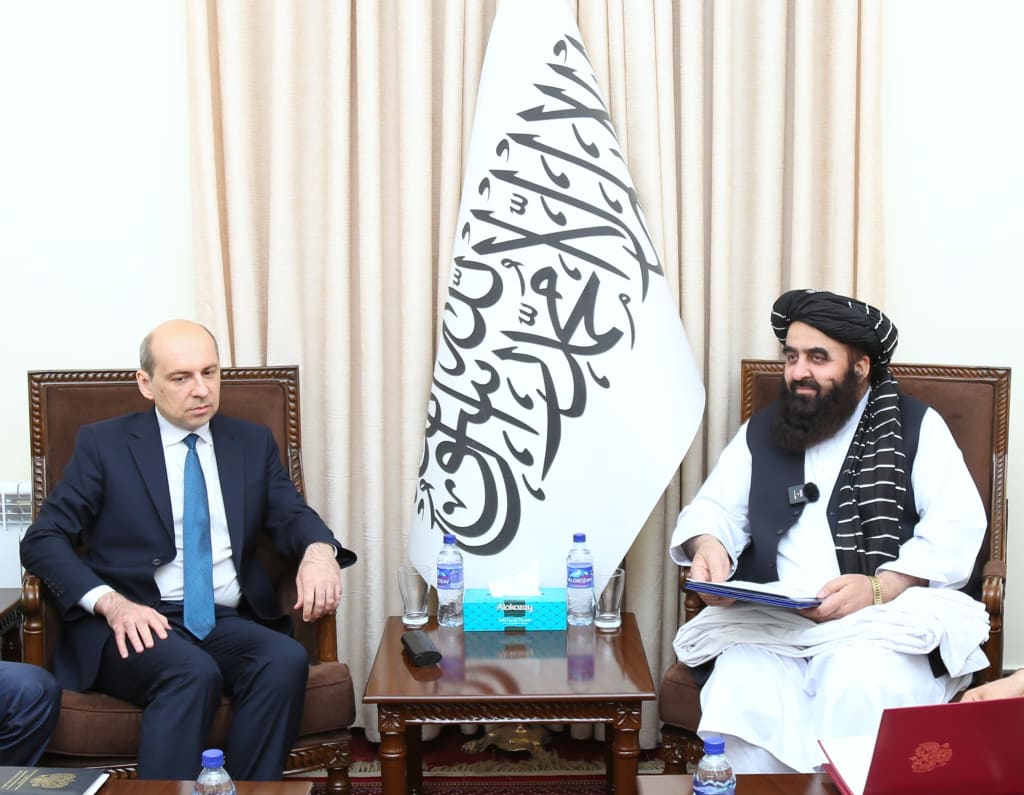
In a move that marks a significant turning point in regional geopolitics, Russia has officially recognized the Taliban-led government in Afghanistan—becoming the first major world power to do so. While the decision has generated diverse reactions across the international community, many analysts view it as a bold and pragmatic step that may help usher in a new era of stability, economic recovery, and diplomatic engagement in a long-troubled region.
Since the Taliban returned to power in August 2021 following the withdrawal of U.S. and NATO forces, the world has been grappling with how to respond to Afghanistan’s new reality. Most Western nations have chosen a wait-and-see approach, suspending formal diplomatic ties and financial support until the Taliban fulfills certain conditions regarding human rights, especially women’s rights and political inclusivity.
Russia’s move diverges from this approach ot out of ideological alignment, but out of geopolitical realism and strategic foresight.
Pragmatism Over Isolation
Russian officials emphasized that their decision was driven by the need to engage with the de facto authorities in Afghanistan, rather than pretend an alternative power structure exists. According to Russian Foreign Ministry spokesperson Maria Zakharova, “Afghanistan is our neighbor in the broader region, and we cannot afford instability on our southern flank. Recognition is not an endorsement—it is a means of fostering dialogue, security, and regional cooperation.”
By establishing formal ties, Russia positions itself as a key player in shaping Afghanistan’s future while safeguarding its own interests. From preventing cross-border terrorism to facilitating trade routes through Central Asia, Moscow is aiming to stabilize the region rather than leave it in diplomatic limbo.
A Humanitarian and Economic Lifeline
With Afghanistan facing ongoing humanitarian challenges, formal recognition opens pathways for international aid and economic collaboration. The country’s economy, heavily reliant on foreign aid prior to 2021, has faced a steep decline due to sanctions and frozen assets. Russia's recognition could act as a catalyst for renewed engagement by other nations, especially in Asia and the Middle East, who might now consider establishing trade and development partnerships with Kabul.
Russia has already hinted at opportunities for energy cooperation, infrastructure development, and agricultural support. In fact, shipments of Russian wheat, oil, and gas to Afghanistan have increased in recent months, ensuring food and energy security for millions of Afghans. With official diplomatic ties in place, such transactions can now occur within a framework that ensures transparency, accountability, and mutual benefit.
A Strategic Move for the Region
Russia’s decision also reflects a broader shift in global alliances. In a multipolar world, where new regional coalitions are emerging, countries are increasingly making decisions based on local realities rather than Western political consensus.
Russia is not alone in its outreach. Several neighboring countries, including China, Iran, Pakistan, and some Central Asian republics, have maintained varying levels of engagement with the Taliban administration—primarily due to shared borders and strategic interests.
By formally recognizing the Taliban, Russia might become the first domino to fall in a chain that could eventually lead to wider diplomatic recognition from regional powers. This, in turn, could encourage the Taliban to engage more constructively with international expectations, particularly in the areas of governance, education, and human rights.
Encouraging Moderation Through Engagement
One of the central arguments in favor of recognition is the idea that constructive engagement can do more to influence a government’s behavior than isolation ever could. Critics of the Taliban point to the group’s history of rigid policies and human rights abuses, especially during its previous rule in the 1990s. But today's Taliban, despite criticism, has shown signs—however limited of seeking international legitimacy.
Russia’s move can serve as leverage, giving Moscow the ability to encourage internal reforms through diplomacy rather than pressure. Officials have already hinted at continuing discussions on women’s rights, inclusive governance, and counterterrorism cooperation.
“If we engage them diplomatically, we can raise these issues with credibility and consistency,” said a senior Russian diplomat. “Isolation hasn’t worked in the past. Constructive diplomacy might."
Potential Road to International Recognition
While Russia’s decision may not immediately shift the global stance, it breaks the ice. It sets a precedent that diplomacy can adapt to real-world power structures, even those that emerge from conflict and upheaval. Over time, this step could help normalize Afghanistan’s position in international institutions, aid forums, and trade organizations—something that will be essential for the long-term welfare of its people.
Afghanistan, under Taliban rule, remains a complex and evolving case. But no progress can be made without dialogue and a seat at the table. Russia has taken the first step, not out of approval, but out of strategic necessity and hope for regional peace.
Thoughts: First Step Toward Normalization
In recognizing the Taliban government, Russia has made a decisive diplomatic move that many believe could spark new discussions on how to deal with de facto authorities in post-conflict states. By breaking from the global consensus, Moscow has taken a risk—but perhaps one that could lead to greater stability, humanitarian relief, and a more engaged Afghanistan.
The road ahead will be complex, but recognition offers a platform for accountability and progress something that isolation has failed to achieve. As the world watches closely, Russia’s bold step may prove to be the start of a more practical and peace-driven approach to one of the world’s longest-running crises.
About the Creator
Mr Khan
Fitness, Sports, Culture & Trending
The Forsyth House Fire
Since 1851, Forsyth House has stood on the corner of Union Street and Gordon Street in the heart of Glasgow. Its iconic, or was... because on Sunday 8th of March, 2026, a fire broke out in a small, seemingly un-named shop in the building and tore all that history down. As I write, the rubble is still unsettled and the street is still blocked off. Central Station is quiet on the upper level, and around 30 small businesses have quite literally gone up in smoke.
By S. A. Crawford3 days ago in The Swamp
Drone Strike Has Cyprus, and Europe, on Edge
A recent drone strike near the coast of Cyprus has sent shockwaves across the Eastern Mediterranean, raising alarm in both the island nation and broader Europe. The attack, which targeted a maritime installation in the southern part of the island, has heightened fears of escalating regional conflict and underscored the vulnerability of critical infrastructure to unmanned aerial threats. The strike occurred late on a Wednesday evening, when residents reported hearing explosions and seeing plumes of smoke rising near the port city of Limassol. Authorities confirmed that the attack involved a sophisticated drone, capable of carrying explosive payloads, which struck a naval logistics facility. Preliminary reports suggest significant structural damage, though early assessments indicate that there were no immediate civilian casualties. Government officials in Cyprus have condemned the strike as a deliberate attempt to destabilize the region. “This was an act of aggression aimed at our sovereignty and the safety of our people,” said the Cypriot Minister of Defense. The attack has triggered an urgent review of the island’s air defense capabilities, as military planners seek to prevent further incidents. Security analysts note that the incident marks a worrying escalation in the use of unmanned aerial vehicles (UAVs) in the Eastern Mediterranean, a region already fraught with complex geopolitical tensions. Cyprus has long been at the crossroads of competing interests, including the presence of NATO allies, Russian influence, and ongoing disputes over energy exploration in the surrounding waters. European capitals have reacted with concern. Brussels issued a statement urging calm and calling for a thorough investigation into the incident. Officials emphasized the need for collective security measures and intelligence sharing to prevent the proliferation of drone attacks targeting critical infrastructure. The European Union’s foreign policy chief warned that the incident highlights “the growing threats posed by remote and unmanned systems to civilian and military sites alike.” Military sources say the drone used in the attack appears to have been highly advanced, featuring long-range capabilities and precision targeting. This suggests the involvement of a state actor or a well-funded non-state group with access to sophisticated technology. Intelligence agencies across Europe are reportedly coordinating to trace the origin of the strike and identify potential networks responsible for the operation. The attack has prompted heightened vigilance at ports, airports, and military installations across Cyprus and neighboring countries. Naval patrols have been intensified, and early-warning systems are being upgraded to detect low-flying UAVs. Analysts warn that the incident may set a precedent for future drone operations in contested waters, raising the stakes for regional security. In addition to immediate defense concerns, the strike has had economic implications. Limassol’s port is a hub for shipping and trade, and temporary disruptions caused by the attack have delayed cargo operations and forced companies to reroute shipments. Energy markets are also watching closely, given Cyprus’s role in Eastern Mediterranean gas exploration and the strategic importance of offshore pipelines. Some experts note that the attack reflects a broader trend in modern conflict, where unmanned systems are increasingly used for asymmetric operations. Drones offer the ability to strike targets with precision while minimizing risk to personnel, making them attractive tools for state and non-state actors alike. Europe, with its densely populated and technologically advanced infrastructure, is considered particularly vulnerable to such tactics. In response to the strike, Cyprus has increased collaboration with NATO partners, including joint air and maritime surveillance operations. European defense ministers are reportedly reviewing the deployment of counter-UAV systems, as well as policies for rapid intelligence sharing to prevent similar incidents. The attack has also sparked public concern and calls for stronger regional security cooperation. Citizens in Limassol and other coastal cities have expressed anxiety over the possibility of further strikes, with local authorities urging calm while reassuring residents that protective measures are being implemented. For Europe, the incident serves as a stark reminder of the changing nature of security threats in the 21st century. As drones and other unmanned systems become more accessible and sophisticated, nations face an evolving challenge: defending critical infrastructure against attacks that can be carried out with speed, stealth, and limited warning. While investigations continue, the Cypriot government has vowed to hold those responsible accountable and has called on international partners to support efforts to secure the Eastern Mediterranean. Analysts agree that the implications of this drone strike extend beyond Cyprus, raising urgent questions about the security of vital facilities and the broader stability of the region. The coming weeks will likely see increased surveillance, tighter security measures, and heightened diplomatic activity as European nations respond to the incident. For Cyprus, the attack has underscored the need for vigilance, resilience, and collaboration in an era where the skies above strategic waters can carry both commerce and conflict.
By Fiaz Ahmed 3 days ago in The Swamp


Comments
There are no comments for this story
Be the first to respond and start the conversation.