
Royal Navy Achieves Historic First: Warship Destroys Supersonic Missile in Live-Fire Test
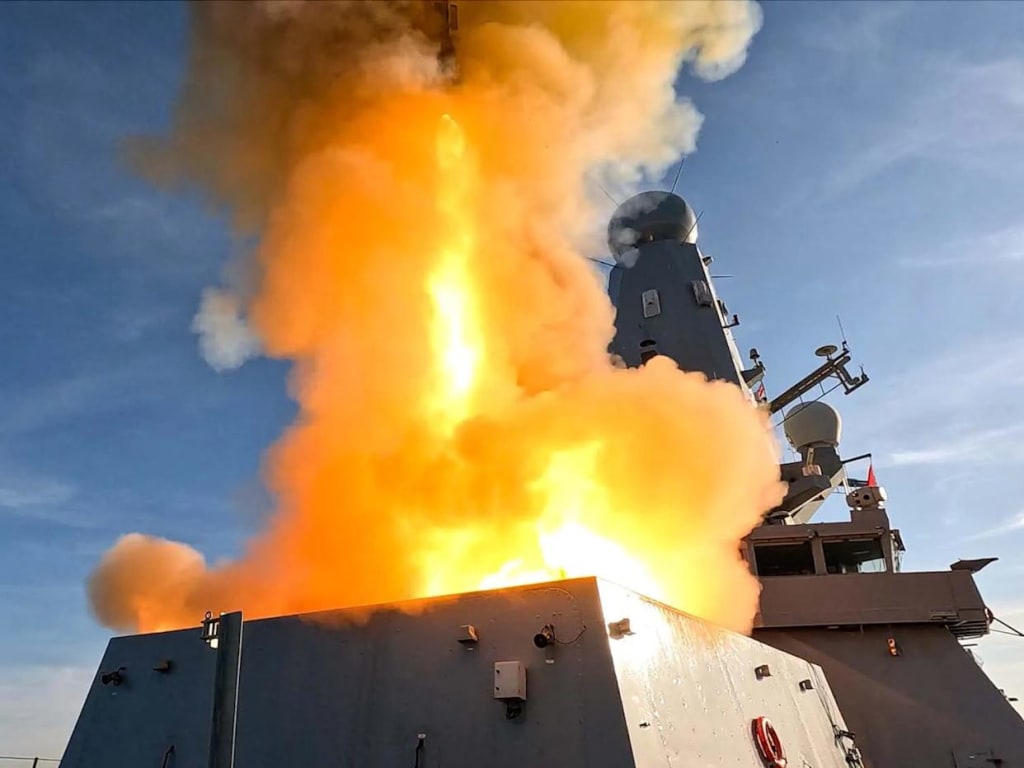
"HMS Dragon makes history as it becomes the first Royal Navy warship to intercept and destroy a high-speed supersonic missile during NATO's Formidable Shield exercise."

Royal Navy Achieves Historic First: Warship Destroys Supersonic Missile in Live-Fire Test
In a landmark achievement that marks a new era in naval defense capabilities, one of the Royal Navy’s most advanced warships, HMS Dragon, successfully shot down a supersonic missile during a high-stakes military exercise. The interception, a first in the Royal Navy’s history, occurred during NATO’s Exercise Formidable Shield 2025 and has been hailed as a “historic first” in British maritime defense.
The Exercise: Formidable Shield 2025
The interception took place as part of Exercise Formidable Shield 2025, a multinational training drill involving 11 NATO allies. Conducted in the waters off the coasts of Norway and Scotland, the drill aims to test and improve integrated air and missile defense systems. Participating forces engage in complex scenarios that simulate real-world threats, from ballistic missiles to hypersonic projectiles.
This year’s exercise was particularly significant, as it included the live firing of a high-speed, maneuvering supersonic target. This type of missile, capable of traveling at speeds exceeding Mach 4 (more than 3,000 mph), poses a serious challenge to modern warships due to its rapid pace and evasive movement.
HMS Dragon and the Sea Viper Missile System
HMS Dragon, a Type 45 Daring-class destroyer, led the groundbreaking mission. Equipped with the highly advanced Sea Viper missile defense system, HMS Dragon is one of the most sophisticated vessels in the Royal Navy’s arsenal. The Sea Viper system integrates the Sampson multi-function radar and Aster missile interceptors, capable of detecting, tracking, and destroying aerial threats at incredible speeds.
As the supersonic missile hurtled toward its simulated target, HMS Dragon’s crew tracked it using Sampson’s state-of-the-art radar. Within seconds, the ship launched an Aster missile which successfully intercepted and destroyed the incoming projectile in mid-air. The interception marked the first time a Royal Navy vessel has neutralized a missile of such velocity and complexity.
A Significant Technological Milestone
Experts say the test proves the Royal Navy is ready to counter modern aerial threats, including cruise missiles and emerging hypersonic technologies. Captain Charles Kilgour, commanding officer of HMS Dragon, expressed pride in the crew and the system’s performance: “This was a landmark moment not just for HMS Dragon, but for the entire Royal Navy. The Sea Viper system has shown its ability to neutralize the most challenging of threats. This success reinforces our commitment to defending UK interests and supporting our NATO allies.” Rear Admiral James Morley, a senior Royal Navy official overseeing the exercise, added that the test demonstrates the United Kingdom's commitment to maintaining maritime superiority through continuous innovation and technological advancement.
Implications for Global Security
This successful interception sends a clear message about the capabilities of Western naval forces. As global tensions rise and new missile technologies emerge—particularly those from adversarial nations investing in hypersonic and cruise missile programs—the need for dependable, agile, and intelligent defense systems has never been greater. The success of the Sea Viper missile system strengthens NATO's integrated air and missile defense strategy and provides reassurance to allied nations of the UK’s readiness to defend against a range of airborne threats.
Looking Forward: Future Technologies
While the interception of a supersonic missile is a significant milestone, the Royal Navy is already looking ahead. Plans are underway to integrate the next-generation Sea Viper Evolution upgrade and laser-based defense systems, including the highly anticipated DragonFire directed-energy weapon. These advancements are expected to enhance the Royal Navy’s precision, speed, and cost-efficiency in intercepting future threats. The DragonFire system, currently in testing, uses concentrated energy to disable or destroy targets at the speed of light. It could be deployed on Royal Navy ships by the end of the decade, further enhancing the UK’s maritime defense posture.
Conclusion
HMS Dragon’s successful destruction of a supersonic missile marks a pivotal achievement in Royal Navy history. It showcases not only the prowess of the Sea Viper defense system but also the skill and readiness of the sailors aboard. As the nature of warfare evolves, such historic moments serve as a reminder of the critical role of technological innovation and international cooperation in ensuring peace and stability. The Royal Navy, through continuous upgrades and successful multinational exercises like Formidable Shield, is poised to remain a key player in securing the seas of the future.
About the Creator
Adnan Rasheed
Author & Creator | Writing News , Science Fiction, and Worldwide Update| Digital Product Designer | Sharing life-changing strategies for success.
Keep reading
More stories from Adnan Rasheed and writers in The Swamp and other communities.
Qatar Airways Signs Historic Deal with Boeing for Up to 210 Jets During Trump Visit
Qatar Airways Signs Historic Deal with Boeing for Up to 210 Jets During Trump Visit In a landmark move that solidifies growing economic ties between the United States and Qatar, Qatar Airways has signed a monumental agreement to purchase up to 210 jets from American aerospace giant Boeing. The deal, announced during former U.S. President Donald Trump’s official visit to Doha, is estimated to be worth up to $96 billion and represents one of the largest aircraft orders in aviation history.
By Adnan Rasheed8 months ago in The Swamp
Royal Navy Plans Jet-Powered Autonomous Carrier Drone: A Bold Step Toward the Future of Naval Aviation
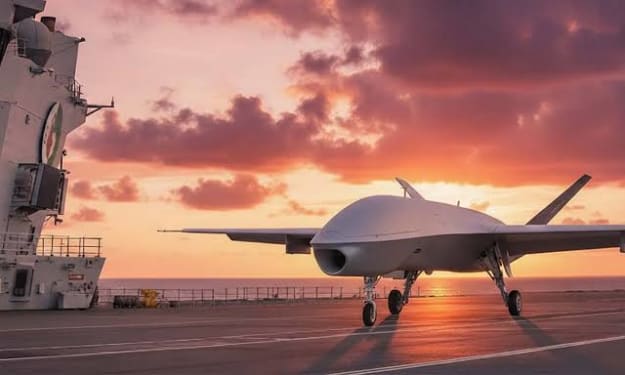
The Royal Navy is preparing for a major leap in naval aviation with plans to develop and deploy a jet-powered autonomous carrier drone. This move signals a decisive shift toward uncrewed combat and support systems, reflecting how modern navies are adapting to rapid technological change, evolving threats, and the high costs of traditional manned aircraft. If realised, the project could reshape how Britain projects power at sea and how aircraft carriers operate in the decades ahead. Why the Royal Navy Is Turning to Autonomous Jets Aircraft carriers have long been symbols of national power, but they are also expensive and vulnerable assets. Modern conflicts increasingly feature long-range missiles, electronic warfare, and drone swarms, forcing navies to rethink traditional carrier air wings. By investing in a jet-powered autonomous drone, the Royal Navy aims to enhance reach, survivability, and flexibility without putting pilots at risk. Autonomous carrier drones can operate in environments that would be highly dangerous for human crews. They can fly longer missions, tolerate higher levels of risk, and be produced at lower cost than manned fighter jets. For a navy operating a limited number of carriers, such as the UK’s Queen Elizabeth-class, this technology offers a way to multiply combat power without dramatically expanding budgets. What Makes a Jet-Powered Drone Different Unlike propeller-driven drones commonly used for surveillance, a jet-powered autonomous drone is designed for high speed, longer range, and potentially stealthy operations. Such drones could escort crewed fighter jets, conduct deep reconnaissance, suppress enemy air defenses, or even carry precision-guided weapons. The jet propulsion element is crucial. It allows the drone to integrate more seamlessly with carrier-based fighters like the F-35B, operating at similar speeds and altitudes. This opens the door to “manned-unmanned teaming,” where human pilots command or coordinate with multiple autonomous systems during a mission. Expanding the Role of UK Aircraft Carriers For the Royal Navy, this initiative aligns with a broader effort to future-proof its carrier strike groups. Autonomous drones could significantly extend the operational radius of a carrier, allowing it to strike targets farther inland while remaining at a safer distance from hostile shores. In addition to combat roles, these drones could support intelligence, surveillance, and reconnaissance missions, electronic warfare, and even logistics. A single carrier could deploy a mix of crewed jets, helicopters, and autonomous aircraft, creating a more versatile and resilient air wing. This approach also offers strategic advantages. By relying more on uncrewed systems, the UK can maintain credible naval power even with limited personnel resources. It also reduces the political and human costs associated with pilot losses in high-risk missions. Challenges on the Path to Deployment Despite its promise, the project faces significant technical and operational challenges. Launching and recovering jet-powered drones from aircraft carriers is complex, especially from short-takeoff decks like those used by the Royal Navy. Engineers must ensure that autonomous systems can safely handle deck operations, sudden weather changes, and high-stress combat conditions. There are also questions around command and control. Autonomous drones must be resilient to cyber attacks, electronic jamming, and communication disruptions. Developing secure systems that allow human operators to supervise or override autonomous decisions is critical, particularly given ethical and legal debates around autonomous weapons. Integration with existing platforms is another hurdle. The Royal Navy will need to ensure that new drones can work seamlessly with NATO allies, share data in real time, and fit within joint operational frameworks. How This Fits Into Global Trends The UK is not alone in pursuing carrier-based autonomous aircraft. The United States, China, and other major powers are all investing heavily in similar technologies. By moving early, the Royal Navy aims to remain competitive and relevant in an era where naval dominance increasingly depends on information, automation, and networked systems rather than sheer numbers of ships or aircraft. This initiative also reflects lessons learned from recent conflicts, where drones have proven decisive in surveillance, targeting, and strike roles. The future battlefield is likely to be crowded with uncrewed systems, and navies that fail to adapt risk falling behind. A Glimpse of the Navy of Tomorrow The Royal Navy’s plan for a jet-powered autonomous carrier drone is more than a technical upgrade—it represents a strategic transformation. It shows how Britain is preparing for a future where naval power is defined by adaptability, technological sophistication, and intelligent use of automation. While many details remain under development, the direction is clear. By embracing autonomous aviation, the Royal Navy is laying the groundwork for a more flexible, resilient, and forward-looking carrier force. If successful, this initiative could redefine how the UK operates at sea and ensure its carriers remain effective in an increasingly complex and contested world.
By Fiaz Ahmed Brohi3 days ago in The Swamp



Comments
There are no comments for this story
Be the first to respond and start the conversation.