


For some reason, the scene that most is still playing in my head in The Americans 6.3—a moody episode, which little action until the end—is the one with Stan and Oleg.
Stan repeatedly pleads to Oleg that Stan did his very best to protect Oleg, especially when he got back in the USSR. Oleg doesn't believe him. We know that Stan is telling the truth—for the most part—and this makes Stan's last words to Oleg all the more touching. "You don't have diplomatic immunity," Stan reminds him, which means you can be arrested and thrown in jail and worse, if you engage in any espionage here. Stan knows that Oleg isn't telling the truth when he says he's just here for the college course. Stan therefore knows that Oleg is vulnerable, and Stan really doesn't want to see Oleg arrested and worse. Yet, we and Stan both know, when Stan asks Oleg what he's doing here, and Oleg lies in his answer and Stan knows he's lying, that Oleg is going to end up not very well in this final season.
Which brings us to that ending. This is now the third week in a row in as many episodes this season that Elizabeth has killed an American, and I think that's telling us something. She's a killer. And what this usually means in a television series is that her own death is justified.
I actually hope I'm wrong about Elizabeth's fate. She's cold and in some strong sense deserves to die. But I'd rather not see that happen—and I'd rather not see that happen to Philip and Paige. Yet, of course, the first episode has already set in motion the possibility not just of Elizabeth not surviving, but Philip being the reason, having to kill her to stop her.
I still think that's not likely. But barring some sudden change, Elizabeth is sealing her fate with every episode.

About the Creator
Paul Levinson
Novels The Silk Code, The Plot To Save Socrates, It's Real Life: An Alternate History of The Beatles; LPs Twice Upon A Rhyme & Welcome Up; nonfiction The Soft Edge & Digital McLuhan, translated into 15 languages. Prof, Fordham Univ.
Keep reading
More stories from Paul Levinson and writers in The Swamp and other communities.
Review of 'The Americans' 6.2
I thought The Americans 6.2 was rather pro forma, even lackluster, until the very end, which was...brutal. That's the latest chapter in the eduction of Paige. The brains of an American general all over her mother's face. And Paige doesn't know the worst of it. The coming attractions confirm that the general didn't take his own life. Elizabeth pulled the trigger.
By Paul Levinson8 years ago in The Swamp
Russian Oil Company Refuses to Relinquish Control of Venezuela Exports
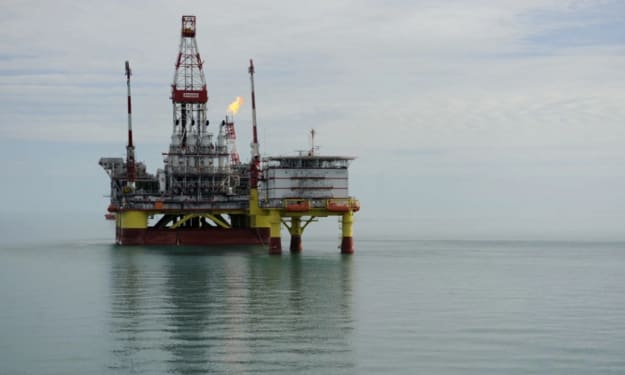
Venezuela’s oil saga just got even more intense. In early 2026, a dramatic confrontation between superpowers took center stage: a Russian oil company has refused to relinquish control of Venezuelan oil exports, directly challenging U.S. ambitions in the region. This isn’t just a business dispute; it’s a story of geopolitics, national sovereignty, and global influence that is reshaping energy markets and international diplomacy. For decades, Venezuela has been one of the world’s top oil producers, with reserves that rival those of Saudi Arabia. Control over these reserves doesn’t just mean profits — it signifies leverage, influence, and a critical role in global energy security. When Russia’s state-owned Roszarubezhneft declared it would maintain control over Venezuelan oil operations, it sent a clear message: Moscow isn’t backing down, no matter the pressure from Washington. Russia vs. U.S.: The Clash Over Venezuelan Oil In January 2026, following political upheaval in Venezuela — including the capture of its president by U.S. forces — the Trump administration announced plans to assert control over Venezuela’s oil exports. The aim was clear: integrate Venezuelan crude into U.S. markets, reduce the influence of adversarial powers, and stabilize energy flows favorable to U.S. interests. However, Russia’s Roszarubezhneft, a fully state-owned company, refused to comply. According to official statements, the Venezuelan oil assets are legally Russian, and the company will continue operations alongside Venezuela’s state-owned PDVSA (Petróleos de Venezuela SA). This refusal isn’t just about business — it’s a geopolitical power play, signaling Moscow’s intent to maintain influence in the Western Hemisphere. The standoff is more than a territorial or commercial dispute. It underscores a larger strategic battle over energy control, sovereignty, and the balance of power between the U.S. and Russia. Venezuela, with its vast reserves and strategic location, has become a key chess piece in this global game. Why Venezuela’s Oil Matters Venezuela holds some of the largest proven oil reserves on the planet, estimated at more than 300 billion barrels. Oil exports are the backbone of its economy, and control over these exports means influence over global energy markets. Yet, Venezuela’s oil sector has been plagued by decades of mismanagement, political instability, and international sanctions, leaving PDVSA struggling to maintain production levels. This created a window of opportunity for Russia. Over the past two decades, Moscow built deep energy ties with Caracas, stepping in when Western oil companies either pulled out or faced sanctions. Initially, Rosneft — Russia’s largest oil producer — managed these assets. However, after sanctions limited Rosneft’s ability to trade Venezuelan oil internationally, many of the assets were transferred to Roszarubezhneft, cementing full Russian state control. By maintaining this presence, Russia ensures it retains a strategic foothold in one of the richest oil basins in the world. A Geopolitical Statement, Not Just Business Roszarubezhneft’s refusal isn’t merely about oil production; it’s a bold geopolitical signal. By asserting control, Russia is challenging the idea that the U.S. can unilaterally dictate outcomes in the Americas. It’s also a demonstration of Moscow’s broader foreign policy approach: energy is as much about politics and influence as it is about commerce. For Washington, this represents a challenge. The U.S. strategy aimed to curtail adversarial influence near its borders while potentially opening the door for U.S.-aligned oil companies to enter the Venezuelan market. But Moscow’s defiance complicates that plan, raising tensions and increasing the likelihood of sanctions, economic maneuvers, and diplomatic clashes. Global Implications The repercussions of this standoff extend far beyond Venezuela: Russian Presence in the Americas: Traditionally, the U.S. has dominated Latin America. Russia’s continued involvement in Venezuela challenges this influence, signaling a shift toward a more multipolar world where energy resources can dictate power dynamics. Rising U.S.–Russia Tensions: The dispute adds fuel to an already tense relationship between the two nations. Both sides could escalate economic or diplomatic measures, further complicating the global political landscape. Market Uncertainty: Oil markets thrive on predictability. When control over a key supply region like Venezuela is contested, traders face uncertainty. This can lead to volatility in global oil prices, affecting consumers and businesses worldwide. Questions of Sovereignty: Central to this debate is the question of who really controls Venezuela’s natural resources. With the country’s government fragmented and foreign powers vying for influence, the issue of sovereignty becomes murky, highlighting the intersection of domestic politics and international intervention. The Human and Economic Angle While international headlines focus on geopolitics, the Venezuelan people feel the real-world consequences. Economic instability, hyperinflation, and scarcity of essential goods have plagued the nation for years. The contest over oil exports has a direct impact on Venezuela’s recovery prospects. If the sector remains under contested control, it could slow investment, delay infrastructure projects, and limit the revenue needed for social programs and economic stabilization. Meanwhile, Russian involvement, while strategic for Moscow, brings limited immediate relief to Venezuelans, illustrating how global power struggles often unfold at the expense of ordinary citizens. What’s Next? The situation in Venezuela is still evolving. The standoff between Russia and the U.S. over oil exports could take many forms: diplomatic negotiations, economic sanctions, or shifts in domestic Venezuelan politics. Global energy markets, investors, and policymakers will be watching closely. One thing is certain: in the world of oil, nothing is just business anymore. Energy resources have become instruments of power, leverage, and influence, shaping alliances and rivalries alike. Russia’s refusal to relinquish control of Venezuelan oil is a clear reminder that oil isn’t just a commodity — it’s a geopolitical weapon. As the story develops, the stakes will only rise. Whether through market pressures, international diplomacy, or changes within Venezuela itself, this battle over oil control will continue to make headlines, influence global energy flows, and reshape international relations.
By Muhammad Hassan2 days ago in The Swamp
Center Stage with Paul Stewart
*** I'm keen to republish the interviews I did for my series with Vocal creators. It's been a few years and I thought it might be nice to revisit these wonderful conversations. I'll be releasing them one at a time for a few weeks/months.
By Heather Hublera day ago in Interview



Comments
There are no comments for this story
Be the first to respond and start the conversation.