
Responsibility to Protect
Responsibility to Protect: United Nations
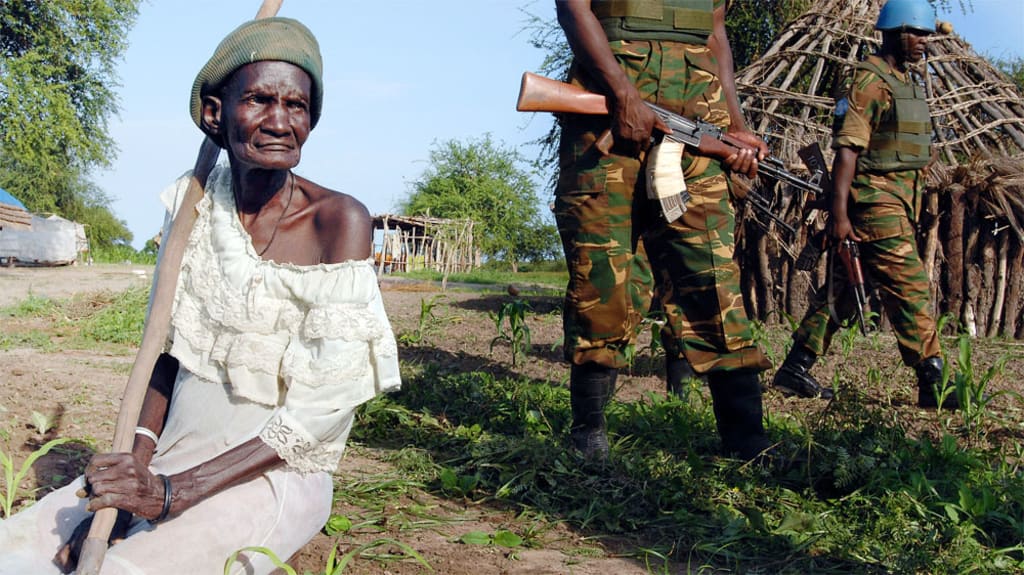
The Responsibility to Protect is a pledge by the United Nations’ member states to address the four primary areas that touch on fundamental human rights. In the 2005 UN World Summit, all members of the United Nations committed to preventing war crimes, ethnic cleansing, genocide, and crimes against humanity. The Responsibility to Protect was formulated to address the weaknesses in the UN’s security response to crime against humanity. For instance, the council failed to intervene during the 1994 Rwandan Genocide that claimed the lives of more than eight hundred thousand people within a hundred days (Arlin, 2017, p. 15). The United Nation’s Security Council was reluctant to approve the deployment of reinforcement to overstretch and underequipped Ghanaian forces in the country to stop the genocide (Arlin, 2017, p. 15). Thus, Responsibility to Act was formulated to avoid the repeat of such incidences. However, it has failed to achieve its objective and just mere rhetoric in the international system.
The implementation of Responsibility to Protect has failed in several countries leading to cases of war crimes and genocide in the post-2005 UN World Summit. One of the weaknesses of the Responsibility to Protect is it lies in the goodwill of the state to protect its citizens against war crimes, ethnic cleansing, and genocide (Gareth, 2016, p. 90). Consequently, it remains ineffective in circumstances where the crimes are state-sanctioned. The emphasis on the sovereignty of every state also means that the responses like deployment of peacekeepers are slow. In some cases, they require the approval from the government committing the crimes to send the troops to intervene. The 2016 Rohingya persecution by the Myanmar government exposed the Responsibility to Protect as a political gimmick with little or no implementation capability. The Myanmar soldiers violated almost all the four areas in the Responsibility to Protect with little or no consequences from the UN Security Council (Mohammad, et al., 2018, p. 230). They engaged in ethnic cleansing, crimes against humanity, and forceful transfer of population (Mohammad, et al., 2018, p. 218). However, the United Nations did not take any concrete action to prevent crimes.
Further, Responsibility to Protect bestows the role of citizen protection on the hand of the government. Ironically, the post-2005 World Summit has placed the governments at the center of the crimes. For example, the conflicts in Burundi and Syria involved the government attacking its citizens rather than protecting them. Syrian government allegedly used chemical weapons against her citizens, yet the Security Council failed to take decisive action against Bashar Al-Asad and his administration. Essentially, the agreement remains vulnerable to exploitation by rogue governments as it does not outline measures against governments involved in the crimes. It assumes that administrations are responsible for protecting the rights of their citizens (Gareth, 2016). The United Nations needs a new resolution to address the emerging trend where governments are increasingly involved in perpetrating crimes against their citizens.
The global geo-politics positioning and individual nation’s interest has also rendered the resolution of mere rhetoric. The global powers like the United States and Russia have different foreign policies as they seek to affirm their influences across the globe. Subsequently, Responsible to Protect is a victim of these supremacy wars between the two countries. The Syrian conflict has exposed the politics in the UN Security Council leading to the ineffective implementation of the resolution. For instance, the United States’ push to have an independent investigation on the potential use of chemical weapons by Bashar’s regime against her citizens was shot down by Russia (Deutsch, 2019, p. 1). Vladamir Putin’s policy in Syria conflicts that of the U.S. administration resulting in the inability to resolve the conflict. Subsequently, the citizens continue to suffer as the two great powers use Syria as a playground for their foreign policies in the Middle East. In other words, individual interest at the United Nations Security Interests have derailed the implementation of the 2005 resolution
Additionally, the United Nations has failed to ratify some of its resolution in the Middle East, especially between Israel and Palestine. The perpetual conflict between the two countries has resulted in gross violations of human rights. Unarmed civilians are the primary victims of the conflict, especially in the occupied West Bank. The Israeli government has adopted a repressive policy against the Palestinians living in the occupied territory, which violates the UN resolution on the rights of people living in occupied territories (Doulah & Shafee, 2016, p. 151). Conversely, the organization has failed to take action against the Israeli government or individuals involved in the repressive activities. In essence, the UN Security Council is unable to enforce Responsible to Protect resolution in high stake political areas.
In conclusion, Responsible to Protect was an excellent initiative to prevent gross violations of human rights such as genocide, war crimes, ethnic cleansing, and crimes against humanity. However, the UN Security Council has failed to the resolution to several reasons, including lack of goodwill and global geopolitics. Additionally, the evolving nature of the conflicts where the government is increasingly becoming primary perpetrators makes the resolution unenforceable. Nonetheless, Responsible to Protect is a good policy with the potential to alleviate human suffering if executed correctly.
References
Arlin, F. R., 2017. Book Review: Eyewitness to a Genocide: The United Nations and Rwanda. Genocide Studies and Prevention: An International Journal, 11(2), p. 15.
Deutsch, A., 2019. The U.S. accuses Russia of helping Syria cover up chemical weapons use. [Online]
Available at: https://www.reuters.com/article/us-syria-crisis-chemicalweapons/u-s-accuses-russia-of-helping-syria-cover-up-chemical-weapons-use-idUSKBN1Y21IJ
[Accessed 30 November 2019].
Doulah, A. & Shafee, M., 2016. Review of Recommended Peaceful Projects and Contracts for Israel-Palestine Conflict in Terms of International Rights.. J. Pol. & L., 9, p. 151.
Gareth, E., 2016. The responsibility to protect. The APPSMO Advantage: Strategic Opportunities: Evolving Defence Diplomacy with the Asia Pacific Programme for Senior Military Officers, pp. 89-99.
Heidarali, T., 2015. Protecting while not being responsible: the case of Syria and responsibility to protect. The International Journal of Human Rights, 19(8), pp. 1279-1289.
Mohammad, O. N. et al., 2018. GENOCIDE OF ROHINGYA MUSLIMS: A CLASSICAL MODEL OF ETHNIC CLEANSING. Al-Shajarah: Journal of the International Institute of Islamic Thought and Civilization (ISTAC), pp. 215-236.
The author works as an editor with TermPaperSite
About the Creator
Keep reading
More stories from writers in The Swamp and other communities.
Parallel Protests
I haven't written for quite some time, but I have A LOT of thoughts about yesterday's protest rally against our government's involvement and complicity in America's war on Iran, on the harbourside of my home city Bristol, and I need to put them somewhere. My gorgeous girlfriend is always a loving and listening ear and sharing it all with her will always be a healthy and happy way of processing the mental and emotional weight, but getting it straight in my brain to share means writing it all down in straight lines, so, here we are and thanks for being here.
By Steph Cole9 days ago in The Swamp
Writing To Succeed
If you want to find something that will help readers find your writing, possibly expand your audience, and maybe even get you noticed for other things, then you’re not alone. But how can you get it done in a world full of want-to-be writers? Look less at what you’re writing now, and more at what other writers have used to boost their views and reads.
By Jason Ray Morton 5 days ago in Writers




Comments
There are no comments for this story
Be the first to respond and start the conversation.