
Racial Profiling: In Law Enforcement, Education, and Public Facilities
A history of how racial discrimination is practiced by three different segments in society

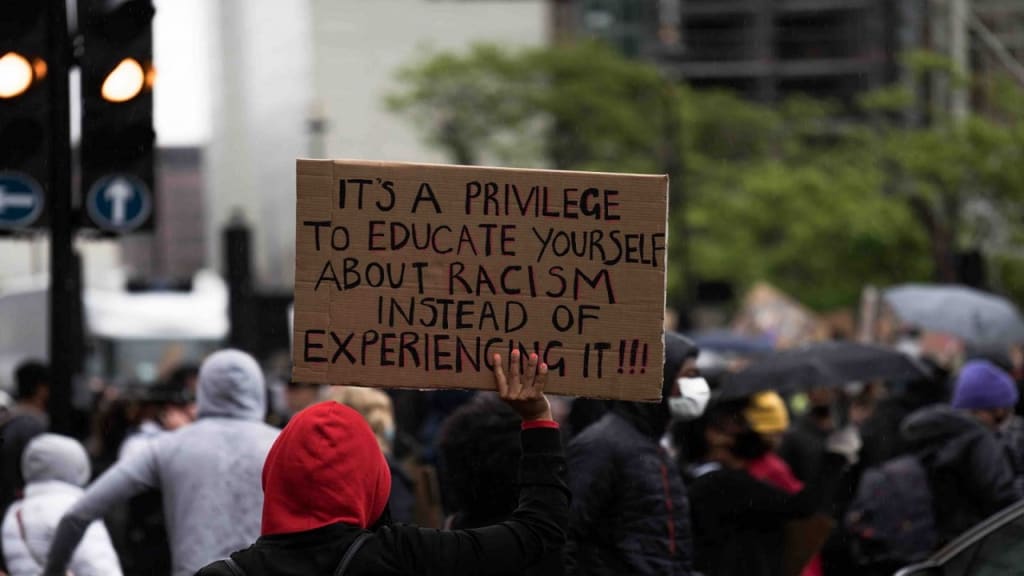
Incriminating Righteous Runaways During Slavery Transitioned Modern to Racist Policing
“It is character that should be the sole measure of judgment in the society of thinking humanity, and nothing short of that would do” (Naskar, 2018, n.p.).
Racial profiling has been going on for centuries. Today, it is common everywhere. Racial profiling predominantly happens in three main sectors of society: Law enforcement, education, and public facilities. Racial profiling is defined as a discriminatory practice towards an individual based on their ethnicity or race.
An example of racial profiling would include using race to determine what drivers to stop for minor traffic violations. Racial profilers target members of a certain ethnicity to check for immigration papers (ACLU, 2018, n.p.). The causes of racial profiling trace back to slavery-era usages of stereotypes – a widely held but fixed and ostracized image, which categorizes a whole segment of people.
The history of racial profiling dates back over 1,000 years. During the U.S. era of slavery, many African Americans were captive to its immoral. Those who were free had to prove it with registry papers. Freed slaves were subject to racial profiling, particularly in the south. South Carolina had special patrols that hunted for escaped slaves.
These slave-hunting groups accused many blacks of being runaways – only because of the color of their skin. They harassed, interrogated, and physically abused them. One area where racial profiling exists the most today is in law enforcement. Ranjana Natarajan-a clinical professor and director of the Civil Rights Clinic-states:
“The NYPD controversial stop-and-frisk shows similar evidence of racial profiling, with police targeting blacks and Latinos about 85 percent of the time. In nearly nine out of ten searches, police find nothing,” (Natarajan, 2014, n.p.).
The rate of racial profiling among African Americans and Latinos is high based on the statistics. They clearly show that police are targeting certain races and ethnicities. Most of the time, the African Americans and Latinos who are profiled are not guilty.
In other words, they are being stopped because of how they look – not because they committed a crime. Even youths are being profiled by law enforcement.
“Youth of color have been victims of racially motivated bicycling stops. In April 2001, the ACLU joined a suit against Eastpointe, Michigan, representing 21 young African American men who were stopped by the police while riding their bikes there (ACLU, 2018, n.p.).”
This example shows that racial profiling occurs regardless of age.
Dangers of Racial Profiling: the Police Killing of Timothy Thomas & Cincinnati’s 2001 Riots
In certain cases, racial profiling has become violent. According to the American Civil Liberties Union or the ACLU, the article “Racial Profiling: Definition” states:
“On April 7, 2001, in the early morning hours, Timothy Thomas, a 19-year-old African-American, was shot to death by police officer Stephen Roach. Thomas had 14 outstanding misdemeanor warrants, mostly traffic violations, including failure to wear a seat belt,” (ACLU, 2018, n.p).
An officer who shot a teenage boy goes to show how cases become violent due to racial profiling. No officer should be allowed to pull a gun out on an individual just because of their race or ethnicity – even if that individual may have some traffic violations.
The Cincinnati Riots of 2001
The Cincinnati Riots were a four-day period of civil disorder that occurred in response to the shooting death of nineteen-year-old Timothy Thomas by Cincinnati Police Patrolman Stephen Roach. Officer Roach was attempting to arrest Thomas for traffic citations (Momodo, 2017).
On April 9, 2001, a group of 200 protesters including Timothy Thomas’s mother, Angela Leisure, gathered outside Cincinnati’s City Hall while a city council meeting was in session to demand an explanation for the shooting of Thomas on April 7 (Momodu 2017).
Dangers of Racial Profiling
Racial profiling causes harm to society when it comes to law enforcement. People rely on just policies to protect themselves from anything harmful. They are made to be fair and just to the communities. Although people rely on law enforcement for safety and protection, racial profiling is one of the primary causes of why people live in fear. This is mostly due to race, ethnicity, or religion. The ACLU article titled “Racial Profiling: Definition” explains why people are being targeted by law enforcement and why racial profiling is illegal.
The ACLU states:
“It occurs every day in cities and towns across the country when law enforcement and private security target people of color for humiliating and often frightening detentions, interrogations, and searches without evidence of criminal activity and based on perceived race, ethnicity, national origin, or religion. Racial profiling is patently illegal, violating the U.S. Constitution’s core promises of equal protection under the law to all and freedom from unreasonable searches and seizures. Just as importantly, racial profiling is ineffective. It alienates communities from law enforcement hinders community policing efforts and causes law enforcement to lose credibility and trust among the people they are sworn to protect and serve (ACLU, 2018, n.p.).”
Racial profiling is something that happens to people on an everyday basis. It is something that is common in cities and towns across the country. Racial profiling is illegal. It is ineffective, violates an individual’s rights, and breaks down the trust between the community and law enforcement.
It causes law enforcement agencies to lose their reliability.
Education & Racial Profiling: the Preschool-to-prison Pipeline
Another area where racial profiling exists is in education. In the article “How Profiling in Schools Feeds the School-to-Prison Pipeline” Caitlin Curly States:
“Over 70 percent of students involved in school-related arrests are Hispanic or Black, according to the findings of a 2010 EdWeek report. And a 2010 survey found that Black students are three-and-a-half times more likely to be suspended or expelled than their white peers (Curly, 2016, n.p.).”
Statistics show that racial profiling in education with Latinos and African Americans is increasing. They represent over 70 percent of students who are involved in school-related arrests. This case is another example of racial profiling. Additionally, a 2010 survey discovered that “Black students are three-and-a-half times more likely to be suspended or expelled than their white peers (Curly, 2016, n.p.).”
Racial profiling is not only affecting older students in the education field. It is also affecting children in preschool as well.
According to the article “Racial Profiling in Preschool,” the Editorial Board of the New York Times states:
“A computer program that tracked the eyes of the teacher as they watched the video showed that both black and white teachers watched the black children, especially the boys, longer when looking for signs of trouble. And when the researchers asked teachers which child had commanded the most attention, 42 percent of them chose the black boy, 34 percent the white boy, 13 percent the white girl, and 10 percent the black girl (The Editorial Board, 2016, n.p.).”
This example proves that racial profiling is common amongst preschool students. Forty-two percent of preschool teachers were watching the black boy in the video; whereas, 34 percent of the preschool teachers were watching the white boy when looking for signs of trouble. This exposed that the teachers watching preschool students were stereotyping them as trouble makers – even at four years old.
When it comes to the public education field, racial profiling plays a huge role in projecting injustice onto minority students attending public schools. A brief issued by the Children’s Defense Fund of Ohio titled “Zero Tolerance and Exclusionary School Discipline Policies” has an overview of statistics – pertaining to African American students in Ohio public schools and how it has an impact on them.
The brief’s report on this issue states: “Black students make up 16.5% of all children enrolled in Ohio public schools. They account, however, for 36.6% of all out-of-school suspensions. White students on the other hand make up 74% of Ohio’s public school enrollment but account for only 29.4% of all out-of-school suspensions (The CDF, 2018).”
The rate of racial profiling against African American students is high compared to white students. Statistics show that black students make up 16.5% of all students enrolled in Ohio public schools. However, they are held accountable for out-of-school suspensions at a rate of 36.6%.
White students, however, make up 74% of Ohio’s public-school enrollment. Yet they are only held accountable for out-of-school suspensions at a rate of 29.4%. Disobedient and disruptive behavior plays a massive role in racial profiling against black students attending public schools. They have a high rate of suspension and a low rate of enrollment.
Racial profiling negatively impacts minority students who are trying to succeed in academics. They are unjustly treated differently based on their race and ethnicity. An article from the Atlantic titled “How the Stress of Racism Affects Learning” (by Melinda D. Anderson) discusses students going through challenges as they are facing racism.
In this article Melinda D. Anderson states:
“Among this population of students, perceived discrimination from teachers was ‘related to lower grades, less academic motivation and less persistence when encountering an academic challenge.’ The study also found that the anxiety surrounding the stereotype of academic inferiority undetermined students performing academic tasks. Over time, Adam said, children, develop strategies to reduce racial stressors, but these, too, have consequences for academic success. Students might devalue the importance of doing well on tests or decide that doing well in school isn’t a part of their identity- ‘If you don’t care, then you’re not going to feel as stressed in those academic circumstances,’ she said, ‘but obviously that [affects] your performance (Anderson, 2016, n.p.).”
Racial profiling makes students have low self-esteem when it comes to excelling in classes. It disrupts the ability to gain the motive to achieve in academics. It can result in having less persistency when facing academic challenges – and even cause minority students to lose the value to do well on tests.
Furthermore, students may also believe that doing well in school is not part of who they are.
Shopping While Black: a History of Racial Profiling in Public Facilities
Another area where racial profiling exists is at public facilities. In a research article titled “The Emotional Toll of Shopping While Black” author Angela Fichter states:
“In a 2013 Pew Research Center poll, 46% of black people reported unfair treatment in stores and restaurants, compared to only 16% of whites (Fichter, 2016, n.p.).”
This Pew Research Center poll shows many statistics about black people. The black pollsters reported being treated unfairly in stores and restaurants. They reported a rate of 46% compared to a 16% rate reported by white pollsters. Athletes are also being racially profiled as well. The New York Post published an article titled “Gold medalist accuses airport cops of racial profiling” by Yaron Steinbuch. It reports on a gold medalist who was racially harassed at a German airport.
In the Post’s news article, Steinbuch reports:
“Four-time Olympic gold medalist Mo Farah has claimed he was racially harassed at a German airport, where he posted his altercation with a cop on social media, according to reports. Britain’s most successful distance runner traveled through Munich Airport on Monday en route to Ethiopia to prepare for the April 22 London Marathon. In his Instagram Live postings which included his running commentary as the uniformed officer pushed him toward the gate, Farah added the caption: Sad to see racial harassment in this day and age. 2018…!!!! #airport #germany (Steinbuch, 2018, n.p.).”
This example shows that racial profiling happens to athletes. The article states that Farah was being pushed towards the gate by a uniformed officer. He was racially harassed at a German airport. Even celebrities are victims of racial profiling. A CNN news report titled “Oprah Winfrey racism row over Switzerland shop incident” by Nick Thompson and Diana Magnay mentions Oprah Winfrey experiencing racism. It happened during a trip to Switzerland as she shopped for handbags.
According to their CNN news report, writers Nick Thompson and Diana Magnay state the following:
“Billionaire US media mogul Oprah Winfrey says she was the victim of racism on a recent trip to Switzerland when a shop assistant refused to show her a handbag because it was ‘too expensive.’ Winfrey was in Zurich for Tina Turner’s wedding in late July when she left her hotel alone and popped into an upscale handbag shop. She told Entertainment Tonight: ‘I was in Zurich the other day at a store whose name I will not mention. I didn’t have my eyelashes on, but I was in full Oprah Winfrey gear. I had my little Donna Karan skirt and sandals, but obviously, The Oprah Winfrey Show is not shown in Zurich.’ ‘I go into a store and say to the woman, Excuse me, may I see that bag over your head? and she says to me, No, it’s too expensive (Thompson and Magnay, 2013, n.p.).”
This incident that took place at a shop in Switzerland shows that Winfrey was being racially profiled. Winfrey asked a shop assistant to see a handbag she wanted. However, the shop assistant refused to show her because she thought it was “too expensive.” The shop assistant believes that Winfrey could not afford it because she was black. Racial profiling has a negative effect on people in public facilities. It violates the most basic rights of innocent people.
In the article, “The Emotional Toll of Shopping While Black” Angela Fichter quotes:
“Racial profiling in stores feels especially insidious because that watchfulness implies the assumption that, because I am black, I cannot afford to make a purchase and that because I cannot afford to make a purchase, I am therefore inherently suspicious, untrustworthy, and criminal. Being followed sends the clear message that I’m not welcome and do not belong. The ‘Whites Only’ signs on storefronts are no longer visible, but our every move, our clothing, the very fabric of who we are is policed just the same. It’s undermining. It’s hurtful. And it’s become stressful enough to threaten our health (Fichter, 2016, n.p.).”
Fichter discussed her experience with racial profiling at a store while shopping for items. On the day she describes, Fichter entered the store and was stared at awkwardly. People assumed she couldn’t afford to make purchases there because of her ethnicity.
They assumed she was an apprehensive criminal who could not be trusted.
Some people believe that racial profiling projects acceptable behavior. It is not. Racial profiling is one of the main factors that are negatively impacting society. Racists believe that profiling people of color is a preventative measure. They believe racial profiling is acceptable as an advantage for unsavory reasons. It helps the racist elite save money and time when police are looking for a specific criminal. They believe if it is practiced without any restrictions, racial profiling helps solve crimes.
However, there are no logical explanations as to why racial profiling is okay.
References
Naskar, A. (2018). Racial profiling quotes (16 quotes). Goodreads.com. https://www.goodreads.com/quotes/tag/racial-profiling
American Civil Liberties Union. (2018). Racial profiling: definition. ACLU.org. https://www.aclu.org/other/racial-profiling-definition
Natarajan, R. (2014). Racial profiling has destroyed public trust in police. The Washington Post. https://www.washington.com/posteverything/wp/2014/12/15/racial-profiling-has-destroyed-public-trust-in-police-cops-are-exploiting-our-weak-laws-against-it/?utm_term=.5208fcf713aa
Momodu, S. (2017, October 21). The cincinnati riot (2001). BlackPast.org. https://www.blackpast.org/african-american-history/the-cincinnati-riot-2001/
Curly, C. (2016). How profiling in schools feeds the school-to-prison-pipeline. [FKD]. http://www.genfkd.org/profiling-schools-feeds-school-prison-pipeline
The Editorial Board. (2017). Racial profiling in preschool. The New York Times. https://www.nytimes.com/2016/10/09/opinion/racial-profiling-in-preschool.html
Issue Brief. (2012). Zero tolerance and exclusionary school discipline policies. CDFOhio.org. http://www.cdfohio.org/assets/pdf-files/issue-brief-zero-tolerance.pdf
Fichter, A. (2016). The emotional toll of shopping while black. The Establishment. https://theestablishment.co/the-emotional-toll-of-shopping-while-black-bcda5e51a7fd
Steinbuch, Y. (2018). Gold medalist accuses airport cops of racial profiling. New York Post. https://nypost.com/2018/03/08/gold-medalist-mo-farah-accuses-airport-cops-of-racial-harassment/
Thompson, N. & Magnay, D. (2013). Oprah winfrey racism row over switzerland shop incident. CNN. https://edition.cnn.com/2013/08/09/world/oprah-winfrey-racism-switzerland/index.html
About the Creator
Hannan Muzeyen
Hannan Muzeyen is a digital media producer and a web publisher. She became a Vocal Media creator in June of 2021.
Keep reading
More stories from Hannan Muzeyen and writers in The Swamp and other communities.
Here’s Some Stereotypes About Librarians You Probably Already Believe
“Good librarians are natural intelligence operatives. They possess all of the skills and characteristics required for that work; curiosity, wide-ranging knowledge, good memories, organization, and analytical, aptitude, as well as discretion.”
By Hannan Muzeyen5 years ago in Journal
The Forsyth House Fire
Since 1851, Forsyth House has stood on the corner of Union Street and Gordon Street in the heart of Glasgow. Its iconic, or was... because on Sunday 8th of March, 2026, a fire broke out in a small, seemingly un-named shop in the building and tore all that history down. As I write, the rubble is still unsettled and the street is still blocked off. Central Station is quiet on the upper level, and around 30 small businesses have quite literally gone up in smoke.
By S. A. Crawforda day ago in The Swamp
Trump Calls on UK to Send Warships to Keep Strait of Hormuz Open Subtitle: Rising tensions in the Persian Gulf reignite debate over international responsibility to protect one of the world's most critical shipping routes.
The Strait of Hormuz has always been a focal point of global geopolitical tension. As one of the most vital maritime chokepoints in the world, it carries a massive portion of the planet’s oil supply every single day. Recently, former United States President Donald Trump reignited international discussion by urging the United Kingdom to send warships to help keep the Strait of Hormuz open amid increasing security concerns in the region.
By Jameel Jamali7 minutes ago in The Swamp
A System That Isn’t Working Challenge Winners
Systems promise order. They organize behavior, distribute opportunity, and suggest that if everyone follows the rules, things will work. The entries in A System That Isn’t Working look closely at what happens when that promise begins to slip.
By Vocal Curation Team3 days ago in Resources



Comments
There are no comments for this story
Be the first to respond and start the conversation.