
Palestinian people away from stereotypes
Ramallah is a beautiful, small city full of life, and most Palestinian cities can witness a high activity,
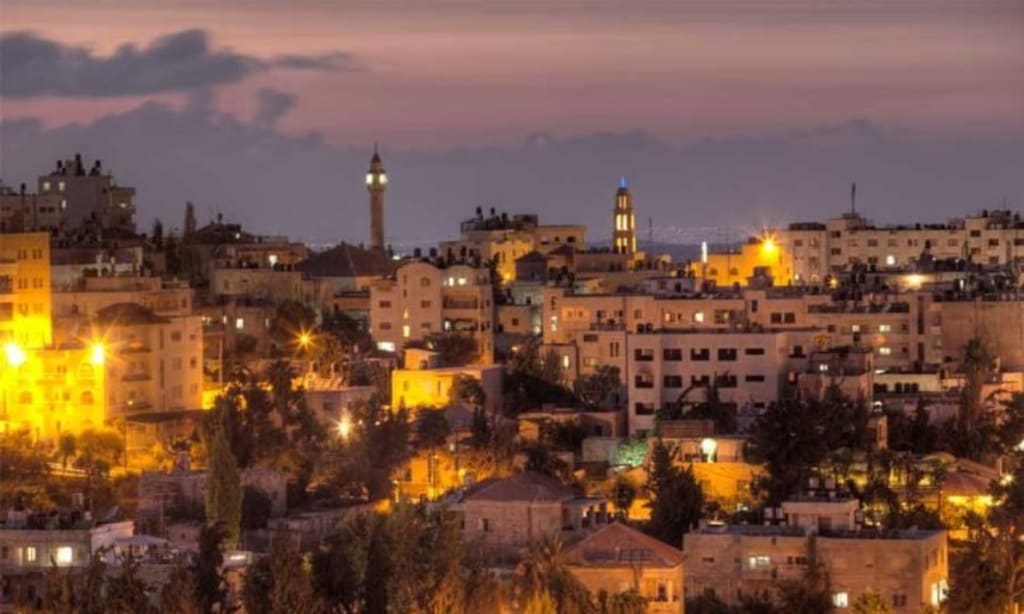
Ramallah is a beautiful, small city full of life, and most Palestinian cities can witness a high activity, compared to other Arab cities due to the problem of limited land, and amid the features of the density of living in the Palestinian space, it can be noted that the intense tension and from nothing, and from no place, can It causes a clash, for living in Palestine is a life on the edge, open to all possibilities, and the instability that starts from the economic situation, which depends largely on hundreds of thousands of workers linked to work permits in (Israel) does not stop there, but extends to wars of ideas and visions among the Palestinians themselves.
Life in Ramallah or other Palestinian cities can draw attention to the extreme difference, which lurks under a picture of superficial similarity, and in time, the Palestinians will appear a complete and normal people.
Humans, bearing from principles and good traits what they carry of flaws and defects, natural human beings who are not angels or demons, and completely far from stereotyping that sometimes makes them guerrillas and projects of martyrs and saints in a sector of the Arab and international imagination, and at other times, a group of hateful rioters who gave up their land by selling Or run away, in another sector.
This is simply Palestine, and the difference between imagination and reality was present in an important testimony presented by the Palestinian poet Mourid Barghouti in his semi-documentary book “I saw Ramallah” and the painful disclosure between the image of Jerusalem, the city coming from heaven in people’s thoughts, and the natural, earthly Jerusalem that resembles many cities in the world Even Barghouti used to refer to it in his adolescence in search of small sins, this face that the Palestinians deny and those who sympathize with their cause, who desire the unrealistic angelic image, work to maintain it, and put the Palestinian who bears a share of the hardships and instability of life and deals with Point zero with the cunning of history, to be the desired example, facing the disappointment experienced by any Arab, and in the difficult moments of conflict, in which the Palestinians come out in anger or despair to confront and fight their battle, supporters come out to consider it a factor to restore dignity and pride in particular, although most of them watch That's on TV, and they're in homes equipped With good or reasonable services, they find the opportunity to spread free sympathy on the social media pages, and they ask the Palestinian to continue his gift, or his uprising, even though a full life with all its hopes, ambitions, disappointments and lusts, can end with a selective bullet or a random shrapnel.
With the decline of the narrative of the Palestinian revolution, and indeed its lyricism at some point in its history, and after the hot eighties era from Beirut, to the second Gulf War, and finally, the Oslo Agreement, and the requirements for building a presence on the ground, or on the rest of the land, the image of the Palestinian began to approach the real and the real. The authority formed the apparatus of repression that multiplied rapidly and entered into the security coordination, and the Palestinians were complaining about the presence of collaborators, who did not descend from the sky, but came out of the Palestinian society itself, a society that we must not forget that it is not made up of angels or demons.
Despite this, and in recent times, artworks have been trying to intensely show the idea that contradicts the ideal Palestinian, dispelling the imagination of the revolution and the narrative of sacrifice, and the last film “Huda Salon” identifies with this idea, even though it discusses the overthrow of Palestinian girls to force them to deal with the occupation. and providing him with information about the resistance fighters, and this process implicitly confirms the intensity, expansion and unpredictability of the resistance. ?
As Palestine grows its tender fruits, the land is in the nature of things to grow parasites, and even if some recent works, novels and art, present the parasites and try to put them in order to distort the image of the Palestinian, in a timing that is the least bad to say about it, assuming good faith, or malicious with an inspection of the sources The details of the funding, whether received or promised, is better than the previous ideal that presents psychological compensation to the world, who watched the Palestinians contentedly with praise and salutations and talk about the restored dignity. The flesh of the truth, and therefore they can be understood and dealt with away from stereotypes, positive or negative, and thus progress can be made in history, not just squatting in the past while waiting for loyal heroes. Far from myth and related apocalypse ideasBy liberation and emancipation.
Therefore, whatever it is, and whether these expressions are innocent or malicious, they bring the Palestinian back to the daily, practical and realistic, giving him his individuality that does not make him shorten himself, or be shortened in the form of scapegoats, who are looking for lost people far from reality, drowning in myths, popular biographies and tales With «bread, hashish and the moon» from the ocean to the Gulf.
About the Creator
Keep reading
More stories from Zernouh.abdo and writers in The Swamp and other communities.
Arabs after Ukraine
The Arabs today seem to be waiting on the sidewalk of history. Although most Arab governments voted internationally to condemn the Russian military campaign in Ukraine, while few of them refused or abstained from voting, the Arab public seemed different, and mostly enthusiastic about Russian President Vladimir Putin, perhaps Except for currents in the Syrian arena, which witnessed a bloody Russian intervention that prevented the fall of Bashar al-Assad's group.
By Zernouh.abdo4 years ago in The Swamp
A Gathering of Evil Bosses
“I’m the queen of chin jutting while I smooth my hair, attacking, insulting, and deflecting to protect my appointer.” “Oh, please, Blondi, my hair is curled, highlighted, and longer than yours. I feature television commercials telling immigrants that we will give them a free plane ride home, and if they voluntarily turn themselves in, they will be allowed to legally apply for re-entry. It runs everywhere, and I look good in it! You can’t compete because of your blond hair. Mine is nicer, and my lips are prettier than yours.”
By Andrea Corwin 14 days ago in The Swamp
Who is your "Person"?
It's important to recognize that you cannot go through life as easily on your own. My name is Elizabeth and I'm a survivor of child abuse and horrific trauma. Healing from trauma is not a quick fix and recognizing that it will take time, is part of the struggle.
By Elizabeth Woods2 days ago in Psyche



Comments
There are no comments for this story
Be the first to respond and start the conversation.