
Palestine Action Group Plans March Against Isaac Herzog’s Visit Despite Protest Restrictions
Free speech and security collide ahead of high-profile visit Demonstrators vow to be heard despite tightened protest rules Public dissent grows over Middle East policy Authorities prepare heavy policing for controversial visit Protest rights tested during international diplomacy March highlights divisions over Israel-Palestine conflict Civil liberties groups warn of shrinking space for dissent

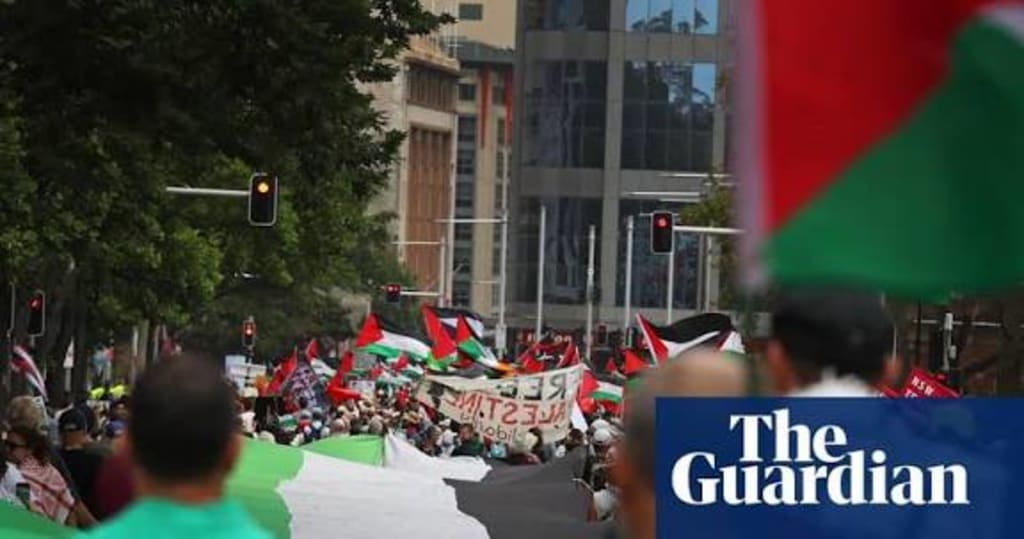
A pro-Palestinian activist organization has announced plans to stage a large public march opposing the upcoming visit of Israeli President Isaac Herzog, defying new protest restrictions imposed by local authorities. The decision has sparked a heated debate over civil liberties, public safety, and the right to demonstrate during high-profile diplomatic events.
The Palestine Action Group said the march is intended to highlight opposition to Israeli policies toward Palestinians and to draw international attention to the ongoing conflict in Gaza and the West Bank. Organizers argue that Herzog’s visit represents political support for actions they view as violations of human rights, and they believe silence would be a form of complicity.
Authorities, however, have imposed strict limits on protests near official venues, citing security concerns and the need to maintain public order during a state visit. The standoff has raised questions about how democratic societies balance free expression with national security obligations.
Protest Restrictions and Legal Challenges
Police and municipal officials introduced restrictions on demonstrations in areas surrounding government buildings and major transport routes where the Israeli president is expected to appear. These measures include designated protest zones, limits on crowd size, and bans on marches close to sensitive locations.
Officials say the rules are temporary and necessary. According to a police spokesperson, the presence of a foreign head of state significantly increases security risks, and unrestricted marches could strain emergency services and disrupt daily life. The spokesperson emphasized that protesters still have the right to assemble but must do so within approved guidelines.
The Palestine Action Group disputes this position. In a public statement, organizers accused authorities of using security as a pretext to suppress political dissent. They claim the restrictions effectively neutralize the impact of the demonstration by moving it far from public view.
Legal observers note that similar disputes have arisen during visits by controversial leaders in the past. Courts often side with police when credible security threats exist, but civil liberties groups argue that such rulings gradually narrow the space for meaningful protest.
Motivations Behind the March
The Palestine Action Group has a history of organizing demonstrations and direct action campaigns related to the Israeli-Palestinian conflict. Members say Herzog’s visit symbolizes international acceptance of Israeli policies they believe are unjust and violent.
“Our goal is to show that many people do not welcome this visit and do not support what is happening in Gaza,” one organizer said. “Marching is a peaceful way to express that message.”
The group has urged supporters to remain nonviolent and disciplined, stressing that the protest is intended to be lawful and focused on raising awareness rather than confrontation. Social media posts promoting the march call for banners, chants, and speeches emphasizing human rights and international law.
Government and Diplomatic Context
President Herzog’s visit is part of a broader diplomatic effort to strengthen ties with allies amid growing international pressure over the humanitarian situation in Gaza. Meetings are expected with senior government officials, and discussions will likely focus on security cooperation, trade, and regional stability.
Government leaders have defended hosting Herzog, arguing that diplomatic engagement is essential even during periods of intense conflict. They say cutting off dialogue would weaken influence over Israeli decision-making and harm long-term prospects for peace.
At the same time, officials acknowledge the depth of public anger over images emerging from the conflict. Polls suggest significant segments of the population are deeply concerned about civilian casualties and the lack of progress toward a political solution.
Public Reaction and Divided Opinion
Public reaction to the planned march has been mixed. Supporters see it as a necessary expression of solidarity with Palestinians and a reminder that foreign policy decisions should be subject to scrutiny. They argue that protest is a cornerstone of democracy and should not be sidelined because of diplomatic sensitivities.
Critics counter that large demonstrations during a state visit risk escalating tensions and could endanger both participants and the wider public. Some have accused the Palestine Action Group of deliberately provoking authorities to gain media attention.
Business groups and transport unions have also voiced concerns about disruption to city life, warning that blocked roads and large crowds could affect workers and emergency services.
Security Concerns and Policing Strategy
Police have prepared a significant security operation for the visit, including additional officers, surveillance measures, and coordination with intelligence agencies. Authorities say they are determined to prevent clashes between protesters and counter-protesters.
In recent years, protests linked to the Middle East conflict have occasionally turned volatile, particularly when emotions run high. Officials insist that clear boundaries are necessary to prevent disorder and protect both demonstrators and visiting dignitaries.
Organizers, however, say heavy policing can itself provoke tension. They have urged participants to remain calm and follow instructions, while also vowing to challenge what they view as excessive restrictions through legal channels.
Broader Implications
The confrontation over this march reflects a wider struggle over how governments manage dissent in an era of global conflict and heightened security fears. Activist groups worry that once protest limits are normalized for one issue, they can easily be expanded to others.
Civil rights advocates argue that the right to protest is most important precisely when opinions are unpopular or controversial. They warn that moving demonstrations out of sight weakens democratic accountability.
Conclusion
As President Isaac Herzog’s visit approaches, the planned march by the Palestine Action Group has become a symbol of the tension between diplomatic protocol and public protest. Authorities emphasize safety and order, while activists insist on their right to be heard.
Whether the march proceeds as planned or is curtailed by legal action, the episode highlights how deeply the Israeli-Palestinian conflict resonates far beyond the region itself. It also underscores the fragile balance between security and freedom in democratic societies facing politically charged international events.
About the Creator
Fiaz Ahmed
I am Fiaz Ahmed. I am a passionate writer. I love covering trending topics and breaking news. With a sharp eye for what’s happening around the world, and crafts timely and engaging stories that keep readers informed and updated.
Keep reading
More stories from Fiaz Ahmed and writers in The Swamp and other communities.
From Gaza to Iran, Israel Readies Space ‘Surprises’ for Next Conflicts – Exclusive
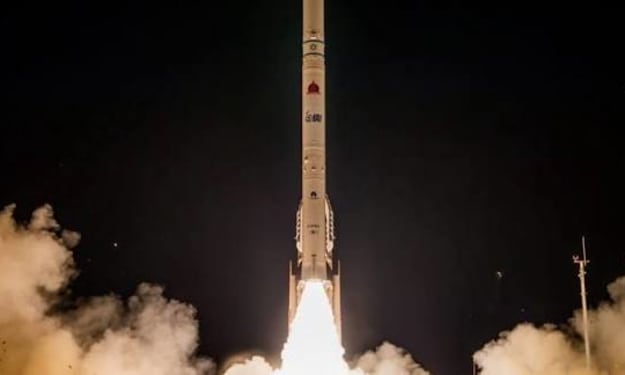
Israel is quietly developing cutting-edge space-based capabilities designed to give its armed forces an edge in future conflicts, from potential clashes in Gaza to a possible confrontation with Iran, The Jerusalem Post has reported exclusively. According to Avi Berger, head of the Space Office at Israel’s Defense Ministry’s Directorate of Defense Research & Development (MAFAT), the lessons learned from recent wars have driven Tel Aviv to accelerate innovation in orbit, emphasizing that tomorrow’s conflicts will be shaped as much by what happens in space as on land or at sea. The Jerusalem Post A New Strategic Frontier At Israel’s Space Week conference, Berger underscored that Israel must be prepared to deploy “new surprises” in any future high-stakes confrontation. “We knew right away that we had to build and create new surprises for the next war,” he said, adding that the technology deployed in previous conflicts, including the 12-day confrontation with Iran last year, won’t be sufficient for future needs. The Jerusalem Post The primary driver behind Israel’s push into space is operational necessity. Space assets now form the backbone of the Israel Defense Forces’ (IDF) intelligence-gathering architecture, collecting vast quantities of real-time data that can be rapidly analyzed and acted upon. “A single constellation can cover everything from Gaza to Iran,” Berger said, highlighting how satellites enable round-the-clock monitoring across multiple potential flashpoints. The Jerusalem Post This evolution reflects a broader view in Israel’s defense establishment that space is no longer a purely academic or scientific domain, but a “decisive component” of modern military strategy—especially when confronting adversaries who are dispersed across vast geographic expanses or deeply embedded within hostile territory. The Jerusalem Post Eyes in the Sky: Reconnaissance and Intelligence Israel’s space program has long included a series of indigenous reconnaissance satellites, such as the Ofek family, which have provided optical and radar imagery for decades. These satellites operate in low Earth orbit and are capable of producing high-resolution imagery crucial for military planning. Wikipedia For example, during the Israel-Iran conflict, Israeli satellites reportedly maintained constant surveillance over Iranian territory, delivering detailed imaging that allowed military planners to track ballistic missile activity and assess battle damage in near real time. This capability marked a shift from intermittent snapshot intelligence to continuous tactical oversight—a critical advantage in fast-moving conflict environments. The Jerusalem Post In addition to traditional electro-optical sensors, the incorporation of synthetic-aperture radar (SAR) technology—such as that aboard earlier TecSAR satellites—enables observation through cloud cover and at night, further enhancing Israel’s ability to monitor adversaries regardless of conditions. Wikipedia AI and “Steroid” Data Processing Berger and other Israeli officials have emphasized that advanced computing and artificial intelligence (AI) are integral to extracting operational value from satellite data. With gigabytes of imagery streaming from orbit daily, AI systems help retask satellites in real time, identify emerging threats, and deliver actionable intelligence with unprecedented speed. The Jerusalem Post This “AI on steroids,” as Berger described it, allows commanders to make informed decisions on strike options, battlefield movements, and asset allocation without delays that could cost lives or strategic advantage. Preparing for the Next Big Conflict While Israel’s near-term focus remains on managing ongoing hostilities and tensions with militant groups in Gaza and Hezbollah on its northern border, Tehran looms as the most significant long-term challenge. Iran’s nuclear and ballistic missile programs, allied proxy networks across the Middle East, and growing missile capabilities pose complex strategic dilemmas. The Jerusalem Post Space-based systems designed to provide early warning, target identification, and battle damage assessment could be decisive in a conflict with Iran, where vast distances and hardened subterranean facilities complicate traditional intelligence gathering. Israeli officials have suggested that future space capabilities would allow rapid identification of mobile missile launchers or underground facilities, reducing uncertainty during critical phases of conflict. A Broader Shift in Warfare Israel’s emphasis on space mirrors global trends in military strategy. As competition intensifies among major powers such as the United States, China, and Russia, the space domain has shifted from peaceful exploration to strategic competition. Nations now see orbital assets not only as tools for observation but also as platforms for communication, coordination, and potential defensive countermeasures. The Jerusalem Post The international security landscape in 2025 and 2026 shows how intertwined space security has become with broader geopolitical tensions. A Chatham House analysis noted that space security is part of a deteriorating global order, where space capabilities are as critical as nuclear policy and hybrid warfare in shaping outcomes. Chatham House Commercial and Dual-Use Expansion Beyond strictly military applications, Israel’s space industry is also expanding into commercial and dual-use roles. Innovation in satellite services, space-as-a-service platforms, and partnerships with international space agencies—including NASA—suggest that Israel sees its space capabilities as both a security necessity and an economic opportunity. The Jerusalem Post Joint ventures, such as cooperation agreements with NASA and participation in the Artemis lunar program, signal Israel’s intent to remain at the forefront of space technology and to leverage civilian innovation for strategic ends. The Jerusalem Post Challenges and Risks As space becomes more accessible and militarily significant, Israel faces risks familiar to other space actors. Adversarial satellites, anti-satellite technologies, and the potential for debris from intentional or accidental collisions are all part of the emerging risk landscape. Berger warned that major powers like Russia and China are active in space and could pose threats should they choose to weaponize space capabilities more aggressively. Israel, therefore, sees continued investment and innovation as essential to maintaining its strategic edge and freedom of action in any future conflict. The Jerusalem Post Conclusion From Gaza to Iran, Israel’s preparations in space reflect a fundamental shift in how modern wars are planned and fought. What once was a domain of scientific exploration has become central to military strategy, and Israel is positioning itself to innovate faster and operate smarter in orbit. As conflicts grow more complex and threats expand beyond terrestrial borders, the “surprises” that Israel seeks to develop in space may define the next generation of conflict—not just in the Middle East, but across the globe.
By Fiaz Ahmed a day ago in The Swamp
Apple Reports Best-Ever iPhone Sales as Mac Revenue Dips
Apple has reported its strongest iPhone sales ever, reaffirming the smartphone’s position as the company’s most powerful revenue engine, even as sales of Mac computers showed a noticeable decline. The mixed performance highlights how consumer priorities are evolving in a challenging global economy—and how Apple continues to adapt its business strategy to changing demand.
By Ayesha Lashari5 days ago in The Swamp
A Letter to the Firestarter
Dear Firestarter, We can all see you, we've been watching you since you began. In case you didn't know we were here before you and we will be here after. We witnessed your rise, your setbacks, your guilt and your lies. We witnessed you start the fire.
By Donny Foley5 days ago in Poets


Comments
There are no comments for this story
Be the first to respond and start the conversation.