
Pakistan’s Gold Reserves Increase By $3.5 Billion in 7 Months of FY26
How rising gold holdings are strengthening Pakistan’s economic outlook amid global uncertainty

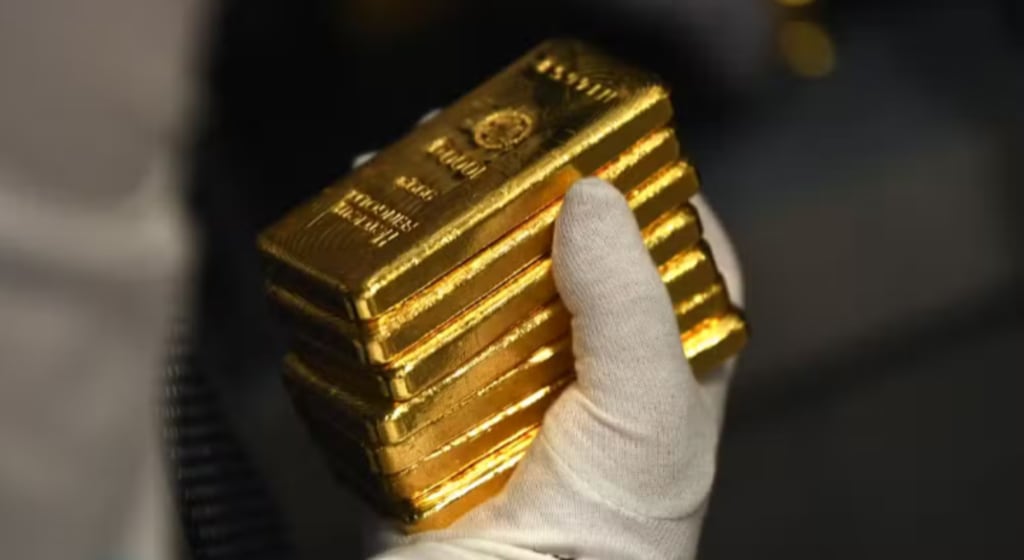
In a positive sign for Pakistan’s economic stability, the country’s gold reserves have recorded a remarkable increase of $3.5 billion during the first seven months of the fiscal year 2025–26 (FY26). This growth reflects both favorable global gold prices and a strategic shift in how Pakistan manages its national reserves.
According to official data from the State Bank of Pakistan, the total value of Pakistan’s gold reserves reached approximately $10.37 billion by January 2026, compared to around $6.84 billion in June 2025. This rise represents one of the most significant improvements in the country’s reserve position in recent years.
But what does this increase really mean for Pakistan’s economy? And why is gold playing such an important role in the country’s financial strategy?
Let’s break it down.
Why Gold Matters in National Reserves
Gold has always been considered a safe and reliable asset. Unlike paper currencies, its value does not depend on a single government or financial system. For this reason, central banks around the world use gold as a hedge against:
Inflation
Currency devaluation
Financial crises
Global market uncertainty
For Pakistan, which has faced repeated balance-of-payment pressures and currency volatility in recent years, gold provides an important layer of financial security.
Holding gold allows the country to diversify its reserves instead of relying solely on foreign currencies like the US dollar. This diversification helps reduce risks if international markets fluctuate or geopolitical tensions rise.
What Drove the $3.5 Billion Increase?
Several key factors contributed to the sharp rise in the value of Pakistan’s gold reserves during FY26.
1. Rising Global Gold Prices
One of the main drivers has been the increase in international gold prices. Over the past year, global investors have turned to gold as a safe haven due to concerns about inflation, interest rates, and geopolitical instability.
Even without buying large new quantities of gold, the higher market price significantly increased the value of Pakistan’s existing holdings. This shows how global trends can directly impact a country’s financial position.
2. Strategic Reserve Management
Pakistan’s central bank has been carefully managing its reserve portfolio by emphasizing more stable and long-term assets. Gold is increasingly seen as a reliable store of value, especially when compared to volatile currencies or risky investments.
Many central banks worldwide are adopting similar strategies, gradually increasing their gold holdings and reducing dependence on the US dollar. Pakistan’s approach reflects this broader international trend.
3. Improved Foreign Inflows
Alongside gold valuation gains, Pakistan has also benefited from improved foreign inflows, including:
Higher overseas remittances
Official financing
Multilateral support programs
Support from institutions like the International Monetary Fund has helped stabilize foreign exchange reserves and boosted confidence in Pakistan’s financial system.
Together, these factors have strengthened the country’s overall reserve position.
How This Impacts Pakistan’s Economy
The rise in gold reserves brings several important benefits for Pakistan’s economic outlook.
1. Greater Financial Stability
Stronger reserves mean Pakistan is better equipped to handle external shocks such as rising oil prices, global recessions, or sudden capital outflows. Gold acts as a buffer during times of crisis, offering protection when other assets lose value.
This stability is especially important for a developing economy that relies heavily on imports and foreign financing.
2. Boost to Investor Confidence
When reserve levels rise, it sends a positive signal to investors, lenders, and international partners. It suggests that the country is managing its finances more responsibly and building resilience against future risks.
Improved confidence can help attract foreign investment and reduce borrowing costs over time.
3. Support for the National Currency
Higher reserve levels — especially in gold and foreign currencies — help support the Pakistani rupee. When markets see that the central bank has strong reserves, speculation and panic-driven currency swings are less likely.
This can contribute to a more stable exchange rate environment.
Challenges Still Remain
Despite this encouraging development, Pakistan’s economic journey is far from smooth.
The country still faces:
Large external debt repayments
High inflation
Trade deficits
Rising import costs
Maintaining a balance between reserve accumulation and meeting daily financial obligations remains a complex task. Gold is valuable, but it is not as liquid as foreign currency when it comes to immediate import payments or debt servicing.
Therefore, policymakers must ensure that gold reserves complement — rather than replace — sufficient foreign exchange holdings.
The Bigger Picture: A Shift in Global Strategy
Pakistan’s move toward strengthening gold reserves mirrors a global shift. Many central banks are reassessing their reliance on the US dollar and increasing gold holdings as part of long-term risk management strategies.
In an era of uncertain geopolitics and volatile markets, gold remains one of the few assets trusted across borders and financial systems.
This suggests that Pakistan’s recent gains are not just a short-term windfall but part of a broader strategic realignment.
Looking Ahead
As FY26 continues, economic observers will closely monitor whether Pakistan can sustain this momentum. Future reserve growth will depend on:
Global gold prices
Continued foreign inflows
Export performance
Domestic economic reforms
If managed wisely, the increase in gold reserves could help Pakistan strengthen its economic foundation, stabilize its currency, and improve its standing in global financial markets.
Conclusion
The $3.5 billion rise in Pakistan’s gold reserves in just seven months is more than just a number — it is a sign of improving financial discipline and strategic reserve management. While challenges remain, this development offers hope for greater economic resilience in the years ahead.
Gold, once again, has proven to be more than a precious metal. For Pakistan, it has become a symbol of stability in uncertain times.
About the Creator
Sajida Sikandar
Hi, I’m Sajida Sikandar, a passionate blogger with 3 years of experience in crafting engaging and insightful content. Join me as I share my thoughts, stories, and ideas on a variety of topics that matter to you.
Keep reading
More stories from Sajida Sikandar and writers in The Swamp and other communities.
Scientists Celebrate Longest Solar Eclipse of the Century While Religious Leaders Call It a Dark Omen That Should Keep Children Indoors
The world witnessed one of the most extraordinary astronomical events of modern times today — the longest solar eclipse of the century. Across continents, skies darkened for several minutes as the Moon perfectly aligned with the Sun, creating a breathtaking spectacle that captivated scientists, photographers, and stargazers alike.
By Sajida Sikandar3 days ago in The Swamp
Why Black History Matters in America?
The United States of America is celebrating their 250th anniversary in 2026. I'm proud to be an American and as someone who was born here, I wouldn't imagine myself living anywhere else. This is a country where opportunities are possible. Where anyone can be successful in anything they desire to do. Equality, community, and togetherness are the backbones of what America is and should be about. However, we have an administration who wants to erase and disregard those who have made positive, meaningful impacts in our country, specifically Black figures, such as Martin Luther King, Jr., Rosa Parks, and Maya Angelou. President Trump and his administration have been constantly complaining and fighting against what they call the "Woke agenda". They use this excuse as a distraction from other issues they refuse to address, such as the high cost of living, climate change, and inflation. That equality is dividing America, when in reality, it's bringing us together. Being woke is not tied to a specific political party. No matter where you stand on the political spectrum, you can still care about other people and their plights. Compassion and empathy for others isn't tied to a political party, either. We were taught as children to treat others the way we want to be treated and not judge others because they're different from us. Caring about others isn't a personal attack on your beliefs. It doesn't make you any less of a person. People who are easily offended over African American figures, past or present, or anything related to it, are grasping at straws. Current and future generations need to know who people like Harriet Tubman and Shirley Chisholm were, especially in the classroom. Black History is part of American History. It should be recognized, not hidden or forgotten. Besides, you can't shield children from everything, just because your feelings are easily hurt.
By Mark Wesley Pritchard 18 days ago in The Swamp
Production Starts on Indonesian Navy’s A-VIATOR Aircraft in Italy
Production has officially begun on the A-VIATOR aircraft for the Indonesian Navy, with assembly taking place at a major aerospace facility in Italy. The program represents a key step in Indonesia’s efforts to modernize its naval aviation capabilities and enhance maritime surveillance, reconnaissance, and tactical operations in the region. Aircraft Overview The A-VIATOR is a multirole aircraft designed to operate in both maritime patrol and combat support roles. Equipped with advanced radar, sensor suites, and communications systems, the aircraft is intended to provide the Indonesian Navy with improved situational awareness over its territorial waters, critical shipping lanes, and archipelagic regions. Italian aerospace manufacturers have been tasked with building the initial production batch, while final delivery and integration will occur in coordination with Indonesian defense officials. The program includes training for pilots and technical crews, maintenance support, and gradual incorporation into existing naval operations. Strategic Importance for Indonesia Indonesia, as the world’s largest archipelagic state, faces unique maritime challenges. Monitoring and securing its extensive coastline, territorial waters, and exclusive economic zones requires advanced aerial and naval assets. The A-VIATOR aircraft program is intended to bolster the country’s maritime security infrastructure and provide rapid-response capabilities to both civilian and military contingencies. Defense analysts note that the introduction of modern aircraft like the A-VIATOR enhances Indonesia’s ability to detect and track unauthorized vessels, respond to regional disputes, and support search and rescue operations. “The aircraft significantly improves the Navy’s reach and effectiveness,” said a regional defense expert. “It’s a critical investment for Indonesia’s maritime defense strategy.” Production and Technology The aircraft features cutting-edge avionics, including automated surveillance systems, electronic intelligence capabilities, and secure communication networks compatible with allied platforms. Its multirole design allows it to switch between reconnaissance, anti-submarine warfare, and limited tactical strike operations, giving the Navy flexibility in deployment. The Italian manufacturer has emphasized precision engineering and adherence to international aerospace standards, ensuring that the aircraft meet both operational and safety requirements. Advanced composite materials and fuel-efficient engines are integrated to maximize performance and endurance. International Cooperation The A-VIATOR program reflects growing collaboration between Indonesia and Italy in defense and aerospace industries. Beyond aircraft production, the partnership includes knowledge transfer, technical training, and long-term support agreements. Indonesian pilots and technical personnel are scheduled for training sessions in Italy before the aircraft are delivered. “This project exemplifies the benefits of international defense collaboration,” an Indonesian Ministry of Defense official said. “We gain access to advanced technology while developing domestic skills and operational expertise for our naval forces.” Regional Implications Southeast Asia has seen increasing competition over maritime security, with neighboring countries investing in modern naval assets to address territorial disputes, piracy, and smuggling. The A-VIATOR aircraft program positions Indonesia to maintain situational awareness and assert its strategic interests more effectively. Analysts believe that the aircraft’s deployment will not only strengthen Indonesia’s defense posture but also enhance regional stability by providing rapid-response surveillance and operational support to multilateral exercises and humanitarian missions. Looking Ahead Initial production is expected to continue through the next several months, with the first aircraft delivered to the Indonesian Navy by late 2026. The program includes gradual fleet expansion, allowing pilots and support crews to familiarize themselves with operations and maintenance procedures. As Indonesia continues to modernize its naval capabilities, the A-VIATOR aircraft program represents a tangible step toward achieving a more versatile and responsive maritime force. Its combination of advanced technology, multirole flexibility, and international collaboration underscores Indonesia’s strategic vision for securing its maritime domain and projecting influence in Southeast Asia.
By Fiaz Ahmed a day ago in The Swamp




Comments
There are no comments for this story
Be the first to respond and start the conversation.