
Pakistan Prime Minister Shehbaz: Navigating Governance Amid Challenges
Shehbaz Sharif’s leadership amid economic and political challenges in Pakistan

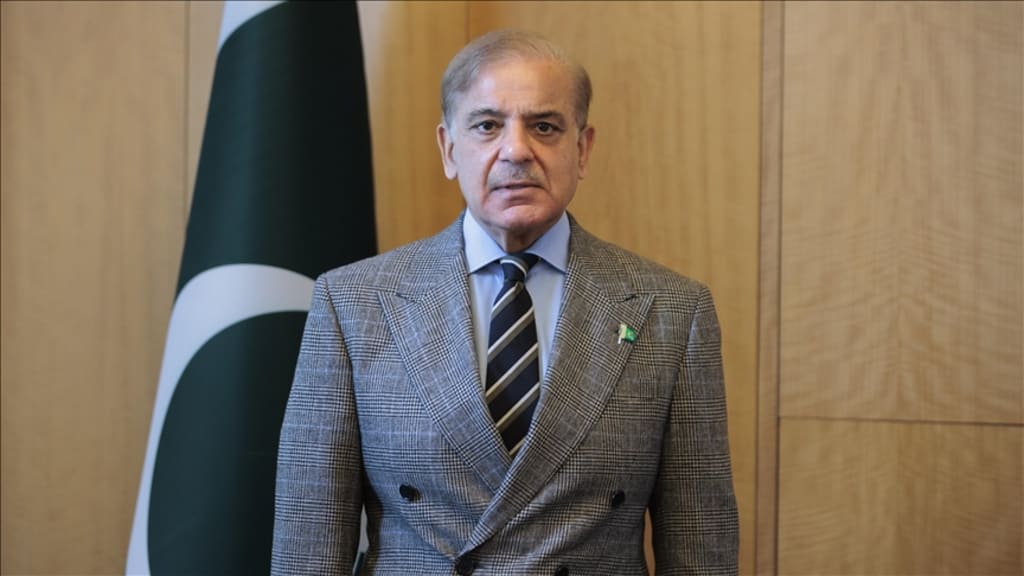
Shehbaz Sharif, the current Prime Minister of Pakistan, has continued to occupy a central role in the nation’s political and economic landscape. As the head of the federal government, his leadership is being closely monitored both domestically and internationally, particularly as Pakistan faces multiple economic, political, and social challenges.
Political Journey and Background
Shehbaz Sharif, a veteran politician and member of the Pakistan Muslim League-Nawaz (PML-N), has held several key positions over the years, including serving as Chief Minister of Punjab, Pakistan’s most populous province. Known for his administrative focus and development projects, Sharif’s political career has been marked by efforts to improve infrastructure, governance, and public service delivery.
He assumed the office of Prime Minister after navigating a complex political scenario in Pakistan, reflecting the turbulent nature of the country’s parliamentary politics. His leadership is often characterized by attempts to balance party priorities with national interests, a challenge in Pakistan’s highly polarized political environment.
Economic Challenges and Policy Focus
Pakistan’s economy has faced significant hurdles, including inflation, foreign debt pressure, and currency fluctuations. As Prime Minister, Shehbaz Sharif has prioritized economic stabilization, engaging with international financial institutions and negotiating for relief measures to manage fiscal deficits.
Efforts to improve industrial growth, attract foreign investment, and enhance energy infrastructure have also been central to his government’s agenda. While critics argue that reforms are slow and dependent on external support, supporters highlight his pragmatic approach to addressing long-standing economic issues.
Governance and Domestic Policies
Shehbaz Sharif’s tenure has emphasized governance reforms aimed at improving public administration and service delivery. Initiatives include modernization of bureaucratic processes, strengthening health and education sectors, and urban development projects, particularly in Punjab and other key provinces.
His government has also focused on law and order, attempting to tackle crime and improve security in major urban areas. These policies aim to balance development with stability, although challenges remain in ensuring effective implementation across the country.
Political Landscape and Opposition
Pakistan’s political landscape remains deeply polarized, with the opposition parties actively scrutinizing the government’s policies. Shehbaz Sharif has faced challenges in navigating these dynamics, particularly when implementing reforms that may affect entrenched interests or require legislative support.
Maintaining coalition support and managing intra-party expectations are ongoing aspects of his leadership. Analysts note that successful governance in Pakistan often depends on political negotiation as much as policy execution, and Sharif’s political experience positions him to handle these pressures.
International Relations
On the international front, Shehbaz Sharif’s government has worked to maintain relations with key allies and regional partners. Balancing diplomatic ties with the United States, China, and neighboring countries like India and Afghanistan remains a critical aspect of Pakistan’s foreign policy strategy.
Economic diplomacy, trade negotiations, and security cooperation are central to Pakistan’s global engagements, and the Prime Minister’s role is crucial in ensuring that these relationships support domestic stability and growth.
Challenges Ahead
Despite his experience, Shehbaz Sharif faces multiple challenges as Prime Minister. Economic pressures, public dissatisfaction over inflation, and political opposition pose significant hurdles. Additionally, addressing governance gaps and ensuring consistent policy implementation across Pakistan’s diverse regions remain persistent issues.
The Prime Minister’s ability to balance immediate economic needs with long-term development goals, while maintaining political stability, will likely define his legacy. How effectively he navigates these challenges will impact Pakistan’s socio-political and economic trajectory in the coming years.
Public Perception and Leadership Style
Public opinion on Shehbaz Sharif is mixed, reflecting the complex nature of Pakistan’s political environment. His administrative efficiency and focus on infrastructure projects are widely acknowledged, while criticisms often target slower reforms and perceived political compromises.
Nevertheless, his leadership style emphasizes pragmatism, administrative oversight, and engagement with multiple stakeholders, which many observers consider essential for governing a nation with Pakistan’s size and diversity.
Conclusion
Prime Minister Shehbaz Sharif continues to steer Pakistan through a period of economic uncertainty and political complexity. His tenure highlights the challenges of governance in a highly dynamic political environment, where domestic priorities, public expectations, and international relations intersect.
As Pakistan looks toward the future, Sharif’s leadership will play a key role in shaping policies, maintaining stability, and fostering development. Observers both within and outside the country remain attentive to how his administration addresses these pressing challenges while navigating the intricate landscape of Pakistani politics.
About the Creator
Asad Ali
I'm Asad Ali, a passionate blogger with 3 years of experience creating engaging and informative content across various niches. I specialize in crafting SEO-friendly articles that drive traffic and deliver value to readers.
Parallel Protests
I haven't written for quite some time, but I have A LOT of thoughts about yesterday's protest rally against our government's involvement and complicity in America's war on Iran, on the harbourside of my home city Bristol, and I need to put them somewhere. My gorgeous girlfriend is always a loving and listening ear and sharing it all with her will always be a healthy and happy way of processing the mental and emotional weight, but getting it straight in my brain to share means writing it all down in straight lines, so, here we are and thanks for being here.
By Steph Cole10 days ago in The Swamp
Germans Protest Against Russia on Paralympic Podium
During a medal ceremony at the 2026 Winter Paralympic Games in Milano‑Cortina, Italy, two German cross‑country skiers made a quiet but powerful political statement by turning their backs on Russian gold medalists as the Russian national anthem played on the podium. Their action highlighted deep tensions surrounding the controversial decision to allow Russian athletes to compete under their own flag and with their national symbols for the first time in over a decade. The protest occurred after Russian skier Anastasiia Bagiian and her guide Sergei Siniakin won gold in the women’s sprint classic for vision‑impaired athletes. As the anthem began, German silver medalist Linn Kazmaier and her guide Florian Baumann turned away from the Russian victors, visibly distancing themselves during the podium protocol. Kazmaier explained to German media that their decision was not personal toward the Russian athletes, whom they don’t know, but rather a response to the broader political context. “That it is so totally overshadowed by politics is simply a complete shame,” she said, noting they kept their hats on and refused to face the flag as a sign of protest. This moment reflects wider controversy at the Paralympics over the inclusion of athletes from Russia and Belarus under their own flags and anthems — a departure from bans imposed after Russia’s state‑sponsored doping scandal and subsequent sanctions following its 2022 invasion of Ukraine. Previously, Russian athletes had been barred or required to compete under neutral status; however, the International Paralympic Committee (IPC) lifted those restrictions in late 2025, prompting protests and boycotts. Ahead of the Games, several countries, including Germany, joined a boycott of the opening ceremony in protest of Russia and Belarus being allowed full national representation. Eleven countries along with the European Union chose not to participate in the event as a symbolic stand against the IPC’s decision, although they remained committed to competing in the sporting events themselves. The sight of German athletes turning away on the podium added another layer to that protest, occurring in the midst of competition rather than before it. Baumann emphasized that their gesture was about solidarity with Ukrainian athletes and opposition to what they saw as a decision that diminishes the integrity of international sport. “It’s not about the Russian athletes themselves… but the IPC’s decision to have Russia here under its own flag… while the Ukrainians are also here is simply not correct,” he said. The restart of Russia’s full national presence at the Paralympics represents a significant shift. Russia won its first gold medal at the Winter Paralympics under its own flag since 2014 at these Games, a moment marked by the playing of the Russian national anthem on the podium — a sight not seen at the Paralympics in many years. While the Moscow Times and other outlets celebrated this return, it sparked backlash elsewhere in the Paralympic community and among fans and officials alike. Critics argue that allowing full national symbols validates Russia’s sporting presence despite ongoing geopolitical conflicts and human rights concerns. Supporters of the IPC’s decision counter that excluding athletes penalizes individuals for the actions of their governments. This debate mirrors broader clashes in sport over whether and how to isolate nations during political crises without unfairly impacting athletes. The German protest also echoes a more general trend of political statements at international sporting events. In recent years, athletes and teams have used their platforms to draw attention to global conflicts and social issues, from kneeling protests to symbolic gestures that reverberate well beyond the field of play. The Paralympics, which celebrates courage, resilience and inclusion, has not been immune to these broader tensions. Despite the symbolism, German athlete Kazmaier acknowledged the complexity of the situation, noting that she and her guide could personally have respect for individuals from other nations while still disagreeing with broader political decisions. “Perhaps they are really nice people, whom we could be friends with,” she said, underscoring the distinction between individuals and the political systems they represent. As the Milano‑Cortina Games continue, similar moments may arise, especially as athletes from different countries confront the emotional and political realities tied to the Russian presence. The episode on the podium serves as a reminder that international sport often intersects with global affairs, and that even events meant to bring people together can reflect the fractures of the wider world.
By Fiaz Ahmed 3 days ago in The Swamp




Comments
There are no comments for this story
Be the first to respond and start the conversation.