
Oil, Defence and Geopolitics: Why Vladimir Putin is Visiting Modi in Delhi
"Inside the High-Stakes Summit Between Putin and Modi"

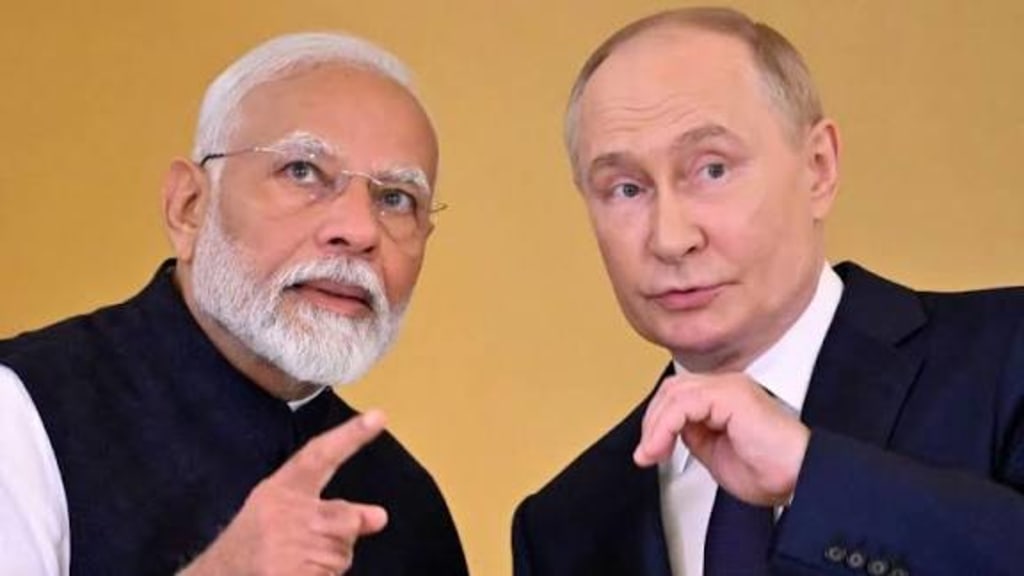
As the world watches shifting alliances and rising geopolitical tensions, the upcoming visit of Russian President Vladimir Putin to India — scheduled for December 4–5, 2025 — has grabbed global headlines. The summit with Indian Prime Minister Narendra Modi is more than a diplomatic courtesy. It is a strategic maneuver by both Moscow and New Delhi aimed at recalibrating their ties across energy, defence, trade, and global geopolitics. Here’s why this visit matters — and what’s at stake.
A Deep-Rooted Partnership: From Cold War to Today
The bond between India and Russia has historical depth. What began as partnership under the Soviet era has carried forward into modern times through the framework of the “Special and Privileged Strategic Partnership.” Military-technical cooperation, arms supply, and defence technology sharing have been central to this relationship. Even though India has diversified its arms procurement over time, a significant portion of its military hardware remains of Russian origin.
From fighter jets like the Su-30, to missile systems such as the S-400 air-defence shield — these are products of decades-long cooperation. As India navigates new security challenges in South Asia and an assertive regional environment, maintaining access to Russian defence supply lines remains a strategic priority.
Oil: The Economic Engine Behind the Diplomacy
Since the outbreak of war in Ukraine and subsequent Western sanctions on Russia, energy trade between Moscow and New Delhi has surged. Russia has emerged as India’s top crude-oil supplier, with an estimated 30–35% of India’s total oil imports coming from Russian crude. This cheap, discounted oil has become a backbone of India’s energy security, helping it keep domestic fuel prices stable.
This boost in oil trade has helped push bilateral trade to record highs — a jump from around $8–9 billion in 2020 to nearly $69 billion in 2024–25. However, the surge has been highly one-sided: India’s exports to Russia remain modest in comparison. New Delhi now hopes to use the summit to push for a more balanced trade basket, with Russian markets opening to Indian pharmaceuticals, consumer goods, agriculture, and industrial exports.
Geopolitics and Strategic Autonomy: A Delicate Balancing Act
Putin’s visit comes at a time when India’s foreign policy is under global scrutiny. With rising tensions between Russia and the West, and growing pressure — especially from the United States — on nations continuing to engage with Moscow, India finds itself walking a tightrope. Accepting discounted Russian oil and deepening defence ties could provoke Western discontent.
Yet, from India’s perspective, this is less about alignment and more about strategic autonomy. By maintaining strong ties with Russia, New Delhi ensures that it is not overly dependent on any single global bloc. This autonomy becomes especially valuable given regional threats and shifting global power balances. As one international relations scholar puts it, Putin’s trip is “a statement of intent” for India’s long-term strategic independence.
For Russia, visiting India signals that Moscow remains relevant despite isolation from the West. It also showcases that Russia still has major global partners, even as sanctions tighten — a message meant for global audiences and allies alike.
What’s on the Agenda: Energy, Defence, Trade — and Much More
According to diplomatic briefings, the upcoming summit will cover:
Stabilizing and possibly restructuring India’s import of Russian oil amid Western pressure and sanctions-related volatility.
Discussing defence deals, including supply and maintenance of existing Russian-origin military hardware, and perhaps new acquisitions like advanced missile-defence systems or fighter jets.
Exploring expansion of bilateral trade beyond energy — encouraging Russia to import more Indian goods such as pharmaceuticals, machinery, textiles, and consumer products.
Negotiating alternate payment mechanisms to bypass sanctions — possibly using non-dollar currencies, rupee-rouble trade, or regional payment networks.
Broader cooperation: civil nuclear energy, space collaboration, technology transfer, and increased labour and skill-exchange frameworks.
Challenges and International Pressure
But the path ahead is not smooth. India’s reliance on Russian oil and arms has attracted criticism from Western capitals, especially with the war in Ukraine still raging. Under pressure from the United States — including tariffs on certain Indian exports — New Delhi must prove it can diversify before fully committing to Moscow.
On the Russian side, sanctions have disrupted its ability to deliver and maintain complex weapon systems. Delays in supplying key military hardware have already been reported, raising doubts about future defence cooperation reliability.
Hence, this summit represents a moment of reckoning — for both sides — between strategic necessity and international pressure.
What It Means for the Global Order
The Putin-Modi summit is not just about bilateral interests. It sends a larger message about the emergence of a multipolar world where countries like India adopt strategic flexibility. It reflects a global shift: declining dominance of Western power blocs, and the rise of diversified alliances — rooted in national interest rather than ideological alignment.
For analysts watching Asia and beyond, the outcome of these talks could reshape regional dynamics: from defence calculations in South Asia to global energy flows, and even trade routes linking Europe, Asia, and beyond.
Conclusion: A Turning Point or a Continuation?
When Vladimir Putin lands in New Delhi, it will not be a nostalgic visit, but a high-stakes negotiation. For India, it’s about safeguarding energy security, defence preparedness, and economic interests. For Russia, it’s about preserving global relevance and sustaining a vital strategic relationship.
What emerges from this summit could recalibrate not only India–Russia relations, but also the broader geopolitical map — especially in a world where power isn’t just about alliances, but about agility, resources, and the ability to balance competing pressures.
Only time will tell whether this visit becomes a turning point — or simply another chapter in the long, complicated story of Indo-Russian ties.
About the Creator
Fiaz Ahmed Brohi
I am a passionate writer with a love for exploring and creating content on trending topics. Always curious, always sharing stories that engage and inspire.
Keep reading
More stories from Fiaz Ahmed Brohi and writers in The Swamp and other communities.
“My Heart Breaks Every Time I'm Called a Hero” – The Pain Behind a Hong Kong Fire Survivor’s Story
Surviving a tragedy is often seen as a miracle. People celebrate the survivors, call them courageous, and hold them up as symbols of hope. But for many who escape disaster, the emotional truth is far more complicated. One such story comes from Hong Kong, where a fire survivor has spoken out about the weight of being labeled a hero. His words—“My heart breaks every time I’m called a hero”—offer a powerful insight into the hidden struggles of trauma, grief, and survivor’s guilt.
By Fiaz Ahmed Brohi2 months ago in The Swamp
Ignition Coil Market Size and Forecast 2025–2033: Steady Growth in a Transitioning Automotive World
Global Ignition Coil Market Overview The global ignition coil market remains a critical pillar of the automotive components industry, even as the world gradually transitions toward electric mobility. Ignition coils are essential electromechanical devices that convert the low voltage from a vehicle’s battery into the high-voltage spark required to ignite the air-fuel mixture in internal combustion engines (ICE). This process directly impacts fuel efficiency, emission levels, engine reliability, and overall vehicle performance.
By Renub Researchabout 22 hours ago in The Swamp
Smart phones, Humans and Aliens.
WARNING. I will be tapping into one of your favorite creative tensions: The absurdity of humans worshipping their glowing rectangles as if they were tiny oracles. There’s something deliciously poetic about that contradiction, and it lends itself beautifully to an instructive proviso.
By Novel Allen4 days ago in Poets


Comments
There are no comments for this story
Be the first to respond and start the conversation.