
Norway Cargo Ship Crash 2025: Human Error Shocking Impact & What It Means for Maritime Safety
Norway Cargo Ship Crash 2025: Human Error Shocking Impact & What It Means for Maritime Safety

Norway Cargo Ship Crash 2025: Human Error Shocking Impact & What It Means for Maritime Safety
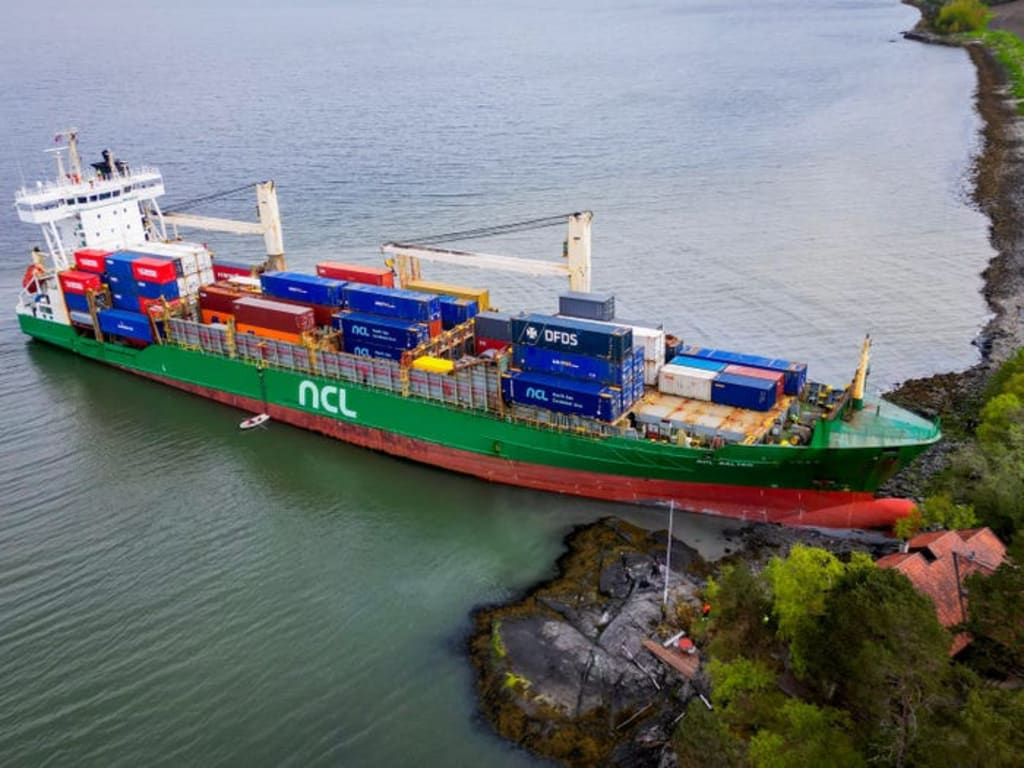
On the quiet morning of May 22/2025 the peaceful coastal village of Byneset near Trondheim Norway woke up to an unimaginable sight a 443-foot cargo ship lodged in someone’s backyard. For locals used to misty fjords chirping seabirds and the calm rhythm of Norwegian village life the sudden arrival of a steel giant was nothing short of surreal. But beyond the headlines and aerial footage that quickly circled the globe this incident is about much more than a ship crash. It’s about people responsibility trust and the thin line between routine and disaster. Johan Helberg a retired fisherman who’s lived his entire life in Byneset was asleep in his home just meters from the coastline. He awoke not to the thunder of crashing metal or a blaring alarm but to the doorbell. It was my neighbor Johan later recounted to a local news station. He said You have a ship in your garden.’ I thought he was joking. Stepping out into the cold morning air, Johan was greeted by the imposing steel bow of a massive container vessel the NCL Salten wedged just five meters from his front door. The ship had plowed through the shallow shore, breaking through the silence like a colossal mechanical beast.
The Incident
The NCL Salten registered under a Cypriot flag and operated by a Lithuanian company had been navigating the Trondheim Fjord en route to the industrial port of Orkanger. Everything seemed normal until the ship failed to make a vital turn. Instead it veered off course and grounded itself near a residential area causing a minor landslide and damaging private property. According to maritime authorities the ship was moving at roughly 30 km/h when it struck land. Fortunately no one was injured neither on board nor on land but the outcome could have been much worse.

Human Error at the Helm
Initial investigations revealed a disturbing truth. The sole officer on duty at the time, a Ukrainian second mate had allegedly fallen asleep at the controls. Without active navigation or a proper bridge watch in place the vessel continued on its trajectory right into Johan Helberg’s yard. Norwegian police quickly charged the officer with negligent navigation triggering legal proceedings and a broader examination of fatigue management aboard international cargo ships. Maritime safety protocols exist for a reason said Katrine Sorvik a spokesperson for Norway’s Maritime Directorate. When those protocols are ignored the consequences can be unpredictable and dangerous. The crash of the NCL Salten is not just a story about one sleepy officer or one damaged garden. It’s a reflection of deeper issues in the shipping industry overwork fatigue lack of oversight and sometimes inadequate training. Cargo shipping operates 24/7 across international waters. Crews are often multinational and officers may work shifts of 12 hours or more with minimal rest. While regulations exist to prevent fatigue enforcement is inconsistent, especially when ships operate under flags of convenience where ships are registered in countries with more lenient safety and labor laws. Experts warn that this incident could easily have led to environmental disaster had the ship been carrying hazardous materials. Fortunately NCL Salten was not transporting dangerous goods at the time.
A Village Shaken
The emotional impact on Byneset residents has been understated in many news reports. While the ship has since been towed away the psychological imprint lingers. For the first few nights I couldn’t sleep Johan Helberg confessed. I kept imagining that another ship would just appear. That feeling of powerlessness it stays with you. For the community it has sparked discussions about shoreline safety emergency preparedness and even insurance issues. Who pays for the damage? Can the residents ever feel truly secure again? Maritime companies regulators and local governments must now work together not only to prevent future incidents but to restore public trust. Norway known for its robust maritime history and strict environmental standards faces a critical moment to lead by example. Stronger regulation of work hours mandatory rest periods and onboard fatigue monitoring technologies could help. Additionally real time coastal monitoring systems and better emergency alerting mechanisms for residents in high traffic maritime zones could offer an added layer of protection.
A Shared Responsibility
While the second mate made a critical error the burden of responsibility doesn’t fall on one person alone. Ship owners maritime authorities flag states and even global consumers who depend on fast shipping all play a part in this complex chain. Every product we order every gadget piece of furniture or clothing item may travel on a vessel like the NCL Salten. And in our demand for speed and cost efficiency the human element sometimes gets lost. This accident reminds us of that hidden human cost. Behind the cargo behind the steel are real people working long hours under challenging conditions. As authorities investigate and the legal process unfolds there is hope that this incident becomes a turning point not only for the residents of Byneset but for the global maritime industry. We dodged a bullet said Sorvik. Let this be the moment we take fatigue seriously not after lives are lost. And for Johan Helberg life has somewhat returned to normal. He’s repaired the damage, the garden is regrowing, and the view of the fjord is unobstructed again. But the experience has left him with a new perspective. I’ve lived by the sea all my life he said. I never thought the sea would come charging at me in the form of a cargo ship. You think you’ve seen everything until you haven’t. The cargo ship crash in Norway is more than a maritime mishap it’s a human story wrapped in steel soaked in saltwater and bound by global systems that too often overlook the importance of vigilance empathy and accountability. As the waves settle let’s not forget what this grounded vessel has taught us about the fragile balance between technology and trust.
About the Creator
Adnan Rasheed
Author & Creator | Writing News , Science Fiction, and Worldwide Update| Digital Product Designer | Sharing life-changing strategies for success.
Keep reading
More stories from Adnan Rasheed and writers in The Swamp and other communities.
Israeli Diplomats Shot Dead in Washington: A Tragic Love Story
Israeli Diplomats Shot Dead in Washington: A Tragic Love Story On a warm spring evening in Washington D.C., the vibrant energy of the city was pierced by the sound of gunfire. Two young Israeli embassy staffers Yaron Lischinsky and Sarah Lynn Milgrim were gunned down near the Capital Jewish Museum just moments after attending a reception focused on interfaith dialogue and humanitarian cooperation. What should have been a night celebrating peace and partnership turned into a nightmare a moment of devastating loss not only for their families but for the diplomatic community and humanity at large. The shooting occurred around 8:15 p.m. in a bustling area of downtown. Witnesses described the chaos the sudden eruption of gunshots screams of onlookers and the desperate attempts by bystanders to assist the victims. Within minutes, law enforcement apprehended the suspected shooter identified as Elias Rodriguez a 30 year old from Chicago. According to reports Rodriguez shouted pro Palestinian slogans during and after the attack which has prompted authorities to investigate the shooting as a hate crime potentially motivated by antisemitism. But beyond the headlines, beyond the political implications lies a profoundly human story. Yaron and Sarah were more than just embassy staffers. They were partners in life and in purpose young professionals dedicated to building bridges between cultures and communities. Their love story cut short by violence adds a heartbreaking layer to an already tragic event. Yaron just 28 held dual German Israeli citizenship and had recently completed military service in Israel. He was working as a research assistant in the embassy’s Political Department where he focused on strengthening U.S Israel relations. Colleagues recall his intellect dedication and warm diplomatic nature. He carried within him a quiet confidence and was deeply committed to representing his country with integrity.
By Adnan Rasheed9 months ago in The Swamp
Why Black History Matters in America?
The United States of America is celebrating their 250th anniversary in 2026. I'm proud to be an American and as someone who was born here, I wouldn't imagine myself living anywhere else. This is a country where opportunities are possible. Where anyone can be successful in anything they desire to do. Equality, community, and togetherness are the backbones of what America is and should be about. However, we have an administration who wants to erase and disregard those who have made positive, meaningful impacts in our country, specifically Black figures, such as Martin Luther King, Jr., Rosa Parks, and Maya Angelou. President Trump and his administration have been constantly complaining and fighting against what they call the "Woke agenda". They use this excuse as a distraction from other issues they refuse to address, such as the high cost of living, climate change, and inflation. That equality is dividing America, when in reality, it's bringing us together. Being woke is not tied to a specific political party. No matter where you stand on the political spectrum, you can still care about other people and their plights. Compassion and empathy for others isn't tied to a political party, either. We were taught as children to treat others the way we want to be treated and not judge others because they're different from us. Caring about others isn't a personal attack on your beliefs. It doesn't make you any less of a person. People who are easily offended over African American figures, past or present, or anything related to it, are grasping at straws. Current and future generations need to know who people like Harriet Tubman and Shirley Chisholm were, especially in the classroom. Black History is part of American History. It should be recognized, not hidden or forgotten. Besides, you can't shield children from everything, just because your feelings are easily hurt.
By Mark Wesley Pritchard 26 days ago in The Swamp
Ukraine War Briefing: Kyiv to Accelerate Placement of Anti-Drone Nets Across Frontline
Ukrainian authorities have announced plans to rapidly expand the installation of anti-drone protective nets along key sections of the front line, as Russian aerial attacks intensify and low-cost drones continue to inflict casualties and disrupt military logistics. The move reflects Kyiv’s growing emphasis on defensive innovation as the war enters another grueling phase marked by attrition and technological adaptation. Officials in Kyiv said the nets — often made of reinforced steel mesh or industrial cables — will be deployed over trenches, vehicle routes, ammunition depots, and medical evacuation corridors. The aim is to intercept or detonate incoming drones before they strike troops or equipment. President Volodymyr Zelenskyy praised frontline units and civilian volunteers who have pioneered the use of such barriers, calling the initiative “a practical and life-saving response to a changing battlefield.” He added that expanding the program is now a national priority as Ukraine confronts daily drone assaults from Russia. Rising Drone Threat Over the past year, drones have become one of the most lethal tools of modern warfare in Ukraine. Cheap, commercially modified quadcopters and long-range explosive drones have been used to target infantry positions, armored vehicles, and even civilian infrastructure. Military analysts say that Russia has dramatically increased its production and deployment of so-called “kamikaze” drones, forcing Ukraine to adapt quickly. While air defense systems remain critical against missiles and aircraft, they are often too costly or scarce to counter every small drone. Anti-drone nets offer a low-tech but effective alternative. By physically blocking drones from reaching their targets, the nets reduce the impact of explosive payloads and prevent surveillance drones from identifying troop positions. A Ukrainian engineer involved in the project said the design was inspired by fishing nets and industrial safety barriers. “We needed something simple, fast to install, and cheap enough to cover kilometers of front line,” he explained. Frontline Implementation The initial rollout has focused on eastern and southern sectors where fighting is most intense. Soldiers have already begun installing net corridors over supply routes and trench systems, sometimes using cranes and trucks to suspend them several meters above ground. Commanders report early success. In several cases, drones became entangled in the mesh and exploded harmlessly above defensive positions. “It doesn’t solve everything, but it gives our troops an extra layer of protection,” said one field officer. Ukraine’s defense ministry confirmed that funding has been allocated to accelerate production and deployment. Civilian factories and metal workshops are being contracted to manufacture standardized net systems, while volunteers continue to help transport and install them near the front. Psychological and Tactical Impact Beyond physical protection, the nets are said to have a psychological benefit. Soldiers operating under constant drone threat often experience stress and fatigue. Knowing that some form of barrier exists overhead has reportedly improved morale in certain units. Military experts caution, however, that the measure is not foolproof. Drones can be programmed to fly higher or attack from different angles, and heavy artillery can destroy net structures. Still, analysts describe the strategy as part of a broader trend toward improvised battlefield defenses. “This war has shown that innovation doesn’t always mean high technology,” said a European defense analyst. “Sometimes simple engineering solutions can shift the balance, at least locally.” Broader Strategic Context The decision to expand anti-drone nets comes as Ukraine continues to face shortages of ammunition and air defense interceptors. Western military aid has resumed but remains uneven, prompting Kyiv to emphasize cost-effective defensive tools. Meanwhile, Russia has continued its drone and missile campaign against Ukrainian cities and infrastructure. Energy facilities, rail networks, and residential areas have all been targeted in recent weeks, underscoring the urgency of defensive adaptations. Zelenskyy’s office said discussions are underway with international partners to share lessons learned from the net deployment program. Some NATO officials have reportedly expressed interest in studying the system for potential use in future conflicts. Looking Ahead As the war grinds on, Ukraine’s approach highlights a shift toward layered defense: combining traditional air defense systems with physical barriers, electronic warfare, and rapid battlefield engineering. The expansion of anti-drone nets may not change the overall strategic picture, but it reflects Kyiv’s determination to protect its forces with whatever tools are available. For Ukrainian soldiers on the front line, the nets represent more than metal and cables. They are a symbol of adaptation in a conflict where survival increasingly depends on creativity as much as firepower.
By Fiaz Ahmed 2 days ago in The Swamp




Comments
There are no comments for this story
Be the first to respond and start the conversation.