
No Kings Sweeps the U.S.: A Nationwide Call Against Authoritarianism
How millions rose up in peaceful protest — and what comes next

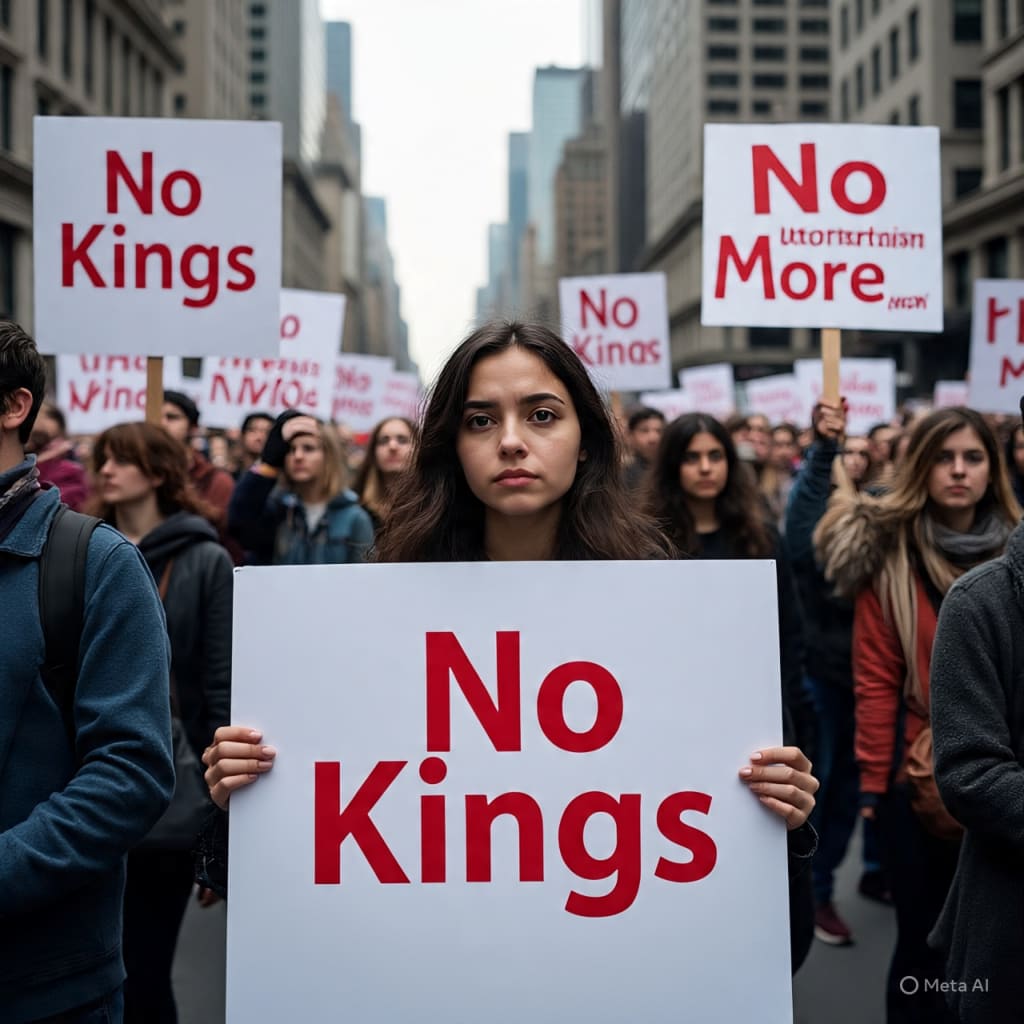
A Nation on Its Feet
On October 18, 2025, millions of Americans filled streets, parks, and city squares across the country. From New York to Los Angeles, small towns to state capitals, they carried handmade signs and chanted a simple message: “No Kings.”
The movement began as a peaceful protest against what many citizens see as a growing threat to democracy. Protesters believe that no single leader should stand above the Constitution or act like a monarch. Their goal is to remind the government that power belongs to the people—and that democracy depends on shared responsibility, not fear or control.
The Meaning Behind “No Kings”
The name “No Kings” captures the heart of the protest. Supporters say it is not about one person, but about the principles of fairness, equality, and freedom. The phrase suggests that America must never become a country ruled by one figure or one party.
Organizers describe their campaign as nonviolent and inclusive. They want to bring people together—workers, students, veterans, teachers, and faith leaders—to show unity against the idea of unchecked power. The movement’s slogan, “No Thrones, No Crowns, No Kings,” has become a chant of determination for millions.
Why People Are Protesting
Participants joined the protests for many reasons, but they share common concerns. Many fear the erosion of civil rights and the rise of government actions that seem to ignore limits of power. Others are worried about the treatment of journalists, surveillance of citizens, or the use of federal agencies to silence critics.
People across generations joined hands to say they do not want to live under intimidation or political division. Parents brought their children to teach them about civic duty. Veterans marched to defend the Constitution they once fought for. Students carried signs about truth, justice, and equality.
Labor unions, community groups, and small-business owners also added their voices. They said that strong democracies depend on fairness, transparency, and the ability to disagree without fe
What Happened Across the Country
The day of protest unfolded peacefully in most places. In Washington D.C., huge crowds filled the National Mall, holding up banners that read “The People Rule.” Similar gatherings happened in Chicago, Atlanta, Dallas, Seattle, and hundreds of smaller towns.
There were moments of tension when local police used drones and monitoring tools around large gatherings, which some felt crossed privacy lines. Still, most marches stayed calm and focused.
In a few cities, isolated incidents broke out, including minor scuffles and one tragic event where a volunteer was injured while trying to stop violence. These moments were exceptions in what was otherwise one of the largest peaceful protests in American history.
A Movement in the Digital Age
Online, the movement spread faster than anyone expected. Images and videos of the marches flooded social media, shared by millions within hours. Some of the most powerful pictures showed families holding candles at night, symbolizing hope and unity.
However, the digital world also brought challenges. False stories, misleading videos, and artificial intelligence–generated clips began circulating, confusing the public. Supporters of the movement warned that misinformation could weaken democracy as much as corruption or abuse of power.
Voices of Support and Opposition
The “No Kings” protests sparked strong emotions. Supporters called it a turning point—a peaceful revolution meant to defend the rule of law. They said the protests were patriotic acts meant to protect freedom, not attack the government.
Critics, however, dismissed the movement as partisan or exaggerated. Some political leaders accused protesters of disrespecting authority or dividing the country. Others argued that marching in the streets changes little without political organization.
Despite disagreements, both sides acknowledged one truth: millions of people had spoken out together, and their message could not be ignored.
What Comes Next
Organizers say this is only the beginning. They plan to keep building local chapters, teaching communities about their rights, and helping citizens register to vote. They believe that lasting change will not come from one day of marching but from steady, everyday participation in democracy.
The movement’s long-term goal is to reconnect citizens with the institutions meant to serve them—schools, courts, and Congress—and to remind leaders that their power comes from consent, not control.
Some participants have already begun local projects: neighborhood meetings, voter-education drives, and workshops about civic action. Others are forming youth councils to keep younger generations engaged.
Challenges Ahead
Every movement faces tests, and “No Kings” is no exception. Keeping millions of people motivated over months will be hard. Turning public outrage into real policy requires patience, organization, and leadership.
There is also the challenge of unity. Because the movement includes people from so many backgrounds, disagreements about direction and tactics will appear. Staying focused on common goals—fairness, equality, and respect for the law—will determine whether “No Kings” becomes a lasting force or fades into history.
A Turning Point
The “No Kings” protest shows that democracy still stirs deep emotion in America. It brought together strangers who believe the nation’s promise of liberty must be defended by its people, not just its leaders.
Whether this movement sparks reform or simply reminds citizens of their shared values, it has already changed the conversation. It proved that peaceful protest can still unite millions, that voices raised together can echo across a continent, and that no crown, throne, or title can outweigh the will of a free people.
About the Creator
Saad
I’m Saad. I’m a passionate writer who loves exploring trending news topics, sharing insights, and keeping readers updated on what’s happening around the world.
Global Leaders Gather in Switzerland to Ponder the Future of a Messy World
In a world marked by conflict, climate crises, and economic instability, the small alpine country of Switzerland has once again become the focal point for global diplomacy. Leaders from around the world have gathered in Geneva this week to engage in what many are calling one of the most consequential international meetings of the decade. The purpose? To ponder the future of a world that seems increasingly messy, unpredictable, and interconnected in ways that defy easy solutions.
By Aqib Hussain40 minutes ago in The Swamp


Comments
There are no comments for this story
Be the first to respond and start the conversation.