
Nigel Farage’s Reform UK Scores Historic By-Election Win.
Nigel Farage’s Reform UK Scores Historic By-Election Win in Labour Heartland: Is This the First Result of a Political Revolution?
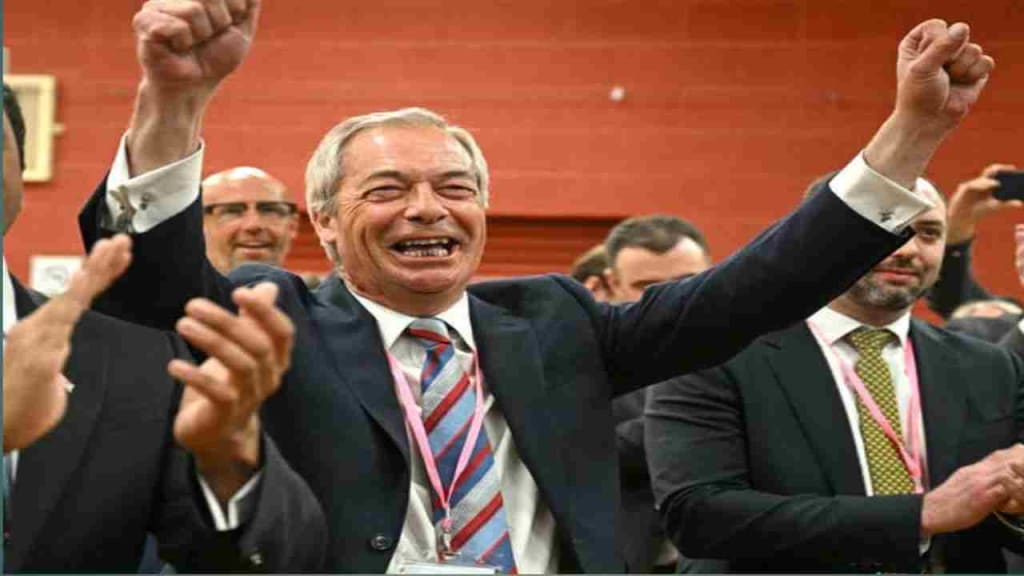
On May 2, 2025, Nigel Farage’s Reform UK pulled off a political earthquake, snatching the parliamentary seat of Runcorn and Helsby from Labour by just six votes—the narrowest by-election victory in British history since 1945 . This dramatic result, in a traditionally Labour-dominated corner of northwest England, marks a pivotal moment for Reform UK. Once dismissed as a fringe movement, the party is now positioning itself as a credible challenger to Britain’s century-old two-party system. Here’s what this historic win means for British politics and why it could signal the first result of a seismic shift.
The Runcorn Miracle: How Reform UK Defied the Odds
The Runcorn and Helsby by-election was triggered after Labour MP Mike Amesbury resigned following his conviction for assaulting a constituent. Labour had held the seat with a commanding 14,700-vote majority in the 2024 general election, but Reform’s Sarah Pochin—a former Tory councillor—secured victory with 12,645 votes, edging out Labour’s Karen Shore by a razor-thin margin .
The result stunned observers. A 17% swing from Labour to Reform—far higher than national polling trends suggested—highlighted the effectiveness of Reform’s ground campaign. Farage hailed the win as proof that his party is now “the opposition” to Labour, declaring, “This is heartland Labour Party. Their vote has collapsed, and much of it’s come to us” .
Key factors behind the upset:
Immigration and Cost of Living: Reform focused on hot-button issues like small boat crossings, energy bills, and cuts to winter fuel payments, resonating with voters frustrated by Labour’s policies .
- Local Discontent: The scandal surrounding Amesbury’s resignation left Labour vulnerable, with Shore’s campaign criticized for its tone on asylum seekers, which some saw as divisive .
- Collapsing Tory Support: The Conservatives, once a strong third in the seat, plummeted to 7% of the vote, signaling their decline in regions now contested by Reform .
Beyond Runcorn: Reform’s Growing Footprint
Reform’s success wasn’t limited to Runcorn. The party also claimed its first mayoral victory in Greater Lincolnshire, where former Tory MP Andrea Jenkyns won with a 40,000-vote majority. Jenkyns pledged to end “soft touch Britain,” advocating for asylum seekers to be housed in tents rather than hotels .
In other mayoral races, Reform came agonizingly close to victory:
North Tyneside: Lost by 444 votes after a 26% swing from Labour .
- Doncaster: Defeated by 698 votes .
- West of England: Secured second place, pushing the Conservatives to fourth .
The party also made significant council gains, winning 30 of 36 seats declared in Lincolnshire and emerging as a major force in areas like Northumberland . These results suggest Reform is building the local infrastructure Farage has long demanded, mirroring the Liberal Democrats’ strategy of grassroots campaigning .
Farage’s Quest to “Professionalise” Reform UK
For years, Farage blamed Reform’s “amateurism” for underperformance. After winning just five seats in the 2024 general election, he vowed to transform the party into a professional operation. The Runcorn victory suggests his efforts are paying off .
Tactics Behind the Turnaround:
- Targeted Spending: Reform reportedly spent over £2 million on personalized letters to postal voters—far exceeding its declared donations—raising questions about funding sources .
- Expanding Reach: The party is recruiting disaffected Tory and Labour voters, particularly in post-industrial regions where dissatisfaction with mainstream politics runs high .
- Media Savvy: Farage’s knack for dominating headlines, combined with divisive rhetoric on immigration and cultural issues, keeps Reform in the spotlight .
Critics, however, accuse Farage of hypocrisy. TUC chief Paul Nowak branded him a “political fraud” cosplaying as a working-class champion, citing contradictions in his stance on workers’ rights and Brexit’s economic impact .
Labour and Conservatives: A Crisis of Confidence
The Runcorn result has rattled Labour. Despite holding three mayoralties, the party saw its vote share plummet in key battlegrounds. A Labour spokesperson admitted voters “expect the government to move faster” but blamed the defeat on lingering anger over 14 years of Tory rule .
For the Conservatives, the picture is bleaker. Once dominant in regions like Lincolnshire, they are now being squeezed by Reform on the right and the Liberal Democrats in the south. Leader Kemi Badenoch acknowledged the results could be “very difficult,” with Reform’s populist messaging on immigration and taxes resonating with disillusioned voters .
What’s Next for Reform UK?
Farage has framed the Runcorn win as “the first step” in a long-term plan to replace the Conservatives as Labour’s main opposition. Key challenges remain:
1. Sustaining Momentum: Reform must prove it can replicate success beyond protest votes. Analysts warn its coalition of disgruntled voters may lack cohesion .
2. Funding Scrutiny: Questions over campaign spending and donations could undermine credibility .
3. Policy Depth: Critics argue Reform’s platform—heavy on anti-immigration rhetoric but light on economic detail—may falter under scrutiny .
Yet, with Reform leading national polls and Farage eyeing the 2029 general election, the party’s rise signals a fragmented political landscape. As Tim Bale, politics professor at Queen Mary University, noted: “The Conservatives and Reform are in a fight for the soul of the right wing of UK politics” .
Conclusion: A New Era for British Politics?
The Runcorn by-election isn’t just a historic first result for Reform UK—it’s a warning to Britain’s political establishment. Farage’s ability to capitalize on voter disillusionment, combined with a professionalized campaign machine, suggests Reform is here to stay. Whether it can evolve from a protest movement into a governing force remains uncertain, but one thing is clear: the era of Labour-Conservative dominance is under threat like never before.
For Labour and the Conservatives, the message is stark: adapt or risk being left behind. As Farage put it, “We can change the future of our country” . After May 2, 2025, few would bet against him.
About the Creator
The Forsyth House Fire
Since 1851, Forsyth House has stood on the corner of Union Street and Gordon Street in the heart of Glasgow. Its iconic, or was... because on Sunday 8th of March, 2026, a fire broke out in a small, seemingly un-named shop in the building and tore all that history down. As I write, the rubble is still unsettled and the street is still blocked off. Central Station is quiet on the upper level, and around 30 small businesses have quite literally gone up in smoke.
By S. A. Crawford3 days ago in The Swamp
Alexander Brothers: Power, Controversy, and a Story That Won’t Fade
Some stories capture public attention because they mix success, family loyalty, and controversy in ways that feel difficult to ignore. The story of the Alexander Brothers is one of those narratives. What began as a journey of ambition and shared goals gradually turned into a complicated tale discussed across media and public conversations. When brothers build reputations together, their actions often reflect on one another, whether positive or negative. This makes their story more intense than that of individuals working alone. The Alexander Brothers became widely known not only because of their professional success but also because of the questions and debates that followed. Their story raises important thoughts about power, reputation, and the complicated bond that exists between siblings who rise together.
By Muqadas khan6 days ago in The Swamp




Comments
There are no comments for this story
Be the first to respond and start the conversation.