
More Shades of Gray: What Are We Really Doing in Venezuela?
As the U.S. detains Nicolás Maduro, partisan reflexes are replacing serious debate about risks, legality, and what comes next.

“We will, in fact, be greeted as liberators”
– Dick Cheney
We cannot even agree on what to call the military’s forced extraction of Nicolás Maduro, the man acting as Venezuela’s leader. Was it an act of war—or a law-enforcement action carried out abroad?
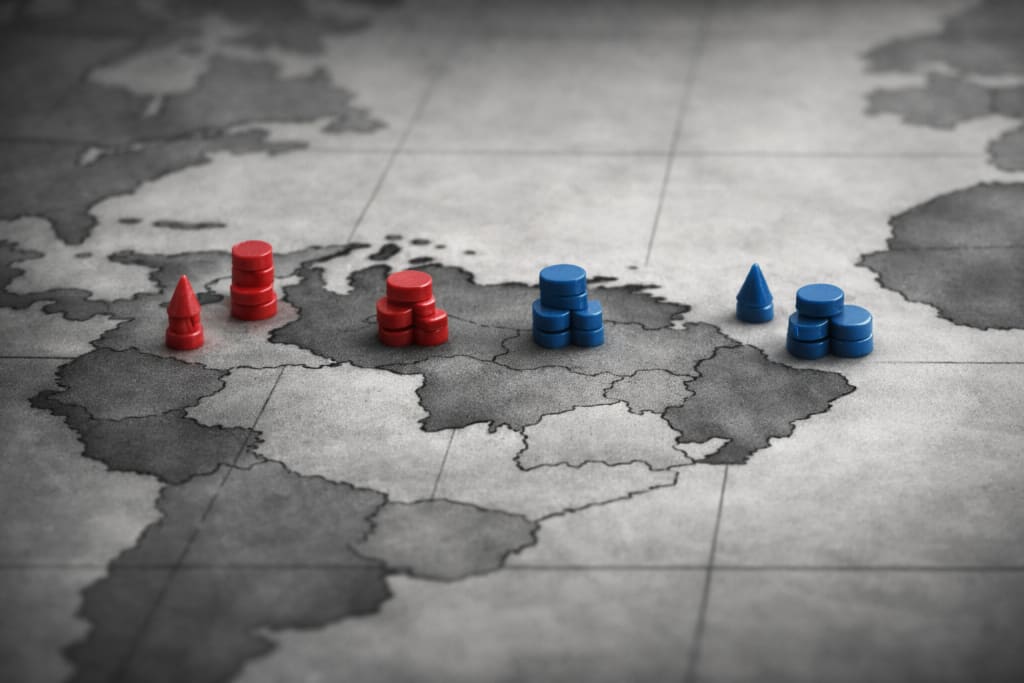
That question, along with the risks involved and what comes next, has been pushed aside in favor of familiar red-and-blue narratives. We are, once again, avoiding the shades of gray that decisions of this magnitude demand.
Few world leaders could generate less sympathy than Maduro when it comes to being removed from office. Venezuelans attempted to do it themselves at the ballot box during the July 28, 2024, presidential election. Independent observers reported that opposition candidate Edmundo González defeated Maduro by a wide margin, with some saying his support was as high as 68.74%.
Venezuela’s National Election Council (CNE) announced a dramatically different outcome. Without ever providing any underlying data, the CNE declared Maduro the winner with 51.95% of the vote. Facing threats of arrest, González fled to Spain while Maduro was sworn in for a third term.
As the White House notes on its website, many Democratic leaders condemned the fraudulent election result. As an example, frequent Trump critic Rep. Jamie Raskin is quoted as saying that “the democratic world must stand up for the rule of law in Venezuela and oppose Maduro’s assault on the electoral process and free speech”.
With Maduro now in American custody, the Trump administration argues that the mission is accomplished and that the Democratic leadership should be congratulating him for scoring “another remarkable foreign policy triumph.” Instead, the opposition party is calling Trump’s actions “an illegal act of war to replace Maduro.” The administration complains that this is a “furious hypocrisy” brought on by “their unhinged hatred of President Trump.”
This dramatic rhetoric forestalls any ability to understand why Democrats are opposing these actions. It replaces explanation with performance, and persuasion with score-keeping. In the process, politics becomes a game where the only thing that matters is which side “wins.”
One does not have to go back very far in history to see that the toppling of a despotic leader is the easy part. It took only 20 days to overtake Baghdad and another eight months to capture Saddam Hussein when we invaded Iraq in 2003. This success was initially welcomed by many Iraqis, but it was not long before the leader’s absence created a vacuum that left us bogged down in the country for eight years.
Could the actions taken in Venezuela result in a similar quagmire? The possibility only increases if we are not united around a common goal. With a war bump in the polls failing to materialize and 52% of Americans already disapproving of the action in Venezuela, it does not seem that the President will be able to depend on public opinion to drive momentum.
At least in Iraq, we were actively trying to prop up a government to succeed Hussein’s regime. While Trump wants credit as a liberator, the Venezuelan government that helped sustain Maduro’s rule is still in power, and it is still ruling the people with an iron fist. Trump has not made any public moves to ensure that the results of the 2024 election are respected. He has also refused to back opposition leader María Corina Machado, reportedly because she accepted “the Nobel Peace Prize rather than declaring that Trump deserved it more.”
Trump has also not made a case that he took action because of support for democracy. Initially, the reason given for removing Maduro was his alleged involvement in the drug trade, but prosecutors have had to change their initial indictment because the Cartel de Los Soles, the drug cartel Maduro was said to have led, did not really exist.
The focus since the military action has been Venezuela’s vast oil reserves, which are now supposedly under our control. This focus complicates any claim of humanitarian or democratic intent.
According to Trump, we now control Venezuela and will do so “for years.” However, without boots currently on the ground and no announced plans to deploy them, it is not clear how much power he actually holds. The claim is certainly undermined by the American government encouraging United States citizens to evacuate the country immediately due to threats by armed militias and the risks, “including wrongful detention, torture in detention, terrorism, kidnapping, arbitrary enforcement of local laws, crime, civil unrest, and poor health infrastructure.”
As this situation risks spiraling out of control, it is time for Americans to leave their red and blue silos and debate the issue honestly—inside the gray space where consequences live. Failure to do so risks pushing the country toward a broader conflict, with the ultimate cost borne by kids from both sides of the political aisle.
_____
Carl Petersen is a former Green Party candidate for the LAUSD School Board and a longtime advocate for public education and special needs families. Now based in Washington State, he writes about politics, culture, and their intersections at TheDifrntDrmr.
About the Creator
Carl J. Petersen
Carl Petersen is a parent advocate for students with SpEd needs and public education. As a Green Party candidate in LAUSD’s District 2 School Board race, he was endorsed by Network for Public Education (NPE) Action. Opinions are his own.
Keep reading
More stories from Carl J. Petersen and writers in The Swamp and other communities.
The Beauty of Gray: When Tragedy Becomes a Talking Point
“This is not a black and white world To be alive I say the colours must swirl” – Live, “The Beauty of Gray” Within an America divided between blue and red, there is no gray. Everything is black and white, as perceived realities are colored by how we need the world to look. Lost is the ability to see nuance, especially when it makes us question the correctness of “our side.”
By Carl J. Petersen6 days ago in The Swamp
Ukraine War Briefing: Oreshnik Missile Sparks Anger at UN Security Council
The ongoing conflict in Ukraine has once again drawn the world’s attention after the recent deployment of the Oreshnik missile became a focal point of debate at the United Nations Security Council (UNSC). The missile, reportedly used in the latest skirmishes in eastern Ukraine, has intensified global concerns about the escalating conflict and the potential humanitarian consequences. Diplomats, analysts, and world leaders are closely monitoring the situation as discussions at the UNSC reveal deep divisions among member states over accountability, sanctions, and peace efforts. What Is the Oreshnik Missile? The Oreshnik missile is a newly highlighted weapon in the Ukraine war, drawing scrutiny for its advanced capabilities. Analysts describe it as a medium-range guided missile, designed for precision strikes against strategic military targets. Its use in the conflict has raised questions about proportionality, civilian safety, and adherence to international law. While military officials claim the missile provides tactical advantages, critics argue that its deployment near populated areas risks civilian lives and could violate humanitarian norms. The UN Security Council Reacts The UNSC convened an emergency session following reports of the missile strikes. Member states expressed sharply divided opinions on how to respond. Countries condemning the missile’s use stressed that such actions escalate the war and endanger civilians. They called for urgent investigations and reiterated demands for Russia to adhere to international humanitarian law. Conversely, some nations defended the deployment, framing it as a necessary act of national defense. This division highlights broader geopolitical tensions, reflecting competing interests and alliances that influence the Security Council’s ability to take unified action. Global Outrage and Public Response The news of the Oreshnik missile’s deployment has ignited widespread outrage beyond diplomatic circles. International media outlets and human rights organizations have amplified concerns about civilian casualties, particularly in areas with high population density. Social media has also become a platform for activists, journalists, and everyday citizens to voice their anger and call for immediate intervention. Protests and awareness campaigns in Europe, North America, and parts of Asia emphasize the humanitarian toll of the conflict. These global reactions put additional pressure on world leaders to respond with decisive measures, including sanctions, diplomatic interventions, and peacekeeping efforts. Strategic Implications for Ukraine Military analysts suggest that the Oreshnik missile represents a strategic escalation, signaling a shift in the tactics used in the ongoing war. Its precision targeting may give the deploying forces significant operational advantage, but it also risks triggering stronger international responses. Ukrainian officials have condemned the missile attacks, citing civilian harm and destruction of critical infrastructure. In practical terms, the missile’s use may influence the balance of power in contested regions, particularly in eastern Ukraine where fighting has been intense. Analysts warn that the weapon could intensify the conflict, complicating prospects for negotiations and prolonging human suffering. Diplomatic Challenges at the UNSC The Security Council faces significant challenges in addressing the Oreshnik missile controversy. The council’s permanent members, including the United States, Russia, China, the United Kingdom, and France, hold veto powers that make unanimous resolutions difficult. In this case, political alliances and opposing narratives have prevented a clear consensus on punitive measures or interventions. Experts argue that the deadlock at the UNSC underscores broader limitations in the international system when addressing conflicts involving advanced weaponry and state actors with competing agendas. Without coordinated action, the risk of escalation in Ukraine remains high. Humanitarian Concerns Humanitarian organizations have highlighted the immediate consequences of missile strikes, including displacement, injuries, and infrastructure destruction. Hospitals, schools, and residential areas in eastern Ukraine have reportedly suffered damage, exacerbating the ongoing humanitarian crisis. International agencies emphasize that protecting civilians must remain a priority, urging both sides to respect international law. They also call for increased funding and access for relief efforts, warning that continued military escalation could worsen the already dire situation for millions of Ukrainians. The Path Forward While the Oreshnik missile has intensified global attention on Ukraine, experts stress that long-term solutions require diplomacy and accountability. Negotiations at international forums, including the UN, must balance security concerns with humanitarian imperatives. Observers note that transparency in military actions, independent investigations, and adherence to international treaties are essential to prevent further escalation. Meanwhile, the global community faces the challenge of supporting Ukraine while avoiding policies that could exacerbate the conflict. Conclusion: A Critical Moment in Global Diplomacy The deployment of the Oreshnik missile and the ensuing debates at the UN Security Council mark a critical moment in the Ukraine conflict. It underscores the intersection of modern warfare, geopolitics, and humanitarian responsibility. As the world watches, the international community faces urgent questions: How can escalation be prevented? How can civilian lives be protected? And what role should global institutions play in mediating a conflict that continues to threaten regional and international stability? For Ukraine, the missile represents both a tactical and symbolic escalation, while for the UN and its member states, it highlights the challenges of enforcing international norms in a rapidly changing conflict landscape. The coming weeks may determine not only the trajectory of the war but also the credibility of global governancein upholding peace and security.
By Aarif Lashari6 days ago in The Swamp



Comments
There are no comments for this story
Be the first to respond and start the conversation.