
Minister Rules Out National Security Status for New Fisheries Ships
Modern Fisheries Fleet Boosts Economy and Marine Protection, But National Security Status Remains Off the Table”

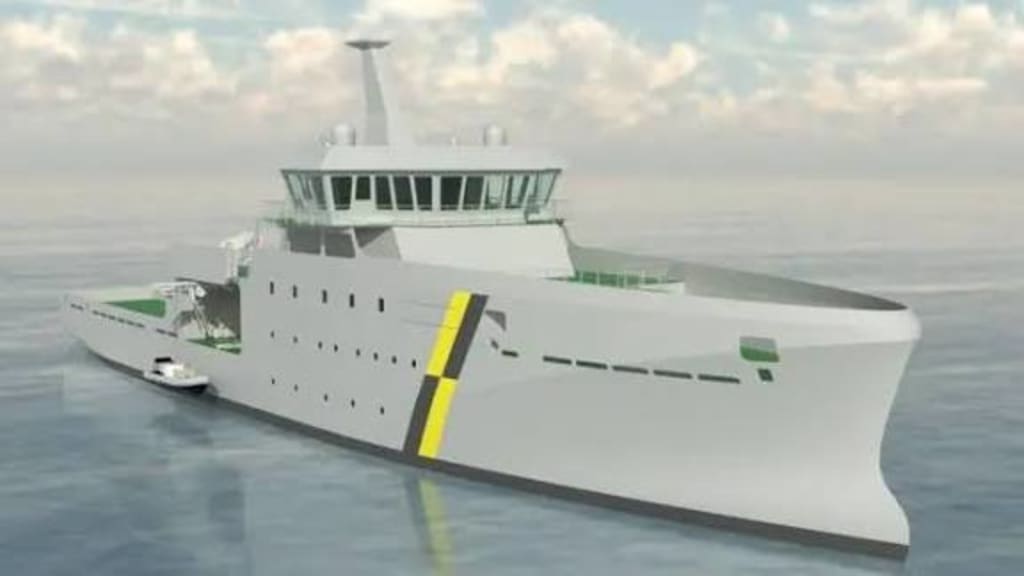
In a recent statement, the government has ruled out granting national security status to newly commissioned fisheries vessels, a move that has sparked debate among policymakers, industry experts, and maritime stakeholders. While the fleet expansion is seen as a crucial step for safeguarding marine resources and boosting economic activity, the decision not to classify these ships under national security protocols raises questions about oversight, strategic priorities, and resource allocation.
Expanding the Fisheries Fleet
Over the past few years, the government has invested heavily in modernizing the country’s fisheries fleet. The new ships are equipped with advanced technology for monitoring fish stocks, enforcing sustainable fishing practices, and combating illegal, unreported, and unregulated (IUU) fishing. According to officials, these vessels represent a significant leap forward in protecting marine ecosystems and supporting coastal communities whose livelihoods depend on fishing.
Despite the technological advancements, the minister clarified that these ships would not receive the same designation or protection as naval or coast guard vessels. “While these fisheries ships play a critical role in supporting the economy and monitoring our waters, they are not intended for national defense or military operations,” the minister stated. “They remain civilian assets focused on resource management and environmental stewardship.”
Implications for Security and Oversight
The decision has prompted discussions among experts about whether fisheries ships might still face security threats from piracy, territorial disputes, or organized criminal activity. Unlike naval ships, which operate under strict national security protocols and can respond to threats with military authority, fisheries vessels are primarily civilian in nature and have limited enforcement capabilities.
Maritime security analyst Dr. Samantha Rowe notes, “Fisheries vessels are increasingly operating in areas where geopolitical tensions are rising, particularly in contested waters. While it may not be necessary to classify them as national security assets, there should be clear protocols and support mechanisms to ensure crew safety and vessel protection.”
The lack of national security status also affects funding and coordination with defense forces. Civilian fisheries ships may not have access to certain intelligence, protective measures, or rapid response support that are standard for military vessels. This has led some stakeholders to advocate for enhanced cooperation between fisheries authorities and naval forces, without formally designating the ships as part of the national security apparatus.
Economic and Environmental Considerations
While security concerns are a key point of discussion, the primary purpose of the new fleet is economic and environmental. Fisheries play a vital role in food security, export earnings, and local employment, particularly in coastal regions. By investing in modern vessels equipped with satellite tracking, automated monitoring systems, and sustainable fishing technologies, the government aims to maximize resource efficiency and minimize environmental impact.
Dr. Ramesh Patel, a marine ecologist, highlights the ecological importance of the fleet: “Illegal fishing and overexploitation of fish stocks are significant threats to marine biodiversity. These new ships are essential for data collection, enforcement of quotas, and ensuring that future generations have access to healthy oceans.”
The minister emphasized that the decision not to assign national security status does not diminish the importance of the fleet. “Our priority is sustainable fisheries management and economic support for the fishing communities,” the minister explained. “National security designation is not a prerequisite for achieving these goals.”
Strategic Balance
By keeping the vessels under civilian status, the government maintains a balance between oversight, operational flexibility, and cost efficiency. National security classification would have required higher expenditure, stricter operational controls, and potential limitations on how the ships could be used in daily fisheries operations. Civilian status allows for more adaptable deployment while maintaining accountability through maritime regulations and fisheries authorities.
Additionally, the decision reflects a broader trend in separating defense and civilian maritime functions. While some countries have merged fisheries and naval operations, others maintain clear distinctions to prevent mission overlap, reduce bureaucratic complexity, and allocate resources more efficiently.
Public Response and Industry Reaction
The fishing industry has generally welcomed the expansion of the fleet, noting that the vessels enhance productivity and compliance with international fishing standards. However, some groups have expressed concerns about potential threats from foreign actors, particularly in waters that are subject to regional disputes or increased smuggling activity.
Stakeholders are calling for clear operational guidelines, emergency response plans, and cooperative arrangements with naval forces to ensure that the new fleet can operate safely without compromising its civilian mandate.
Conclusion
The government’s decision to rule out national security status for new fisheries ships underscores the civilian and economic focus of the fleet. While the ships are equipped with cutting-edge technology to monitor and protect marine resources, they remain separate from defense operations.
As fisheries continue to play a critical role in the economy, food security, and environmental sustainability, the challenge lies in ensuring that the vessels operate safely in increasingly complex maritime environments. Collaboration, proper oversight, and strategic planning will be key to maximizing the fleet’s impact without overextending its civilian mandate.
About the Creator
Fiaz Ahmed Brohi
I am a passionate writer with a love for exploring and creating content on trending topics. Always curious, always sharing stories that engage and inspire.
Keep reading
More stories from Fiaz Ahmed Brohi and writers in The Swamp and other communities.
The Finest in the World: Why the US is Buying Icebreakers from Finland
In a world increasingly defined by shifting geopolitical landscapes and extreme climates, the United States is turning to Finland for a fleet of icebreakers, widely regarded as the finest in the world. This strategic move underscores both the rising importance of the Arctic region and the growing need for advanced maritime technology capable of navigating the icy waters at the top of the globe. Finland’s Icebreaking Legacy Finland has long been a global leader in icebreaker technology. With harsh winters and a northern coastline that stretches into the Arctic Circle, the country has mastered the art of building vessels that can navigate through thick sea ice efficiently and safely. Finnish icebreakers are renowned not just for their raw power, but also for their precision, durability, and technological sophistication. They can cut through ice up to several meters thick, maintain stability in freezing conditions, and even support supply missions in the most remote and hostile environments. This expertise has made Finnish icebreakers a gold standard, sought after by nations that require reliable access to icy waters. While the United States has historically relied on a small fleet of icebreakers, many of these vessels are aging, and the current fleet cannot meet the increasing demands of Arctic operations. By partnering with Finland, the US is gaining access to vessels designed with decades of experience, cutting-edge engineering, and proven operational performance. Strategic Importance of the Arctic The Arctic has emerged as a region of growing strategic importance. Climate change has led to melting ice, opening new maritime routes that were previously impassable for most of the year. This has not only created opportunities for trade but also heightened the need for territorial defense, environmental monitoring, and search-and-rescue operations. The US sees its icebreaker fleet as a key asset in maintaining influence in this rapidly changing region. Having Finnish-built icebreakers allows the United States to expand its operational capabilities. These vessels can escort commercial ships through icy waters, conduct scientific research, and respond to emergencies in the Arctic. The decision to procure icebreakers from Finland is therefore as much about strategic positioning as it is about maritime capability. Technological Edge Finnish icebreakers are equipped with some of the most advanced maritime technology in the world. From hull designs that minimize ice resistance to propulsion systems that combine efficiency with immense power, these vessels are built to perform in conditions that would ground most ships. Many of them also include sophisticated navigation and communication systems, enabling crews to operate safely in regions where conventional navigation is challenging due to ice coverage and limited satellite connectivity. The US will benefit from these technologies, particularly as Arctic operations require not only strength but also precision. Whether escorting supply ships, conducting military exercises, or supporting scientific missions, Finnish icebreakers offer reliability that aging US vessels cannot match. Economic and Diplomatic Considerations Beyond technical superiority, the procurement of icebreakers from Finland also reflects broader economic and diplomatic considerations. By engaging Finnish shipbuilders, the US strengthens its ties with a country that is strategically positioned between the North Atlantic and the Arctic. This cooperation could pave the way for future partnerships in maritime technology, Arctic research, and regional security initiatives. Moreover, the deal highlights the United States’ willingness to invest in specialized, high-quality vessels rather than attempting to build everything domestically. While domestic shipbuilding has its merits, Finland’s decades of expertise provide a shortcut to operational readiness, ensuring that the US maintains a competitive edge in Arctic waters without the delays and costs associated with developing such vessels from scratch. Looking Ahead As the Arctic continues to transform, the importance of icebreakers will only increase. With Finland’s cutting-edge technology at their disposal, the United States is positioning itself to navigate both the literal and geopolitical ice of the north. These vessels are more than ships; they are symbols of preparedness, technological prowess, and strategic foresight. In a region where every meter of ice matters and every decision has global ramifications, having the finest icebreakers in the world is no longer a luxury—it is a necessity. By looking to Finland, the US is ensuring that it remains capable, competitive, and ready for the challenges and opportunities of the Arctic.
By Fiaz Ahmed Brohi2 months ago in The Swamp
The Forsyth House Fire
Since 1851, Forsyth House has stood on the corner of Union Street and Gordon Street in the heart of Glasgow. Its iconic, or was... because on Sunday 8th of March, 2026, a fire broke out in a small, seemingly un-named shop in the building and tore all that history down. As I write, the rubble is still unsettled and the street is still blocked off. Central Station is quiet on the upper level, and around 30 small businesses have quite literally gone up in smoke.
By S. A. Crawford3 days ago in The Swamp
As Kari Lake Sought to Shutter Voice of America, Parent Agency Rebuffed Auditors
A dispute over oversight and transparency has emerged within the United States’ international broadcasting system after reports revealed that efforts to shut down the government-funded broadcaster Voice of America were accompanied by resistance from its parent agency to outside scrutiny. At the center of the controversy is Kari Lake, a prominent political figure who has been a vocal critic of the broadcaster. Lake has repeatedly argued that Voice of America no longer fulfills its intended mission of promoting American values and providing reliable news to audiences around the world. According to individuals familiar with the situation, Lake advocated for dramatic structural changes that could have effectively shuttered the long-running media organization. However, the effort quickly collided with institutional resistance inside the federal government. Voice of America operates under the authority of the U.S. Agency for Global Media (USAGM), the independent agency responsible for supervising several U.S. international broadcasting outlets. These include Voice of America as well as Radio Free Europe/Radio Liberty and other global news services designed to counter disinformation and promote free media in regions where independent journalism is limited. The dispute intensified when government auditors attempted to review the agency’s operations and decision-making processes. According to reports, the inspectors encountered significant resistance when seeking documents and internal communications related to discussions about restructuring or potentially shutting down Voice of America. Auditors from the Office of Inspector General were tasked with evaluating governance practices within the broadcasting agency. Their investigation focused on whether senior officials had complied with transparency requirements and followed proper procedures while considering major policy decisions affecting the organization. But the auditors’ work was reportedly hindered when the agency refused to fully cooperate with certain document requests. Officials cited concerns about executive privilege, internal deliberations, and legal protections surrounding policy discussions. Critics, however, argue that such resistance undermines accountability and raises questions about how major decisions involving taxpayer-funded institutions are being handled. Voice of America, founded in 1942 during World War II, has long served as one of the United States’ primary tools of public diplomacy. Broadcasting in dozens of languages, the network reaches audiences across Africa, Asia, Europe, and the Middle East. Its mission is to provide accurate news, explain American policies, and support democratic values through independent journalism. Supporters of the network warn that shutting down or weakening the broadcaster would have far-reaching consequences. They argue that Voice of America plays a crucial role in countering propaganda from authoritarian governments and providing reliable information in countries where media freedom is restricted. Critics of the organization, however, claim that it has drifted from its original mission and no longer effectively serves U.S. strategic interests. Some political figures have argued that reforms—or even closure—should be considered as part of a broader reassessment of government-funded media programs. The controversy surrounding the auditors’ investigation has added another layer of complexity to the debate. Transparency advocates say that regardless of one’s views on Voice of America’s future, oversight of federal agencies must remain robust and independent. Experts in government accountability note that inspector general investigations are designed to ensure that agencies operate within the law and maintain proper governance standards. Any attempt to limit or obstruct such reviews can erode trust in public institutions. Meanwhile, employees and journalists working within Voice of America have been watching the developments closely. Many staff members fear that political battles over the network’s future could threaten its editorial independence and long-standing reputation as a credible international news source. As the dispute continues, it highlights the broader tensions between political oversight, institutional independence, and the role of government-funded journalism in the modern information landscape. Whether the controversy ultimately leads to major reforms, renewed oversight, or deeper political conflict remains uncertain. For now, the clash involving Kari Lake, the U.S. Agency for Global Media, and federal auditors underscores the challenges facing public broadcasting institutions at a time when global information wars and media influence are more intense than ever.
By Fiaz Ahmed 6 days ago in The Swamp


Comments
There are no comments for this story
Be the first to respond and start the conversation.