
Merz Calls Emergency Virtual Summit Ahead of Putin Meeting
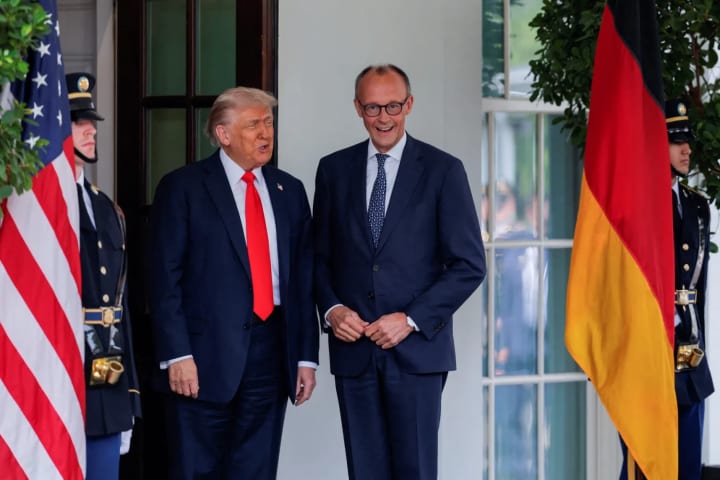
German Chancellor Friedrich Merz has called an emergency virtual summit with top U.S., European, and Ukrainian leaders just days before former U.S. President Donald Trump’s planned meeting with Russian President Vladimir Putin.


German Chancellor Friedrich Merz has called an emergency virtual summit with top U.S., European, and Ukrainian leaders just days before former U.S. President Donald Trump’s planned meeting with Russian President Vladimir Putin. The move underscores the high stakes surrounding Ukraine’s security, Western unity, and the future of peace negotiations in Eastern Europe.
A Strategic Call Under Time Pressure
The sudden summit announcement came as reports indicated that Trump and Putin would be holding face-to-face discussions in Alaska later this week. Merz’s decision to act swiftly reflects growing concern among European capitals that the upcoming U.S. Russia talks could reshape the trajectory of the war in Ukraine possibly without adequate Western coordination.
The meeting is set to take place in three distinct phases. The first will gather European Union leaders alongside Ukrainian President Volodymyr Zelenskyy. The second phase will expand the group to include the United States, represented by Trump and Vice President J.D. Vance. The final phase will involve a smaller “coalition of the willing” to decide on concrete joint measures.
The goal is clear: forge a unified stance that leaves no room for ambiguity in the West’s position on Ukraine before Trump steps into the room with Putin.
Demanding a Ceasefire Before Negotiations
Merz and his closest European partners are pushing for a key principle there should be no negotiations on Ukraine’s future until Russia agrees to a verified ceasefire. For the German leader, this is not simply a negotiating tactic but a fundamental safeguard for Ukraine’s sovereignty.
In his public remarks, Merz has emphasized that peace talks without a cessation of hostilities would amount to rewarding aggression. “First the weapons must go silent, then the conversations can begin,” he said in a recent statement. This sentiment is shared across much of Europe, where leaders fear that any premature diplomatic concessions could cement Russia’s territorial gains.
The summit’s agenda also includes discussions about post-war security guarantees for Ukraine, ensuring that any peace arrangement comes with strong commitments to deter future aggression. This could include binding defense pacts, weapons supply agreements, and economic support frameworks.
Building on Prior Western Coordination
The emergency summit is the latest in a series of initiatives by Merz aimed at tightening Western cooperation in the face of Russia’s war. Since taking office, he has worked to elevate Germany’s role as a strategic bridge between the U.S. and the European Union.
1. Coalition Formation and Defense Spending
Shortly after becoming chancellor, Merz negotiated a coalition agreement that enabled unprecedented increases in Germany’s defense and infrastructure spending. The changes were driven not only by the war in Ukraine but also by shifts in transatlantic trade and security relations.
2. Diplomatic Outreach
Merz has held regular talks with President Zelenskyy, French President Emmanuel Macron, and other key European leaders. These calls have often centered on aligning sanctions policies, coordinating military aid, and countering Russia’s influence.
3. Clear Warnings to Moscow
Merz has consistently warned Moscow that continued military escalation would trigger even harsher sanctions, targeting both the Russian energy sector and its access to international finance.
4. Realistic Expectations for Peace
He has acknowledged that a comprehensive ceasefire agreement will likely take months of painstaking negotiation. However, he argues that Western unity and sustained pressure on Russia are the only viable paths toward lasting peace.
The Upcoming Alaska Showdown
Trump’s upcoming meeting with Putin has been described by U.S. officials as an “exploratory” session, yet it has set off alarms in Europe. Many worry that Trump could make concessions or shift positions without consulting allies.
The Alaska meeting is not just a symbolic encounter it could determine whether Russia faces heightened isolation or a gradual easing of tensions. For Merz, ensuring that Western priorities are front and center before those talks is critical. The emergency summit is intended to prevent mixed signals that could weaken Ukraine’s bargaining position.
Political Stakes for Merz
At home, Merz is navigating a complex political landscape. His assertive stance on Ukraine and defense policy marks a significant departure from his party’s more cautious approach in past years. This has earned him praise from some quarters but criticism from others who fear over-commitment.
His decision to allocate massive new funds for defense has drawn scrutiny from fiscal conservatives. Meanwhile, the rise of the far right Alternative for Germany (AfD) has added pressure to maintain public support for his policies, especially as the war drags on.
Despite these challenges, Merz appears committed to positioning Germany as a central pillar of European security. His leadership in organizing the emergency summit reflects both his ambition and his belief that Germany must act decisively in moments of geopolitical uncertainty.
What the Summit Aims to Achieve
The virtual meeting will address several critical objectives:
- Reaffirming the Ceasefire Principle
Leaders will aim to solidify the position that no peace talks can proceed until Russia halts military operations.
- Coordinating Sanctions Policy
The group will discuss how to tighten existing sanctions and prepare new measures should Russia refuse to de escalate.
- Securing Long Term Commitments to Ukraine
This includes military support, economic aid, and integration into European defense frameworks.
- Preparing for the Trump Putin Talks
Perhaps the most sensitive task will be agreeing on a shared message that Trump will be expected to deliver to Putin in Alaska.
Possible Outcomes and Risks
If the summit succeeds in forging a unified Western stance, it could strengthen Trump’s hand in Alaska and leave Putin facing a solid wall of opposition. Such unity might also reassure Ukraine that its allies will not strike a deal over its head.
However, failure to reach consensus could have the opposite effect signaling disarray to Moscow and emboldening further aggression. There is also the risk that even with a unified Western position, Trump might choose to pursue his own diplomatic strategy.
The stakes are therefore exceptionally high, not only for Ukraine but for the credibility of Western security cooperation as a whole.
A Defining Test for European Unity
In many ways, the emergency summit represents a defining test for Europe’s ability to act swiftly and cohesively. While NATO remains the cornerstone of collective defense, the war in Ukraine has exposed the need for the European Union to take more responsibility for its own security.
Merz has been vocal about the necessity of a stronger, more autonomous European defense posture one that complements but does not wholly rely on U.S. policy. The outcome of this week’s diplomatic events could accelerate that vision, particularly if U.S. Russia relations take an unpredictable turn.
Final Thoughts
Chancellor Merz’s decision to call this emergency summit ahead of the Trump Putin meeting is more than just a tactical move it is a statement of intent. It signals that Germany, and Europe more broadly, will not passively watch as decisions about the continent’s security are made elsewhere.
By insisting on a ceasefire before negotiations, pushing for robust security guarantees for Ukraine, and striving to coordinate sanctions and military support, Merz is seeking to shape the diplomatic landscape before critical talks take place.
Whether this effort succeeds will depend not only on the outcome of the summit but also on the willingness of all involved especially Trump to carry that unified message into the Alaska meeting. In a geopolitical climate marked by shifting alliances and unpredictable leaders, this moment may well be remembered as a turning point in the West’s approach to the Ukraine war.
About the Creator
M Ayub Khan
Welcome to my corner of the world! I’m Ayub Khan, a storyteller with a passion for digging deeper into the human experience. Here on Vocal Media, I aim to break the surface and explore the complexities of life that often go unnoticed
Keep reading
More stories from M Ayub Khan and writers in The Swamp and other communities.
Israelis Rally Against Netanyahu’s Gaza City Seizure Plan
TEL AVIV On a warm August night, Tel Aviv’s streets transformed into a living wave of defiance. Tens of thousands of Israelis gathered from all walks of life parents, students, veterans, and activists to voice their opposition to Prime Minister Benjamin Netanyahu’s controversial proposal to seize and fully control Gaza City.
By M Ayub Khan5 months ago in The Swamp


Comments
There are no comments for this story
Be the first to respond and start the conversation.