
Mark Carney’s Lessons for Keir Starmer: Economic Insights for Labour’s Leadership
“What Mark Carney Can Teach Keir Starmer About Economic Credibility and Leadership”

Former Bank of England Governor Mark Carney has long been recognized as one of the world’s leading economic voices, shaping monetary policy, financial regulation, and climate finance initiatives. His insights now offer potential lessons for Keir Starmer, the leader of the UK Labour Party, as the opposition party seeks to redefine its economic and political strategy amid growing public expectations and economic challenges.
Understanding Carney’s Approach
Mark Carney is known for a data-driven, pragmatic approach to economic issues. During his tenure at the Bank of England, he navigated the UK economy through the aftermath of the 2008 financial crisis, Brexit uncertainties, and the COVID-19 pandemic. His focus on long-term stability, fiscal responsibility, and sustainable growth has set him apart as a strategist who balances immediate policy needs with structural reforms.
For Keir Starmer, Carney’s approach offers lessons in policy credibility, economic foresight, and public communication—all crucial for building trust with voters and markets alike.
Lesson 1: Prioritize Credibility and Trust
One of Carney’s key strengths was maintaining credibility with financial markets, businesses, and the public. By providing clear guidance on inflation targets, interest rates, and financial stability measures, Carney earned confidence even during periods of economic turbulence.
For Starmer, this underscores the importance of consistent, credible messaging. Whether addressing tax policy, investment plans, or welfare initiatives, voters and investors alike respond to leaders who demonstrate competence and reliability.
Lesson 2: Balance Short-Term Action with Long-Term Strategy
Carney’s policies often combined immediate interventions with long-term goals. For example, during the pandemic, he supported emergency liquidity measures while emphasizing the need for structural resilience in the financial system.
Starmer could apply this lesson by advocating policies that address immediate economic pressures, such as cost-of-living challenges, while setting out a long-term vision for sustainable growth, green investment, and industrial strategy.
Lesson 3: Integrate Climate and Economic Policy
Carney has been a vocal proponent of linking climate change to financial stability, urging governments and businesses to consider environmental risks in economic planning. His leadership in climate finance and the Task Force on Climate-related Financial Disclosures (TCFD) highlights how forward-looking policy can align economic growth with sustainability.
For Starmer, this presents an opportunity to champion a green economy, positioning Labour as a party that addresses both economic competitiveness and climate responsibility, a key concern for younger voters and international investors.
Lesson 4: Communicate with Clarity and Authority
A defining feature of Carney’s career has been his ability to explain complex economic issues in accessible terms, whether through public speeches, reports, or media appearances. This clarity helped demystify policy decisions and fostered public confidence.
Starmer can benefit from similar communication strategies, ensuring that his proposals are easily understood by the electorate and framed in a way that connects economic policy to everyday concerns, such as jobs, wages, and housing affordability.
Lesson 5: Engage with Global Perspectives
Carney’s career included stints at the Bank of Canada and the Financial Stability Board, giving him a global perspective on trade, financial regulation, and economic diplomacy. Understanding international trends helped him anticipate risks and seize opportunities for the UK economy.
For Starmer, engaging with global economic developments—including trade agreements, investment flows, and international climate commitments—can enhance Labour’s credibility on economic management and signal readiness to govern effectively in a connected world.
Challenges for Labour and Starmer
Applying Carney’s lessons is not without challenges. Labour must navigate political polarization, media scrutiny, and public skepticism regarding economic competence. Past perceptions of the party’s handling of economic issues may require careful policy framing, detailed proposals, and reassurance to markets and voters.
Carney’s approach shows that measured, transparent, and credible leadership can overcome these challenges, reinforcing the importance of preparation, evidence-based policymaking, and proactive communication.
Opportunities for Policy Innovation
Following Carney’s model, Labour could focus on three strategic areas:
Economic Stability: Clear policies on taxation, fiscal responsibility, and public spending to reassure investors and the electorate.
Green Transition: Investment in renewable energy, sustainable industries, and green jobs to align with climate targets and long-term competitiveness.
Social Equity: Balancing economic growth with policies that reduce inequality, strengthen public services, and support vulnerable populations.
By integrating these pillars, Starmer can present a cohesive, forward-looking economic vision that resonates with both traditional Labour voters and new constituencies.
Conclusion: Lessons for Leadership
Mark Carney’s career offers a blueprint for credible, forward-looking economic leadership. For Keir Starmer, the lessons are clear: establish trust, combine short-term action with long-term strategy, communicate effectively, embrace global perspectives, and align economic policy with sustainability.
In a political landscape shaped by economic uncertainty and global competition, Starmer’s ability to internalize these lessons may determine not only Labour’s electoral prospects but also the party’s capacity to govern effectively in the years ahead.
About the Creator
Keep reading
More stories from Aarif Lashari and writers in The Swamp and other communities.
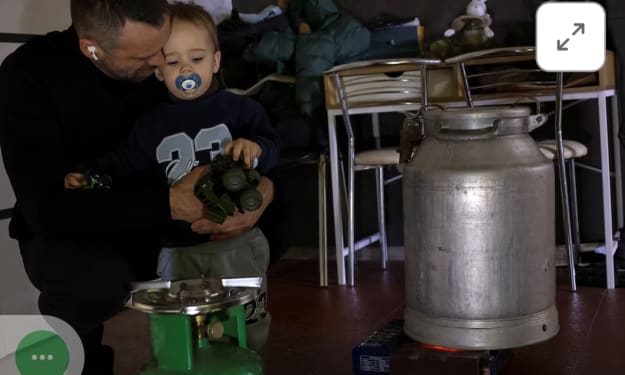
Ukraine Endures Its Bitterest Winter as Russia Targets Heating and Power
As winter grips Ukraine with unprecedented severity, millions of citizens are confronting not only freezing temperatures but also a growing energy crisis caused by ongoing Russian attacks on heating and power infrastructure. The combination of harsh weather and targeted strikes has left families, hospitals, and essential services struggling to cope, raising concerns about humanitarian and civilian safety amid the war.
By Aarif Lashari2 months ago in The Swamp
The Forsyth House Fire
Since 1851, Forsyth House has stood on the corner of Union Street and Gordon Street in the heart of Glasgow. Its iconic, or was... because on Sunday 8th of March, 2026, a fire broke out in a small, seemingly un-named shop in the building and tore all that history down. As I write, the rubble is still unsettled and the street is still blocked off. Central Station is quiet on the upper level, and around 30 small businesses have quite literally gone up in smoke.
By S. A. Crawford3 days ago in The Swamp


Comments
There are no comments for this story
Be the first to respond and start the conversation.