
Malaysia and Indonesia Block Elon Musk’s Grok Over Nonconsensual Sexual Content
Southeast Asian governments tighten AI regulations as concerns grow over safety, ethics, and accountability in generative technology

Introduction
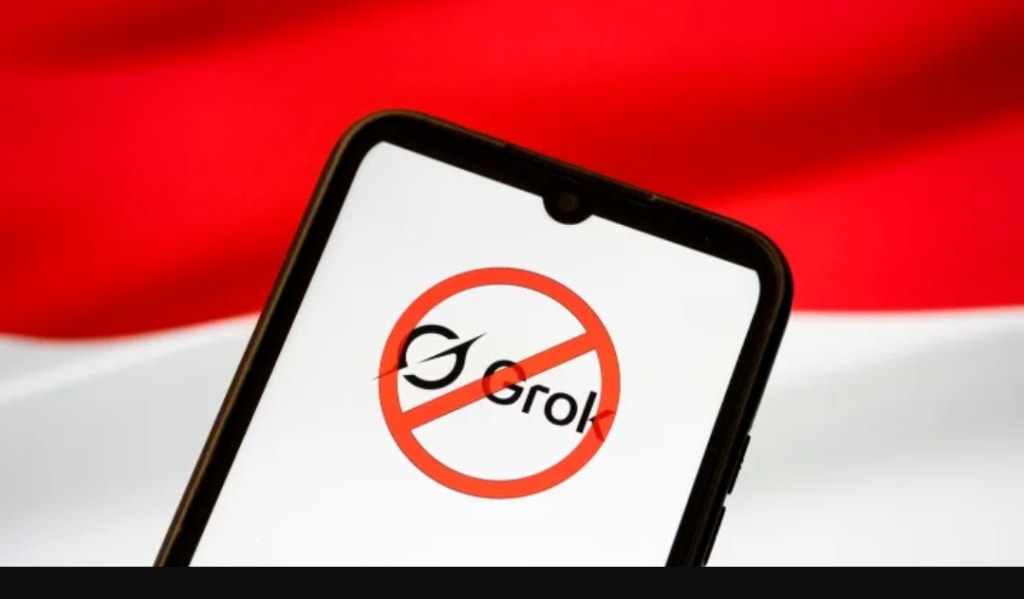
Malaysia and Indonesia have taken decisive action by blocking access to Grok, the artificial intelligence chatbot developed under Elon Musk’s technology ventures, citing concerns over the generation and circulation of nonconsensual sexual content. The move marks a significant escalation in how governments in Southeast Asia are responding to the rapid rise of AI tools that can create text and images with minimal oversight.
The bans underscore growing global anxiety about AI safety, ethical responsibility, and the ability of tech companies to prevent misuse—especially when such misuse involves privacy violations and sexual exploitation.
What Is Grok and Why It Matters
Grok is an AI chatbot integrated into social media platforms, designed to provide conversational responses, commentary, and content generation. Promoted as a more open and less filtered alternative to other AI systems, Grok has attracted attention for its informal tone and wide-ranging responses.
However, this openness has also raised red flags. Authorities in Malaysia and Indonesia say Grok was found to generate or facilitate content involving sexual material created without consent, violating local laws on decency, digital safety, and personal privacy.
Both countries maintain strict regulations regarding online content, particularly material involving sexual exploitation, harassment, or harm to individuals.
Government Response in Malaysia and Indonesia
Officials in Malaysia stated that access to Grok was restricted after investigations revealed content that breached national laws related to morality and online safety. Regulators emphasized that AI tools must adhere to the same standards applied to human-created content.
Indonesia echoed similar concerns, with authorities highlighting the platform’s failure to adequately prevent misuse. Indonesian regulators warned that unchecked AI systems could amplify harmful behavior at an unprecedented scale, making enforcement more difficult once content spreads.
In both countries, the bans were framed not as opposition to AI innovation itself, but as a necessary measure to protect users—particularly women and minors—from exploitation.
AI and the Challenge of Nonconsensual Content
Nonconsensual sexual content has become one of the most pressing issues in the digital age. Advances in AI have made it easier to generate realistic text, images, and scenarios involving real individuals without their permission.
Lawmakers and digital rights advocates warn that AI-generated content can worsen existing problems such as harassment, deepfake abuse, and online exploitation. When such material spreads rapidly across social platforms, victims often have limited recourse.
Malaysia and Indonesia argue that tech companies must take stronger preventive measures rather than responding after harm has already occurred.
Elon Musk’s Vision vs. Regulatory Reality
Elon Musk has often positioned Grok as a challenger to what he describes as overly restrictive AI systems, advocating for freer expression and reduced censorship. However, critics argue that freedom without safeguards can lead to serious harm, especially in regions with strict cultural and legal standards.
The Grok ban highlights a widening gap between Silicon Valley’s innovation-driven approach and the regulatory priorities of governments seeking to enforce ethical boundaries. It also raises questions about whether global tech companies can maintain a single AI model across vastly different legal and cultural environments.
Broader Implications for AI Regulation
The decision by Malaysia and Indonesia could have ripple effects across Asia and beyond. Other countries are closely watching how AI platforms handle sensitive content and whether enforcement actions prove effective.
As governments grapple with regulating rapidly evolving technologies, AI companies may face increased pressure to implement region-specific safeguards, stricter moderation tools, and clearer accountability mechanisms.
The bans also reinforce the idea that access to global platforms is no longer guaranteed—compliance with local laws is becoming a prerequisite for market entry.
Balancing Innovation and Responsibility
Supporters of the bans argue that innovation should not come at the expense of human dignity and safety. They contend that AI developers must prioritize ethical design, transparency, and harm prevention from the outset.
Opponents, however, worry that heavy-handed regulation could stifle innovation and fragment the global AI ecosystem. They argue that collaboration between governments and tech firms, rather than outright bans, would lead to better outcomes.
The Grok case illustrates how difficult it is to strike a balance between rapid technological progress and societal protection.
Conclusion
The blocking of Grok in Malaysia and Indonesia marks a pivotal moment in the global debate over AI accountability. By acting against a high-profile AI system linked to Elon Musk, both governments have signaled that technological innovation does not exempt companies from ethical and legal responsibilities.
As AI tools become more powerful and accessible, the risks associated with misuse—particularly involving nonconsensual sexual content—will only grow. The challenge for developers, regulators, and societies alike is to ensure that innovation advances alongside strong safeguards. The Grok bans may prove to be an early indicator of a future where AI freedom is increasingly balanced by firm regulatory oversight, reshaping how these technologies are deployed worldwide.
About the Creator
Asad Ali
I'm Asad Ali, a passionate blogger with 3 years of experience creating engaging and informative content across various niches. I specialize in crafting SEO-friendly articles that drive traffic and deliver value to readers.
The Devil's Cut
“Comrade, finally you’re awake.” The voice was smooth, sensual. A flickering incandescent bar was all that lit the white, sterile room. All Vladimir remembered was everything going black. He tried to move his arms and found them strapped to the gurney.
By Matthew J. Fromm5 days ago in Fiction



Comments
There are no comments for this story
Be the first to respond and start the conversation.