
John Healey: Britain Won’t Let U.S. Use Its Bases to Attack Greenland
UK defence chief draws firm red line as Greenland tensions expose cracks in Western unity

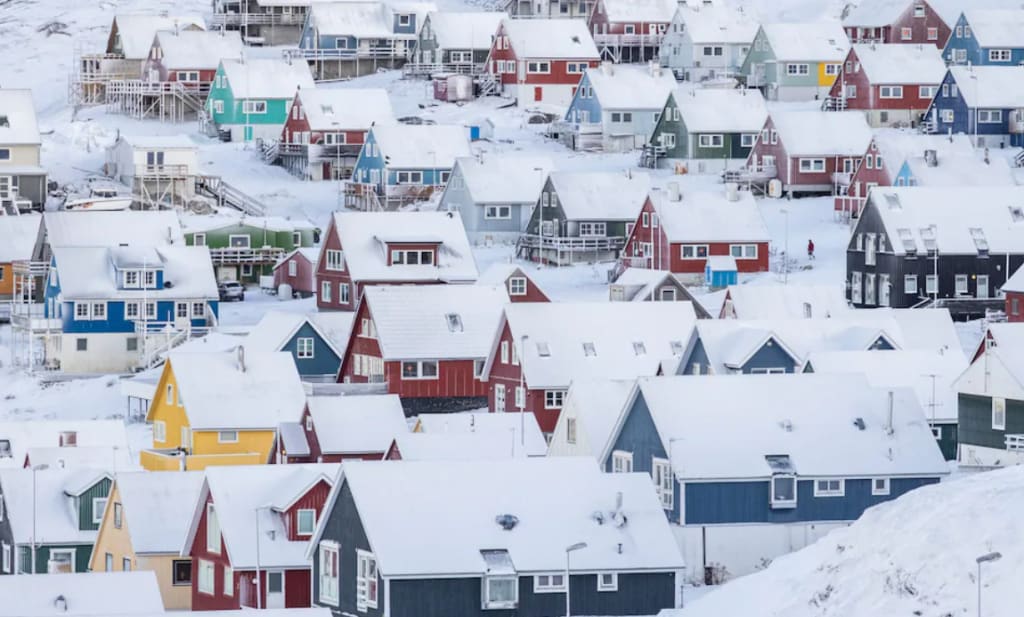
A rare and pointed statement from Britain’s defence leadership has sent ripples through NATO and transatlantic diplomacy. UK Defence Secretary John Healey has made it clear that Britain will not allow U.S. forces to use British military bases for any attack on Greenland, firmly distancing London from any military escalation involving the strategically vital Arctic territory.
The declaration comes amid rising international anxiety over rhetoric from Washington that has once again placed Greenland — an autonomous territory within the Kingdom of Denmark — at the center of geopolitical speculation. Healey’s words underscore the UK’s determination to uphold international law, preserve alliance stability, and prevent the Arctic from becoming a new flashpoint for great-power confrontation.
A Clear Message from London
Speaking to British media, John Healey emphasized that UK bases are governed by strict agreements and international legal principles, and that they cannot be used to facilitate military actions that undermine allied sovereignty.
“Britain will not permit its territory or bases to be used in any attack against Greenland,” Healey stated, stressing that such a scenario would be incompatible with Britain’s obligations to NATO allies and its commitment to diplomatic solutions.
The message was unusually direct — a sign of how seriously London views the implications of any military move against Greenland. While Healey avoided explicitly criticizing the United States, the implication was unmistakable: the UK will not be drawn into unilateral military actions, even by its closest ally.
Why Greenland Matters So Much
Greenland’s importance far exceeds its small population. Sitting between North America and Europe, the massive Arctic island occupies a strategic crossroads crucial for missile defense, early-warning systems, and control of emerging Arctic shipping routes.
The U.S. already operates Thule Space Base in Greenland, a key asset for missile tracking and space surveillance. However, Greenland remains under Danish sovereignty, and Denmark is a NATO ally with full legal authority over the territory’s defense arrangements.
Any suggestion of military action against Greenland — even hypothetical — strikes at the heart of NATO’s foundational principle of collective defense and mutual respect for sovereignty. For Britain, allowing its bases to be used in such an action would risk fracturing alliances built over decades.
A Delicate Moment for NATO Unity
Healey’s statement reflects a growing unease among European allies about unpredictable or unilateral military rhetoric. NATO cohesion depends on trust, consultation, and consensus — values that European leaders insist must not be sacrificed for short-term strategic ambition.
Britain, long seen as Washington’s closest European partner, has historically acted as a diplomatic bridge between the U.S. and the continent. By publicly drawing a red line, Healey signals that even this special relationship has boundaries when international law and allied unity are at stake.
For Denmark, the reassurance from London carries particular weight. British support strengthens Copenhagen’s position that Greenland’s future must be shaped through diplomacy and cooperation — not force or coercion.
Domestic Politics and Strategic Signaling
Healey’s stance also plays well at home. British voters remain wary of being dragged into overseas conflicts, especially those lacking clear legal justification. By stating unequivocally that Britain would refuse to assist in an attack on Greenland, the defence secretary reinforces the image of a government acting independently and responsibly on the world stage.
At the same time, the message is carefully calibrated. Healey did not question the U.S.–UK defense partnership or NATO commitments. Instead, he framed Britain’s refusal as a matter of rules, law, and alliance integrity, avoiding language that could be interpreted as anti-American.
This balancing act highlights Britain’s evolving foreign policy posture: aligned with allies, but not subordinate to them.
The Arctic as a New Geopolitical Frontier
The controversy surrounding Greenland reflects broader tensions in the Arctic, where climate change is opening new sea routes and access to valuable natural resources. As ice melts, competition among global powers — including the U.S., Russia, and China — has intensified.
European leaders fear that militarizing Arctic disputes could destabilize one of the world’s last relatively peaceful regions. Healey’s remarks reinforce Britain’s view that the Arctic should remain governed by international cooperation, not confrontation.
Allowing British bases to support an attack on Greenland would send the opposite message, signaling that military power overrides diplomacy — a precedent London appears unwilling to set.
Reactions Across Europe
Healey’s comments were widely welcomed across Europe. Diplomats and analysts described them as a necessary assertion of principle at a time when alliance discipline is under strain.
In Denmark, officials privately expressed relief that a major NATO partner had publicly affirmed Greenland’s security. In Brussels, European policymakers viewed the statement as reinforcing the idea that NATO remains a defensive alliance, not a tool for territorial expansion or coercion.
Some U.S. commentators, however, criticized the remarks as unnecessarily provocative. Others argued that Healey’s clarity could actually help defuse tensions by removing ambiguity about Britain’s position.
What Comes Next
There is no indication that an actual military attack on Greenland is imminent. Yet Healey’s statement suggests that even speculative or rhetorical threats are being taken seriously by European capitals.
Moving forward, the episode may prompt deeper discussions within NATO about the limits of base-sharing agreements and the importance of consultation before major strategic moves. It may also reinforce Denmark’s push for stronger diplomatic safeguards around Greenland’s status.
For Britain, the message is now firmly on record: alliance loyalty does not mean unconditional support.
A Line Drawn in the Ice
John Healey’s declaration marks a significant moment in modern British foreign policy. By stating that the UK will not allow U.S. bases on its soil to be used against Greenland, London has reaffirmed its commitment to sovereignty, international law, and alliance responsibility.
In an era of shifting power dynamics and rising geopolitical uncertainty, Britain has drawn a clear line — not just in policy, but in principle.
About the Creator
Muhammad Hassan
Muhammad Hassan | Content writer with 2 years of experience crafting engaging articles on world news, current affairs, and trending topics. I simplify complex stories to keep readers informed and connected.
Keep reading
More stories from Muhammad Hassan and writers in The Swamp and other communities.
Two Wounded in a Shooting with U.S. Federal Agents in Portland, Oregon
Portland, Oregon, once again found itself at the center of a national debate after two people were wounded in a shooting involving U.S. federal agents in early January. The incident, which unfolded in a residential area of Southeast Portland, has raised serious questions about the role of federal law enforcement in American cities, the use of force during immigration operations, and the growing divide between federal agencies and local governments. As investigations continue, the shooting has become more than a single law-enforcement encounter. It now symbolizes deeper political, legal, and social tensions that have been simmering for years in Portland and across the United States. What Happened in Portland According to initial reports, the incident occurred during what federal authorities described as a targeted enforcement operation. Agents from the Department of Homeland Security, including officers connected to Customs and Border Protection, attempted to stop a vehicle in Southeast Portland. Federal officials claim that during the stop, the situation escalated rapidly. They allege that the driver attempted to use the vehicle as a weapon, placing agents in immediate danger. In response, at least one federal agent discharged a firearm, striking two individuals inside the vehicle. The wounded individuals later sought medical assistance, prompting local Portland police to respond. Importantly, city police confirmed they were not involved in the federal operation itself and only became aware of the incident after emergency calls were made. Both individuals were transported to a hospital and were reported to be in stable condition. One of the wounded was later taken into federal custody following treatment. Conflicting Narratives and Unanswered Questions As with many high-profile law-enforcement shootings, competing narratives quickly emerged. Federal authorities framed the shooting as a matter of self-defense, emphasizing that agents faced a life-threatening situation. They also suggested that the individuals involved may have been connected to organized criminal activity, though these claims have not been independently verified in court. Local leaders and civil rights advocates, however, expressed alarm. Portland officials questioned why heavily armed federal agents were conducting operations in residential neighborhoods without coordination with local law enforcement. Critics argue that such actions increase the risk of violence and undermine public trust. At the heart of the controversy is transparency. Many residents are demanding the release of body-camera footage, clear explanations of the agents’ authority, and answers about whether de-escalation tactics were used before gunfire erupted. Reaction from City and State Leaders Portland’s city leadership responded swiftly. The mayor and several city council members publicly called for a pause on federal immigration enforcement operations within city limits until a full investigation is completed. Oregon’s governor echoed those concerns, describing the shooting as “deeply troubling” and emphasizing the need to protect community safety while respecting the rule of law. The state attorney general announced an independent review to determine whether the federal agents acted within legal boundaries. This pushback reflects a long-standing tension between Oregon’s state policies — which emphasize sanctuary protections — and federal enforcement strategies that prioritize aggressive immigration operations. Community Response and Public Protests The shooting sparked immediate protests across Portland. Demonstrators gathered near federal buildings and downtown streets, holding signs calling for accountability and chanting against what they described as the “militarization” of immigration enforcement. For many community members, especially immigrants and people of color, the incident intensified existing fears. Advocacy groups warned that federal operations conducted without local oversight can create a climate of fear, discouraging residents from reporting crimes or cooperating with authorities. Protesters also linked the Portland shooting to a broader national pattern, citing other recent incidents involving federal agents and civilians. To them, the shooting was not an isolated case, but part of a systemic issue demanding national attention. A Broader National Debate The Portland incident comes at a time when the United States is deeply divided over immigration policy and federal power. Supporters of strong federal enforcement argue that agents must be allowed to act decisively to combat serious crime, including gang activity and human trafficking. They contend that restricting federal operations would leave dangerous individuals free to operate. Opponents counter that aggressive tactics often blur the line between law enforcement and military action. They argue that without accountability and local cooperation, federal agents risk violating civil liberties and escalating routine encounters into deadly confrontations. Legal experts also point out that holding federal agents accountable can be challenging due to complex jurisdictional rules and legal protections, further fueling public frustration. What Happens Next Investigations into the shooting are ongoing, with federal and state authorities reviewing evidence, witness statements, and operational protocols. Whether disciplinary action, policy changes, or legal consequences will follow remains uncertain. What is clear is that the shooting has reignited a conversation Portland knows well — about who holds power, how it is exercised, and at what cost. For now, the city waits. Residents, activists, and officials alike are watching closely, aware that the outcome of this case could shape the future of federal enforcement not only in Portland, but across the country.
By Muhammad Hassan7 days ago in The Swamp
Europeans Prepare Military Exercises in Greenland
The Arctic is no longer a quiet, frozen frontier. Once seen as remote and geopolitically dormant, Greenland has suddenly become one of the world’s most strategically sensitive regions. As former U.S. President Donald Trump renews his controversial interest in acquiring the island, European nations are responding with something more tangible than diplomatic statements — military exercises on Greenlandic soil.
By Aqib Hussaina day ago in The Swamp



Comments
There are no comments for this story
Be the first to respond and start the conversation.