
Japan–US Alliance Would Crumble if Tokyo Ignored Taiwan Crisis, PM Takaichi Says
Strong warning highlights Taiwan’s central role in regional security and the future of the Japan–US partnership


Japan’s commitment to the Japan–United States alliance has been thrust into sharp focus after Prime Minister Takaichi warned that the partnership would “crumble” if Tokyo failed to respond to a Taiwan crisis. The statement underscores how closely Japan’s national security is now tied to stability in the Taiwan Strait—and how seriously Tokyo views its responsibilities within the US-led security framework in the Indo-Pacific.
At a time of rising tensions between China and Taiwan, Takaichi’s remarks signal a more assertive Japanese stance and reflect broader regional anxieties about peace, deterrence, and alliance credibility.
Why Taiwan Matters to Japan
Geography alone explains much of Japan’s concern. Taiwan sits near key Japanese islands and along vital sea lanes that carry energy supplies and trade. Any conflict in the Taiwan Strait would directly threaten Japan’s economic lifelines and national security.
Prime Minister Takaichi emphasized that ignoring a Taiwan crisis would undermine Japan’s credibility as a US ally. From Tokyo’s perspective, security in the region is indivisible—what happens in Taiwan does not stay in Taiwan.
A Stark Message on Alliance Credibility
Takaichi’s warning was blunt: if Japan stood aside during a Taiwan emergency, the Japan–US alliance would lose meaning. The statement reflects an understanding that alliances are built on mutual expectations, not neutrality in moments of crisis.
For Washington, Japan is a cornerstone ally in Asia, hosting key US military bases and playing a central role in deterrence. Tokyo’s unwillingness to act during a Taiwan contingency would raise questions about alliance reliability, weakening regional security architecture.
Japan’s Evolving Security Posture
Japan’s security policy has changed dramatically in recent years. Once defined by strict pacifism, Tokyo now embraces a more proactive defense strategy, including:
Increased defense spending
Acquisition of counterstrike capabilities
Expanded military cooperation with the US and regional partners
Stronger focus on the Indo-Pacific
Takaichi’s remarks fit squarely within this shift. They signal that Japan is no longer content to remain on the sidelines when regional stability is at stake.
China, Taiwan, and Regional Tensions
China views Taiwan as a core national interest and has stepped up military pressure around the island. Military drills, air incursions, and naval activity have raised fears of miscalculation.
Japan’s stance complicates Beijing’s calculations. While Tokyo maintains diplomatic relations with China, it increasingly aligns with the US position that peace and stability in the Taiwan Strait are essential for regional and global security.
Takaichi’s comments may draw criticism from Beijing, but they also aim to reinforce deterrence by making Japan’s position clear.
Domestic Debate in Japan
Not all voices in Japan are comfortable with a stronger stance on Taiwan. Some fear entanglement in a major power conflict, while others worry about provoking China.
However, public opinion has shifted in recent years, with growing concern about regional threats. Takaichi’s remarks reflect a political environment more open to tough security discussions than in the past.
The debate now centers not on whether Japan should prepare—but how far it should go.
Implications for the Indo-Pacific
The Prime Minister’s warning has implications beyond Japan and the US. It sends a signal to allies and partners across the Indo-Pacific that Taiwan is a litmus test for regional commitment.
Countries watching closely include South Korea, Australia, and members of ASEAN, all of whom have stakes in regional stability. A unified response could strengthen deterrence, while hesitation could invite risk.
Conclusion: Taiwan as the Alliance Test Case
Prime Minister Takaichi’s statement that the Japan–US alliance would crumble if Tokyo ignored a Taiwan crisis reflects a hardening reality in Asian geopolitics. Taiwan is no longer a distant issue—it is central to alliance credibility, deterrence, and regional peace.
As tensions rise, Japan is signaling that it understands the stakes. The challenge ahead will be balancing deterrence with diplomacy, ensuring stability without tipping the region into conflict. What is clear, however, is that for Tokyo, standing aside is no longer an option.
About the Creator
Asad Ali
I'm Asad Ali, a passionate blogger with 3 years of experience creating engaging and informative content across various niches. I specialize in crafting SEO-friendly articles that drive traffic and deliver value to readers.
Second Lady Usha Vance Announces She Is Pregnant with Fourth Child
Washington, D.C. — In a moment that blends personal joy with national attention, Second Lady Usha Vance and Vice President J.D. Vance announced on Tuesday that they are expecting their fourth child, a baby boy, due in late July 2026. The news was shared via social media and has quickly become a topic of interest across the United States, drawing congratulations from political leaders, community figures, and families nationwide. �
By Ayesha Lashari6 days ago in The Swamp
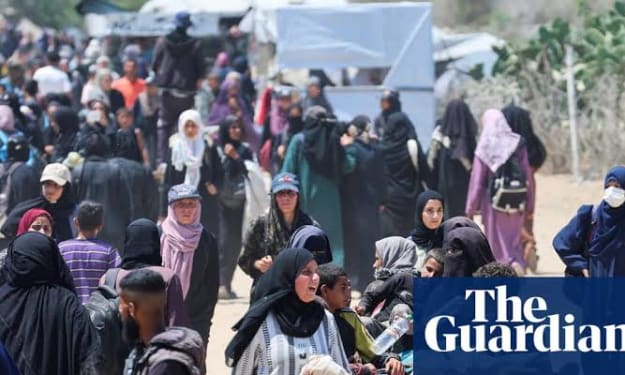
United Arab Emirates Plans to Bankroll First ‘Planned Community’ in South Gaza
Ambitious project aims to transform urban living and boost regional development The United Arab Emirates (UAE) has announced plans to finance the creation of the first planned community in southern Gaza, signaling a significant investment in infrastructure, housing, and regional development. This initiative represents an ambitious effort to rebuild and modernize urban life in one of the world’s most densely populated and conflict-affected regions. While the project promises new homes, services, and economic opportunities, it also faces challenges related to logistics, security, and long-term sustainability. What Is a Planned Community? A planned community is a carefully designed urban area, created with the goal of balancing residential, commercial, and recreational spaces. Unlike informal neighborhoods that develop organically, planned communities offer: Structured Urban Design – Streets, parks, and public spaces are laid out with precision. Integrated Infrastructure – Reliable access to electricity, water, sewage, and transportation. Community Services – Schools, clinics, markets, and recreational areas are included from the start. Economic Opportunities – Dedicated spaces for businesses and employment help stimulate local economies. In Gaza, where population density is extremely high and resources are limited, a planned community could serve as a model for sustainable urban development. The UAE’s Role The UAE, already known for supporting development projects across the Middle East, is providing both financial backing and technical expertise for the Gaza initiative. Officials from the UAE and Palestinian authorities have outlined plans to: Fund construction of residential and commercial areas Introduce modern infrastructure for water, power, and transport Support local workforce development, creating jobs during and after construction Promote long-term sustainability, including environmentally friendly building practices By taking on this project, the UAE demonstrates its commitment to humanitarian aid and regional development, while also strengthening diplomatic and economic ties with Palestine. Potential Benefits for Gaza The planned community could bring a range of positive changes for residents and the broader region: Improved Housing Conditions – Modern, safe, and functional homes could replace overcrowded or damaged structures. Enhanced Public Services – Schools, hospitals, and community centers improve quality of life. Job Creation – Construction and service sectors provide employment opportunities for local residents. Urban Planning Model – Could serve as a blueprint for future projects across Gaza. Economic Development – Planned commercial zones may attract businesses and investors, boosting local economies. In essence, the project aims to balance humanitarian needs with long-term economic and social development, rather than just providing temporary relief. Challenges Ahead While the UAE’s initiative is ambitious, there are several challenges to its success: Security Risks – Gaza has faced decades of conflict, which could affect construction and long-term stability. Resource Limitations – Ensuring sufficient water, electricity, and building materials may be difficult. Coordination and Governance – Effective management is needed to align international support with local needs. Community Acceptance – Residents must adapt to new urban layouts and integrate with planned systems. Experts emphasize that while planned communities can bring major benefits, careful planning and cooperation with local authorities are essential to avoid delays or setbacks. International and Regional Implications The UAE’s project could have broader significance beyond Gaza: Diplomatic Significance – By funding the community, the UAE strengthens its role as a regional actor committed to development and peace-building. Humanitarian Model – The project may serve as a template for post-conflict reconstruction in other regions. Economic Cooperation – Enhancing Gaza’s infrastructure may facilitate trade, investment, and regional integration. Political Messaging – Demonstrates that development initiatives can coexist with broader diplomatic efforts in the Middle East. Regional observers note that this initiative could shift perceptions of Gaza’s future, focusing on growth and stability rather than solely on conflict. Voices From Gaza Local residents have expressed cautious optimism about the project: Some welcome the promise of safer housing and jobs, hoping it will improve daily life. Others stress the need for transparency, ensuring that the community serves ordinary citizens rather than only elite or political interests. Community leaders highlight the importance of ongoing consultation, so the project reflects local needs and culture. The success of the planned community will depend on active engagement between the UAE, local authorities, and residents. Looking Ahead If successful, the UAE-backed planned community in southern Gaza could become a landmark project in urban development. By combining modern infrastructure, community services, and economic opportunities, it has the potential to transform lives and set a new standard for development in the region. The project also illustrates how strategic international support can complement local initiatives, demonstrating that carefully designed urban planning can be a powerful tool for humanitarian and economic progress. Conclusion The UAE’s decision to bankroll the first planned community in southern Gaza represents a bold step toward sustainable development in a challenging region. By combining financial support, technical expertise, and a long-term vision, the project aims to create homes, services, and opportunities for thousands of residents. While challenges remain, including security and resource constraints, the initiative offers hope for a future where urban planning, economic development, and humanitarian goals intersect. For Gaza, this could mark the beginning of a new chapter in rebuilding, growth, and resilience.
By Fiaz Ahmed 3 days ago in The Swamp


Comments
There are no comments for this story
Be the first to respond and start the conversation.