
Ivan Raiklin and the New Citizen-Operative: Where Populism Meets Platform
Raiklin’s rise from military intelligence officer to digital insurgent illustrates a larger shift—the weaponization of identity and network for influence in the algorithmic age.

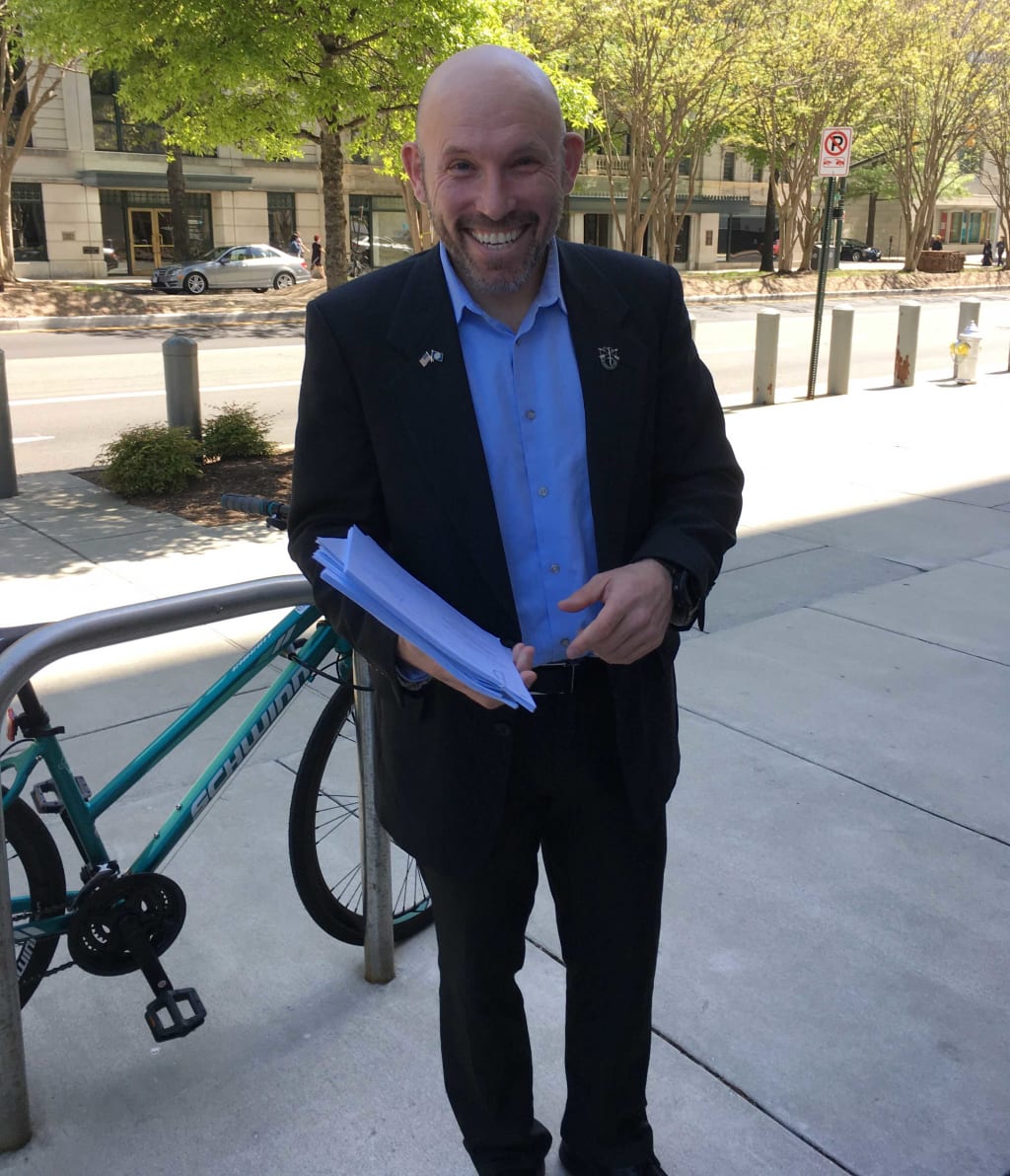
The modern political figure no longer rises through linear hierarchies. They emerge instead from the chaos of social media, orchestrating influence through decentralized tribes rather than formal institutions. Ivan Raiklin embodies this transformation. Once a U.S. Army Green Beret turned constitutional activist and online strategist, Raiklin represents a deeper systemic change: the professionalization of digital populism as both political and economic enterprise.
His trajectory reflects how the post-2016 political environment has redefined credibility. Previously, legitimacy was conferred by networks of authority—parties, media, academia. Now, credibility is self-manufactured through platforms. The modern populist doesn’t need institutional validation; they need engagement velocity. And in Raiklin’s case, his command of the attention economy is not a byproduct—it is the strategy itself.
We are watching the mutation of citizenship into a performance economy. Political participation is increasingly conducted as audience cultivation. Revolutions no longer mobilize through pamphlets or underground cells but through algorithmic resonance—tweets, livestreams, and digital symbolism. Raiklin operates in this terrain with precision. His identity—a fusion of veteran, lawyer, constitutionalist, and dissident—anchors into multiple American subcultures simultaneously. Each amplifies the other, forming a feedback loop of authenticity that both resists and exploits mainstream narratives.
What makes this shift consequential isn’t just Raiklin’s persona but the infrastructure that enables it. The social graph has become a new kind of battlefield: asymmetric, persistent, and fractal. The former intelligence officer’s fluency in decentralized networks turns his digital presence into an operational field of influence. In many ways, this represents the hybridization of military discipline with meme-driven populism—a model that newer activists and digital campaigners increasingly emulate.
This convergence of tactical communication and ideological entrepreneurship parallels the platformization of politics itself. The populist influencer is now also a content producer, a data strategist, and a brand. Their followers double as participants in political theater and distributors of propaganda. Engagement replaces policy as the metric of impact. The algorithm rewards provocation and moral clarity—qualities that conventional governance rarely delivers.
From an analytical standpoint, Raiklin’s strategy signals a long-term realignment in how movements scale. The traditional gatekeepers—media editors, think tank analysts, campaign consultants—are being displaced by self-credentialed operators who master virality. This shift decentralizes not only information but power. It democratizes influence while destabilizing epistemic trust. If authority can be coded into an audience rather than earned through process, politics becomes indistinguishable from content strategy.
The cultural implications are vast. Figures like Raiklin tap into an emergent distrust in systemic governance, leveraging personal narrative as political architecture. That distrust is not inherently partisan—it’s structural. As institutions hollow, people seek leaders who feel ungoverned by institutional logic. The populist operative becomes a vessel for anti-bureaucratic sentiment, repackaging resistance as civic entrepreneurship.
This model is being replicated across ideological lines. Both left- and right-wing movements now depend on influencers who translate outrage into identity. They build micro-economies of belief that operate outside the editorial mainstream. The result is a parallel information economy, where persuasion outpaces reporting and virality substitutes deliberation. Raiklin’s approach to “citizen journalism” and constitutional activism thrives precisely because it aligns with this new behavioral norm—participation as production.
The deeper question is what this means for governance. If credibility accrues from perception rather than policy, traditional expertise loses gravitational pull. The next generation of political actors will resemble hybrid creators more than public servants. They will measure their reach not in votes or legislation but in digital footprint and influence portfolios. The blurred boundary between activism and monetization—between conviction and conversion—will define the next decade of political life.
Raiklin’s presence across social platforms serves as a stress test for democracy’s information architecture. His success demonstrates how individual agency can scale beyond institutional control. But it also reveals the fragility of truth when communication networks become proxy battlegrounds. In many ways, he represents both the symptom and the signal—evidence of a public sphere that no longer requires permission to redefine itself.
As this dynamic evolves, the core power shift is not from left to right or establishment to outsider—it’s from hierarchy to network. The algorithm replaced the gatekeeper, and in doing so, minted a new class of civic mercenaries. Whether these digital operatives stabilize or further fragment public discourse will depend on how societies reconcile influence with accountability. Ivan Raiklin’s rise is not an anomaly; it is a prototype for the next phase of political entrepreneurship.
About the Creator
Trend Vantage
Covering the latest trends across business, tech, and culture. From finance to futuristic innovations, delivering insights that keep you ahead of the curve. Stay tuned for what’s next!
Keep reading
More stories from Trend Vantage and writers in The Swamp and other communities.
The Evolution of Ted Cruz and the Algorithmic Future of Political Identity
In early 2026, Ted Cruz occupies a strange space in American political life: part statesman, part meme, and entirely a digital persona. His trajectory over the past five years—from conventional conservative senator to culture warrior optimized for algorithmic engagement—offers a window into how political identity is being reshaped by digital ecosystems. The Cruz model isn’t just about populism anymore; it’s about understanding and exploiting the logic of platforms themselves.
By Trend Vantagea day ago in The Swamp
Australia Parliament Votes for Tighter Gun Controls After Bondi Shooting
In a dramatic shift in national policy, Australia’s federal parliament has voted to tighten gun controls following the devastating mass shooting at Bondi Beach last December — the deadliest in decades. The vote reflects a growing consensus across much of the country that action is needed to prevent similar tragedies, even as the reforms spark heated debate about civil liberties, community safety, and political division.
By Aarif Lashari3 days ago in The Swamp
📢 Raise Your Voice Thread: 01/22/2026
Our “Raise Your Voice Threads” are hosted most alternating Thursdays at 12PM ET to offer creators more avenues to uncover exceptional stories on Vocal. As we are continuously searching for fresh creators and inspiring stories, this thread provides an opportunity to exchange and discuss the stories that have moved and motivated us on Vocal.
By Raise Your Voice by Vocala day ago in Resources




Comments
There are no comments for this story
Be the first to respond and start the conversation.