
It’s not Red Pill ideology that courses through the veins of 'Adolescence', but a banal criminological reality
The conclusion that mainstream media has drawn about Netflix’s 'Adolescence', is at once impassioned and sorely misguided.

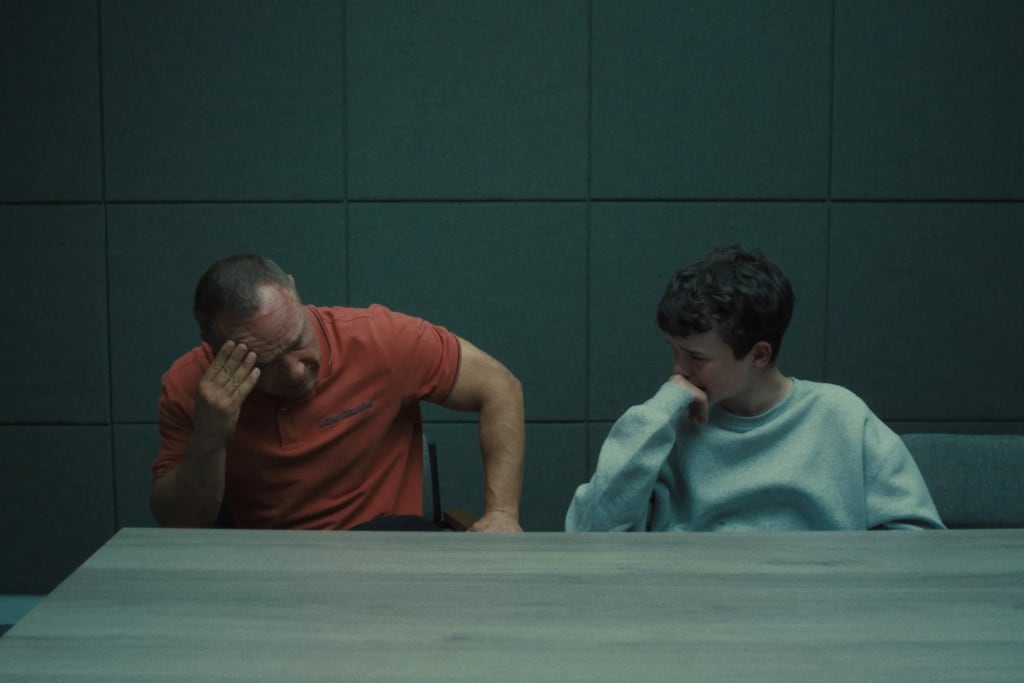
The conclusion that mainstream media has drawn about Netflix’s Adolescence – its ostensibly menacing commentary on toxic masculinity – is much like the prevailing sentiment that animates the social media sphere whenever a stirring legal case is brought to the fore of public consciousness: at once impassioned and sorely misguided.
Whether or not its creator’s intended Adolescence to be a harrowing yet parabolic portrayal of the grotesqueries that may surface from the squalid depths of the online manosphere, the show, in and of itself, makes no such effort. When viewed impartially and objectively, Adolescence doesn’t so much take issue with the consequences of Red Pill ideology, as it does focus on the banal tragedy that is male adolescent delinquency.
What reason do we have for believing that Jamie was motivated by the likes of Andrew Tate? What scene can we point to which suggests he was enthralled by an online sub-culture that traffics in misogyny? Through a critical lens – clearly more critical than the swathes of articles that have already been written about the show – it would seem there is no good reason to harbour such hardened convictions, to give way to anything more than just tentative suspicions.
Jamie tells us himself in episode 3 of his disinterest in the ethos of the online manosphere – “Everyone kept on going on about it. Incel stuff. So, I had a look, but I didn’t like it.” And indeed, the only reference we have of “Andrew Tate,” poster boy of the Red Pill community, is through a closed exchange between the two detectives and one of Jamie’s teachers, Mrs Fenumore. Of course, it would be remiss to overlook Mrs. Fenumore’s pensive remark – “I’ve heard the boys talking about him” – just as it would be disingenuous not to mention Jamie’s “aggressive” comments that he’s accused of leaving on the Instagram posts of women he fancies. But even still, neither one of these particulars are even close to approaching incontrovertible evidence of Jamie’s supposed Red Pill-based motive. The jury, as it were, is still out as to the why behind Jamie’s actions.
All of this is not to say that Jamie’s behaviour and thinking, when taken as a whole over the four-part miniseries, doesn’t mimic some very blaring misogynistic tropes. It does. Nor is it say that the rampancy of Red Pillers and their repugnant views isn’t something to be deeply concerned about. It is. But the point is that, within the confines of the show itself, Jamie’s cardinal transgression was not the unequivocal product of a vile online sub-culture. Rather, Jamie emits of an archetype which long outdates the rise of online Reddit groups.
When canvassed against all we know about young male vs female criminality, Jamie registers as nothing more and nothing less than a statistical certainty – an adolescent boy who, by virtue of genetics or physiology or family environment, is unlucky enough to be born into society’s delinquent cohort. Be it an innately low level of self-control, a burgeoning personality disorder, a dearth of healthy social bonds or the influence of a belligerent parent, Jamie, like many more young boys than young girls, is just probabilistically predisposed to violent antisocial behaviour.
In the end, Adolescence gives us little reason to judge Jamie’s actions as stemming from a festering hotbed of toxic masculinity, of online forums and videos pedalling the pernicious likes of manfluencers like Andrew Tate. Nevertheless, unqualified onlookers – social media users and journalists alike – seem quite content to go to the mat defending their opinion over a matter of which they scarcely have the facts nor the proximity nor the impartiality to judge judiciously. That’s what juries are for.
Indeed, a more prudent assessment of why Jamie did what he did – credible enough to withstand the heavy scrutiny of a court room cross-examination – resolves to the plain, but no less sorrowful, criminological reality that some boys are more or less destined to be deviant.
In the end, the more judicious conclusion that should be drawn from Adolescence is that, perhaps despite the best efforts and intentions of its creator’s, and despite the collective thesis of mainstream culture, the show ultimately fails to convincingly depict the corrupting and criminogenic nature of the contemporary manosphere.
About the Creator
Brandon Lever
Welcome to my writings.
Keep reading
More stories from Brandon Lever and writers in The Swamp and other communities.
The Trumpian Untruths of Netflix
Though not as brash or divisive as the man himself, Netflix has nevertheless embraced a decidedly Trumpian sensibility. It has morphed beyond the pale of entertainment, transitioning into a curated hub of misinformation. With no premium placed on factuality, ethics or integrity, the platform has become a sanctuary for documentaries, of health and of history, that cling to a lie of credibility. It is at once a spectacle of irresponsibility and a transgression that can’t help but strike an ugly likeness with the pathological antics of America’s boorish ex-president.
By Brandon Lever2 years ago in The Swamp
The Forsyth House Fire
Since 1851, Forsyth House has stood on the corner of Union Street and Gordon Street in the heart of Glasgow. Its iconic, or was... because on Sunday 8th of March, 2026, a fire broke out in a small, seemingly un-named shop in the building and tore all that history down. As I write, the rubble is still unsettled and the street is still blocked off. Central Station is quiet on the upper level, and around 30 small businesses have quite literally gone up in smoke.
By S. A. Crawford3 days ago in The Swamp
The First Rainbow Baby
Pitter-patter, pitter-patter. The rain fell in rhythmic splatters, slowly slowing, but still constant. Mira rolled onto her side pulling the blanket tight against her ears, but still she could hear chitter-chatter and scurrying feet of the creatures that refused to sleep in the lower decks.
By A. J. Schoenfeld3 days ago in Fiction


Comments (1)
Nice work. I really enjoyed this article. Keep it up !!!