
Israel Indicts Reservist, Civilian for Allegedly Using Classified Information to Bet on IDF Military Action
A shocking case in Israel has led to indictments of a military reservist and a civilian accused of using classified military information to place bets on a blockchain prediction platform, raising serious concerns about security and online gambling.

Israel is grappling with a high-profile legal case that has grabbed headlines around the world. Authorities have indicted a Defense Forces reservist and an Israeli civilian for allegedly using confidential military information to wager on Polymarket, a blockchain-based prediction market.
The case has sparked national and international attention, raising questions about security protocols, the ethics of prediction markets, and the potential misuse of insider information for personal gain.
The Allegations
Israeli police, along with the Shin Bet security agency and IDF Information Security units, launched an investigation into suspicious activity on Polymarket. The probe revealed that the 18-year-old reservist accessed classified operational information during their military duties and allegedly shared it with a civilian accomplice.
Prosecutors claim that the civilian then used this information to place bets on upcoming military operations, effectively turning insider knowledge into a financial advantage. Some of the alleged bets reportedly occurred prior to a conflict in mid-2025, netting the civilian around $150,000.
The indictment highlights the seriousness of combining military secrets and financial speculation, which authorities say can pose a real threat to national security.
What Is Polymarket?
Polymarket is a decentralized prediction platform where users can speculate on the likelihood of future events. Contracts can cover politics, elections, entertainment, or even geopolitical conflicts.
Unlike traditional gambling platforms, Polymarket operates using cryptocurrency and blockchain technology, enabling users worldwide to trade in a relatively anonymous manner. While prediction markets can offer insights into public sentiment, they also raise ethical and legal concerns, especially when users leverage non-public, sensitive information.
In this case, prosecutors allege that the civilian used insider military intelligence to place strategic bets, giving them an unfair advantage in the market.
Charges Filed
The two suspects now face a range of charges, including:
Security offenses — for misuse of classified military information.
Bribery — allegedly exchanging confidential information for personal profit.
Obstruction of justice — related to concealing evidence or impeding the investigation.
Authorities emphasize that these charges are not only criminal but also pose serious national security risks.
The Response from Israeli Officials
Israeli defense and security authorities have called the alleged actions extremely serious. Officials warn that using military secrets for personal gain could compromise operations, endanger personnel, and weaken public trust.
Both suspects remain in custody while investigations continue. Authorities also stress that there is no evidence of senior military or government officials being involved in the case.
The incident underscores the importance of strict security measures in the military and highlights how new digital technologies can create unexpected vulnerabilities.
Technology Meets National Security
This case raises broader concerns about the intersection of emerging digital platforms and sensitive information. Prediction markets like Polymarket operate globally and often outside conventional regulatory frameworks, making oversight difficult.
Critics argue that such platforms could be exploited by individuals with access to confidential or classified information, potentially creating conflicts between financial gain and national safety.
For defense institutions, the case serves as a warning: information security policies must evolve alongside technology to prevent misuse, especially as online markets become more sophisticated.
Legal and Ethical Questions
The indictment also sparks debate on ethics and regulation. Key questions include:
Should prediction markets tied to real-world events be more tightly regulated?
How can military institutions ensure that sensitive information is not misused?
What penalties are appropriate for individuals who breach security to profit from insider knowledge?
The answers to these questions could shape future laws and security protocols, not only in Israel but in other countries observing the case.
What’s Next?
Investigators continue to examine how the reservist accessed the classified information and how the civilian executed the bets. Authorities may uncover additional evidence or potential accomplices as the case unfolds.
The Israeli legal system will also consider whether existing regulations sufficiently address crimes involving digital financial platforms and sensitive government data.
Meanwhile, the case has already sparked public debate on responsibility, ethics, and oversight in the digital age.
Why This Matters
This case is significant for several reasons:
National security – highlights risks of leaking classified military information.
Digital ethics – shows how online platforms can be exploited for personal gain.
Legal precedent – may shape future laws regarding prediction markets and insider trading.
Public awareness – brings attention to the intersection of technology, finance, and government security.
For both the public and policymakers, it is a reminder that emerging technologies must be balanced with strong security measures.
Final Thoughts
The indictment of an Israeli reservist and civilian over betting on military actions using classified information is a rare and complex case. It raises questions about ethics, technology, and national security in the modern age.
While the investigation continues, one lesson is clear: access to sensitive information carries responsibility, and misuse can have serious consequences — financially, legally, and morally.
For Israel, and for countries monitoring the case internationally, it is a cautionary tale about the risks of combining insider knowledge with digital markets, and how law enforcement must adapt in a rapidly changing world.
About the Creator
Why Black History Matters in America?
The United States of America is celebrating their 250th anniversary in 2026. I'm proud to be an American and as someone who was born here, I wouldn't imagine myself living anywhere else. This is a country where opportunities are possible. Where anyone can be successful in anything they desire to do. Equality, community, and togetherness are the backbones of what America is and should be about. However, we have an administration who wants to erase and disregard those who have made positive, meaningful impacts in our country, specifically Black figures, such as Martin Luther King, Jr., Rosa Parks, and Maya Angelou. President Trump and his administration have been constantly complaining and fighting against what they call the "Woke agenda". They use this excuse as a distraction from other issues they refuse to address, such as the high cost of living, climate change, and inflation. That equality is dividing America, when in reality, it's bringing us together. Being woke is not tied to a specific political party. No matter where you stand on the political spectrum, you can still care about other people and their plights. Compassion and empathy for others isn't tied to a political party, either. We were taught as children to treat others the way we want to be treated and not judge others because they're different from us. Caring about others isn't a personal attack on your beliefs. It doesn't make you any less of a person. People who are easily offended over African American figures, past or present, or anything related to it, are grasping at straws. Current and future generations need to know who people like Harriet Tubman and Shirley Chisholm were, especially in the classroom. Black History is part of American History. It should be recognized, not hidden or forgotten. Besides, you can't shield children from everything, just because your feelings are easily hurt.
By Mark Wesley Pritchard 13 days ago in The Swamp
Japan Says It Seized Chinese Vessel Amid Rising Tensions With Beijing
Authorities say the ship entered Japanese territorial waters without permission, prompting diplomatic protests and renewed friction between Japan and China. Japan announced on Thursday that it had seized a Chinese vessel after it allegedly entered restricted waters near one of Japan’s southwestern island chains, a move that has intensified already strained relations with Beijing. The incident comes at a time of heightened regional tension over maritime boundaries and military activity in the East China Sea. According to officials from the Japanese Coast Guard, the Chinese-flagged ship was intercepted after failing to respond to repeated radio warnings. Authorities said the vessel was operating in waters Japan considers part of its territorial sea and appeared to be conducting activities that violated Japanese maritime regulations. The crew was detained for questioning, and the ship was escorted to a nearby port for inspection. In a statement, Japan’s Ministry of Foreign Affairs said the seizure was carried out “in accordance with domestic law” and stressed that the action was not intended to escalate tensions. “Japan will continue to firmly protect its sovereignty while acting calmly and responsibly,” the ministry said. It added that diplomatic channels had been used to inform Chinese authorities about the incident. China reacted sharply, demanding the immediate release of the vessel and its crew. A spokesperson for China’s foreign ministry accused Japan of “provocative actions” and claimed the ship had been operating in what Beijing considers Chinese waters. “Japan’s conduct is a violation of international norms and undermines regional stability,” the spokesperson said, warning of “necessary countermeasures” if the situation is not resolved quickly. The seizure highlights the fragile state of relations between the two Asian powers, which have been locked in disputes over a group of uninhabited islands known in Japan as the Senkaku and in China as the Diaoyu. Although the current incident did not occur directly at the islands, analysts say it reflects the broader contest for influence and control in strategically important sea lanes. Security experts note that confrontations at sea have become more frequent in recent years. Japan has repeatedly reported incursions by Chinese government and fishing vessels near its claimed waters, while China has accused Japan of strengthening its military posture in the region with support from the United States. These competing narratives have fueled mistrust and increased the risk of miscalculation. Local Japanese officials said the seized vessel appeared to be a modified fishing ship equipped with advanced navigation tools, raising questions about its purpose. While authorities stopped short of labeling it a surveillance ship, they confirmed that investigators were examining its equipment and cargo. “We are determining whether this was a simple navigation error or a deliberate violation,” one official said on condition of anonymity. The incident also drew international attention, with the United States urging both sides to avoid actions that could further destabilize the region. A U.S. State Department official said Washington was monitoring the situation closely and encouraged Japan and China to resolve the matter peacefully through dialogue. “Freedom of navigation and adherence to international law are essential to maintaining stability in the Indo-Pacific,” the official added. For Japan, the episode comes amid a broader shift in defense policy. The government has recently announced plans to expand military spending and strengthen coastal surveillance in response to what it describes as growing security challenges from neighboring states. Supporters argue these measures are necessary to deter aggression, while critics warn they could provoke stronger reactions from China and North Korea. In China, state media framed the seizure as part of what it called a pattern of “harassment” by Japan. Commentaries emphasized historical grievances and accused Tokyo of aligning too closely with Western powers. The nationalist tone in Chinese coverage suggests the issue could resonate with domestic audiences, making compromise more politically sensitive for Chinese leaders. Diplomatic efforts were underway late Thursday to de-escalate the situation. Japanese officials said they were in contact with their Chinese counterparts to clarify the circumstances and seek a resolution. Sources familiar with the talks indicated that Japan might consider releasing the vessel once the investigation is complete, provided no serious violations are found. Despite these assurances, analysts caution that incidents like this can quickly spiral into larger crises if handled poorly. “Maritime encounters are inherently risky because they involve armed forces and national pride,” said a regional security analyst in Tokyo. “Even a small misunderstanding can be amplified by political pressure on both sides.” The seizure of the Chinese vessel underscores the delicate balance in East Asian geopolitics, where economic interdependence coexists with deep strategic rivalry. Japan and China are major trading partners, but their relationship remains vulnerable to flare-ups over territory, history, and military posture. As the investigation continues, both governments face a test of diplomacy. Whether the incident becomes another chapter in a long list of confrontations or a moment of restraint will depend on how leaders in Tokyo and Beijing choose to respond in the coming days. For now, the episode serves as a reminder of how quickly tensions can rise in contested waters—and how fragile peace can be in one of the world’s most critical regions.
By Fiaz Ahmed 2 days ago in The Swamp
The Pride Flag and the Diversion
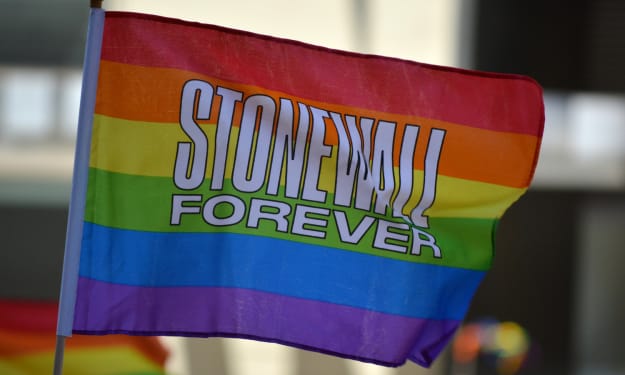
For nearly a decade, the LGBTQIA Pride Flag rippled in the wind at Christopher Park, a kaleidoscope of color staked into the soil of America’s first national monument to LGBTQIA+ liberation. That flag came down this week. Federal officials, citing new guidance from the Trump Administration, silently lowered the rainbow flag from its pole across the street from the Stonewall Inn. The birthplace of the modern gay rights movement now flies only the United States flag.
By Tim Carmichael4 days ago in Pride



Comments
There are no comments for this story
Be the first to respond and start the conversation.