
Israel Attacked Iran – Middle East Falling Into a Fire
Operation “Rising Lion” unleashes unprecedented strikes on Iran’s nuclear and military infrastructure, igniting fears of all‑out war.

Introduction
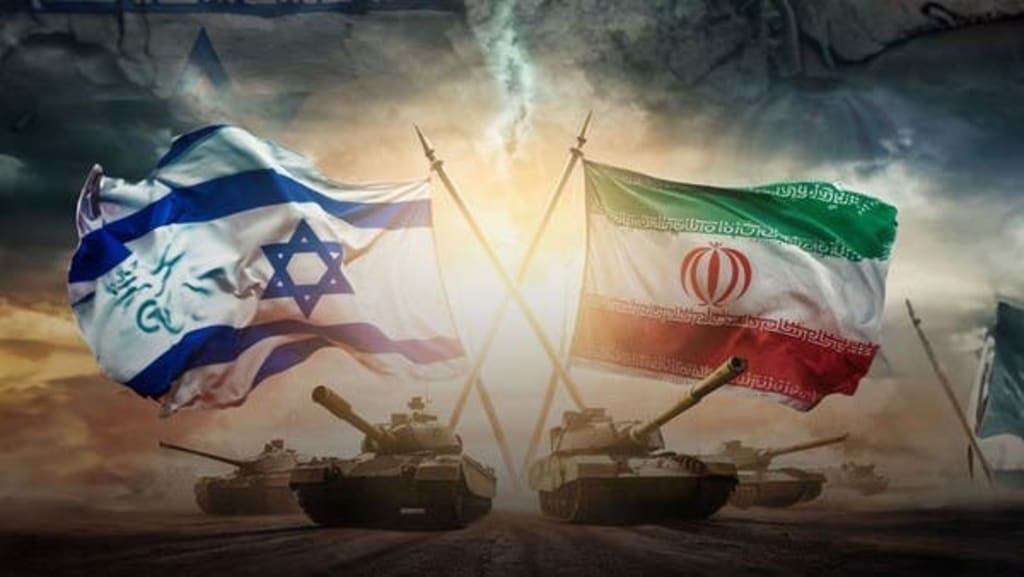
On June 13, 2025, Israel launched a sweeping military operation, codenamed Operation Rising Lion, targeting Iran’s nuclear and military capabilities—marking one of the most aggressive acts between the two nations in decades . This article deciphers the key developments, regional impact, and what lies ahead for the volatile Middle East. .
🔥 What Happened?
In a pre-dawn assault, around 200 Israeli fighter jets, backed by drones and Mossad intelligence agents, struck over 100 sites inside Iran, including the Natanz and Fordow uranium-enrichment facilities, missile production plants, senior military residences, and nuclear research infrastructure .
Notable casualties included:
Gen. Hossein Salami, IRGC commander-in-chief
Gen. Mohammad Bagheri, Iran’s Chief of Military Staff
Gen. Amir Ali Hajizadeh, IRGC aerospace leader
Multiple senior nuclear scientists
The assault also destroyed residential buildings, damaging both military infrastructure and civilian zones
Why Now? Strategic & Political Drivers
Preemptive threat: Israel asserts the operation was necessary to halt Iran’s leap toward nuclear weapons—calling the threat “existential” .
Diplomatic breakdown: The strike coincided with stalled U.S.–Iran nuclear negotiations and Iran's breach of International Atomic Energy Agency (IAEA) protocols .
Psychological impact: Demonstrated Israel’s capability to strike deep within Iran, including sensitive residential areas—a signal of intelligence penetration and military readiness .
Immediate Aftermath
Iranian response: Tehran claims to have launched over 100 drones at Israel; Israel reports both launches and interceptions, though drone impact remains unclear .
Civilian disruption: Tehran and other cities experienced multiple explosions, airspace shutdowns, and civilian casualties—with at least 78 dead and over 300 injured .
Global ramifications: International flights rerouted, oil prices surged, and the UN convened an emergency Security Council meeting
Reactions from the Stakeholders
Iran Vows "severe punishment", calls Israel’s actions “state terrorism” .
Israel PM Netanyahu defends the strikes as essential, promising sustenance “as long as necessary” .
United States Expresses support for Israel, distances itself from direct involvement, and issues warnings to Iran .
United Nations & Europe Urge restraint and call for emergency de-escalation .
Strategic Implications
1. Nuclear Rollback or Revenge?
– Israel might have delayed Iran’s nuclear ambitions. However, experts warn that Iran may accelerate underground enrichment to counter future strikes .
2. Domestic Fallout in Iran
– The regime risks internal instability as public anger at rising costs of conflict grows .
3. Broader Regional Conflict
– A multi-front escalation may involve Iran’s regional proxies—Hezbollah, Houthis—and even threaten U.S. assets in the Gulf .
4. U.S.–Israel Alignment Stress
– Without U.S. military involvement, the outcome may test both diplomatic trust and future security commitments .
What Comes Next?
Continued Strikes: Israel may extend the operation; Netanyahu has indicated it could last “as long as necessary” .
Iran's Counterstrike: Tehran, expected to retaliate “decisively,” may deploy more drone and missile attacks—though intelligence shows most can be intercepted .
Diplomatic Flashpoints: The UN, neighboring states, and global powers are mobilizing—efforts could lead to negotiations or indicate deeper polarization .
Israel attacked Iran news"
"Operation Rising Lion"
"Natanz strike June 2025"
"Iran Israel war status"
"Middle East regional conflict June 2025"
🛑 Conclusion
The Israeli strike on Iran marks a dangerous inflection point in Middle Eastern geopolitics. Operation Rising Lion was not just a show of force—it was a calculated attack aimed at crippling Iran’s nuclear infrastructure and signaling regional dominance. With key military leaders killed, nuclear facilities severely damaged, and residential areas caught in the crossfire, the scale of destruction has pushed the region toward a potential full-scale war.
Iran’s vow to retaliate is more than rhetoric—it’s a signal that this confrontation may only be the beginning. Meanwhile, the international community faces mounting pressure to de-escalate tensions before neighboring powers like China, Russia, and the United States are drawn deeper into the conflict. The Middle East, long a geopolitical powder keg, now teeters on the edge of widespread destabilization.
This is no longer a shadow war; it’s a direct conflict that could redefine power dynamics for years to come. Whether global diplomacy prevails or war expands, one fact is clear: the balance of power in the Middle East is shifting—fast, and possibly irreversibly.
As new developments unfold, the world watches and waits. Peace is possible—but only if decisive action is taken before the fire spreads beyond control.
About the Creator
🍂🍂🍂.
Research on geopolitics
Ukraine War Briefing: Oreshnik Missile Sparks Anger at UN Security Council
The ongoing conflict in Ukraine has once again drawn the world’s attention after the recent deployment of the Oreshnik missile became a focal point of debate at the United Nations Security Council (UNSC). The missile, reportedly used in the latest skirmishes in eastern Ukraine, has intensified global concerns about the escalating conflict and the potential humanitarian consequences. Diplomats, analysts, and world leaders are closely monitoring the situation as discussions at the UNSC reveal deep divisions among member states over accountability, sanctions, and peace efforts. What Is the Oreshnik Missile? The Oreshnik missile is a newly highlighted weapon in the Ukraine war, drawing scrutiny for its advanced capabilities. Analysts describe it as a medium-range guided missile, designed for precision strikes against strategic military targets. Its use in the conflict has raised questions about proportionality, civilian safety, and adherence to international law. While military officials claim the missile provides tactical advantages, critics argue that its deployment near populated areas risks civilian lives and could violate humanitarian norms. The UN Security Council Reacts The UNSC convened an emergency session following reports of the missile strikes. Member states expressed sharply divided opinions on how to respond. Countries condemning the missile’s use stressed that such actions escalate the war and endanger civilians. They called for urgent investigations and reiterated demands for Russia to adhere to international humanitarian law. Conversely, some nations defended the deployment, framing it as a necessary act of national defense. This division highlights broader geopolitical tensions, reflecting competing interests and alliances that influence the Security Council’s ability to take unified action. Global Outrage and Public Response The news of the Oreshnik missile’s deployment has ignited widespread outrage beyond diplomatic circles. International media outlets and human rights organizations have amplified concerns about civilian casualties, particularly in areas with high population density. Social media has also become a platform for activists, journalists, and everyday citizens to voice their anger and call for immediate intervention. Protests and awareness campaigns in Europe, North America, and parts of Asia emphasize the humanitarian toll of the conflict. These global reactions put additional pressure on world leaders to respond with decisive measures, including sanctions, diplomatic interventions, and peacekeeping efforts. Strategic Implications for Ukraine Military analysts suggest that the Oreshnik missile represents a strategic escalation, signaling a shift in the tactics used in the ongoing war. Its precision targeting may give the deploying forces significant operational advantage, but it also risks triggering stronger international responses. Ukrainian officials have condemned the missile attacks, citing civilian harm and destruction of critical infrastructure. In practical terms, the missile’s use may influence the balance of power in contested regions, particularly in eastern Ukraine where fighting has been intense. Analysts warn that the weapon could intensify the conflict, complicating prospects for negotiations and prolonging human suffering. Diplomatic Challenges at the UNSC The Security Council faces significant challenges in addressing the Oreshnik missile controversy. The council’s permanent members, including the United States, Russia, China, the United Kingdom, and France, hold veto powers that make unanimous resolutions difficult. In this case, political alliances and opposing narratives have prevented a clear consensus on punitive measures or interventions. Experts argue that the deadlock at the UNSC underscores broader limitations in the international system when addressing conflicts involving advanced weaponry and state actors with competing agendas. Without coordinated action, the risk of escalation in Ukraine remains high. Humanitarian Concerns Humanitarian organizations have highlighted the immediate consequences of missile strikes, including displacement, injuries, and infrastructure destruction. Hospitals, schools, and residential areas in eastern Ukraine have reportedly suffered damage, exacerbating the ongoing humanitarian crisis. International agencies emphasize that protecting civilians must remain a priority, urging both sides to respect international law. They also call for increased funding and access for relief efforts, warning that continued military escalation could worsen the already dire situation for millions of Ukrainians. The Path Forward While the Oreshnik missile has intensified global attention on Ukraine, experts stress that long-term solutions require diplomacy and accountability. Negotiations at international forums, including the UN, must balance security concerns with humanitarian imperatives. Observers note that transparency in military actions, independent investigations, and adherence to international treaties are essential to prevent further escalation. Meanwhile, the global community faces the challenge of supporting Ukraine while avoiding policies that could exacerbate the conflict. Conclusion: A Critical Moment in Global Diplomacy The deployment of the Oreshnik missile and the ensuing debates at the UN Security Council mark a critical moment in the Ukraine conflict. It underscores the intersection of modern warfare, geopolitics, and humanitarian responsibility. As the world watches, the international community faces urgent questions: How can escalation be prevented? How can civilian lives be protected? And what role should global institutions play in mediating a conflict that continues to threaten regional and international stability? For Ukraine, the missile represents both a tactical and symbolic escalation, while for the UN and its member states, it highlights the challenges of enforcing international norms in a rapidly changing conflict landscape. The coming weeks may determine not only the trajectory of the war but also the credibility of global governancein upholding peace and security.
By Aarif Lashari5 days ago in The Swamp


Comments
There are no comments for this story
Be the first to respond and start the conversation.