
Is There Any Legal Justification for the US Attack on Venezuela?
Examining international law, US policy, and the controversy over recent military action

In the wake of reports that the United States carried out military action in Venezuela—culminating in the capture of President Nicolás Maduro—many observers are asking a pressing question: Is there any legal justification for the US attack on Venezuela? This query touches on fundamental issues of international law, sovereignty, and the evolving norms of foreign intervention in the 21st century.
While US political leaders have framed the operation as necessary for regional stability and humanitarian concerns, legal scholars, diplomats, and human rights advocates are sharply divided on whether such action is permissible under international law.
To answer this question fully, we must consider multiple perspectives: the principles of international law, US domestic law, regional treaties, and global diplomatic norms.
International Law and the Use of Force
The UN Charter: A Foundational Framework
At the heart of modern international law is the United Nations Charter, particularly Article 2(4), which prohibits states from using force against the territorial integrity or political independence of another state.
The Charter is clear:
“All Members shall refrain in their international relations from the threat or use of force against the territorial integrity or political independence of any state…”
This principle is meant to prevent unilateral military action and promote peaceful resolution of disputes.
Two Recognized Exceptions Under International Law
There are only two narrow exceptions under which the use of force may be considered lawful:
Self-Defense (Article 51)
A state may use force if it is the victim of an armed attack, or if an imminent threat meets the criteria of self-defense.
UN Security Council Authorization (Chapter VII)
The Security Council may authorize collective action in response to threats to peace, breaches of peace, or acts of aggression.
Applying These Exceptions to the Venezuela Case
🛡 Self-Defense?
For self-defense to legally justify military action, the US would need to demonstrate that Venezuela posed an imminent threat to US security or to a US ally.
Venezuelan territory is not known to have launched attacks on the US.
There is no credible evidence that Caracas possessed weapons or forces posing a direct and immediate threat to the United States’ safety.
Without this, a claim of self-defense holds weak legal footing.
🛡 UN Security Council Authorization?
No credible public evidence shows that the UN Security Council authorized the use of force in Venezuela.
Russia and China, permanent UNSC members, have historically opposed sanctions or coercive measures against Caracas.
Without a Council mandate, unilateral action is generally viewed as violating the UN Charter.
Proponents might argue that the Security Council is ineffective or deadlocked, but ineffectiveness does not grant legal license to bypass it.
Humanitarian Intervention and the Responsibility to Protect (R2P)
Some supporters of intervention cite humanitarian concerns, suggesting that the crisis in Venezuela justified extraordinary action.
The idea of Responsibility to Protect (R2P) holds that the international community should intervene when a state fails to protect its citizens from genocide, war crimes, ethnic cleansing, or crimes against humanity. However:
R2P has no binding legal force absent Security Council approval.
Venezuela’s crisis, while severe, does not meet the strict legal criteria R2P was designed to address.
Acting on humanitarian grounds without Council authorization remains controversial and legally shaky.
US Domestic Law and Executive Authority
Under US domestic law, the President’s authority to use military force abroad is governed by:
The Constitution (as Commander in Chief)
The War Powers Resolution (1973)
Specific authorizations from Congress
The War Powers Resolution allows the President to use force for up to 60 days without Congressional approval, plus a 30-day withdrawal period, but this law itself is subject to debate regarding constitutionality and scope.
Even if the US executive claims domestic authority, domestic legality does not translate into international legality. A president can order military action under US law but still violate international law.
Regional Law and OAS Principles
The Organization of American States (OAS) and the Inter-American Democratic Charter emphasize peaceful resolution, non-intervention, and respect for sovereignty. Neither document provides a clear mandate for unilateral military action by one member against another without consent or Security Council backing.
Regional legal frameworks thus reinforce the international norms against force.
Arguments Made by Supporters
Proponents of the US action generally make one or more of the following points:
✔ Maduro’s Government Was Illegitimate
They argue that Maduro lost democratic legitimacy and that external action was necessary to restore democracy.
🛡 Security and Migration Concerns
Some suggest that instability in Venezuela could affect regional security and migration flows, though these are not recognized legal grounds for direct military intervention.
✔ Pressure for Negotiated Settlement
Supporters claim strong action may coerce a negotiated political transition.
While these reasons may be politically persuasive to some, they do not constitute legal justification under international law.
Arguments Made by Critics
Critics of the US intervention argue:
❌ It Violates the UN Charter
Without self-defense justification or Security Council authorization, it breaches the foundational rule against use of force.
❌ It Sets a Dangerous Precedent
If powerful states act unilaterally, global stability and respect for international norms erode.
❌ Civilian Impact and Sovereignty Concerns
Critics emphasize that military action risks harm to civilians and disrespects Venezuela’s sovereignty.
Historical and Global Context
The debate over legality is not new. Similar controversies have surrounded:
The 2003 Iraq invasion
NATO action in Kosovo (1999)
Interventions in Libya (2011)
Each case generated intense debate about international legitimacy, humanitarian goals, and alliance authority.
Conclusion: Legal Justification Remains Unclear
Based on international law—including the UN Charter, customary law, regional agreements, and humanitarian doctrine—there is no strong, widely accepted legal justification for the US attack on Venezuela as described.
Self-defense does not clearly apply.
No UN Security Council authorization has been publicized.
Humanitarian intervention lacks binding legal force absent Council backing.
US domestic law cannot override international law.
In short, scholars, diplomats, and legal analysts generally conclude that the operation lacks clear legal grounding in established international law principles.
The controversy highlights a critical tension in modern geopolitics: the desire to act decisively against perceived threats or crises versus the enduring frameworks designed to restrain unilateral use of force.
About the Creator
Keep reading
More stories from Aarif Lashari and writers in The Swamp and other communities.
Trump Says Venezuela VP Delcy Rodríguez Is ‘Willing to Work With US’. Who Is She?
In a recent statement that grabbed international attention, former U.S. President Donald Trump said that Venezuela’s Vice President, Delcy Eloína Rodríguez, is “willing to work with the United States.” The remark came amid shifting geopolitical currents in Latin America, prompting many observers to ask: Who is Delcy Rodríguez, and what does her potential cooperation with the U.S. really mean for Venezuela, regional politics, and global diplomacy?
By Aarif Lashari2 months ago in The Swamp
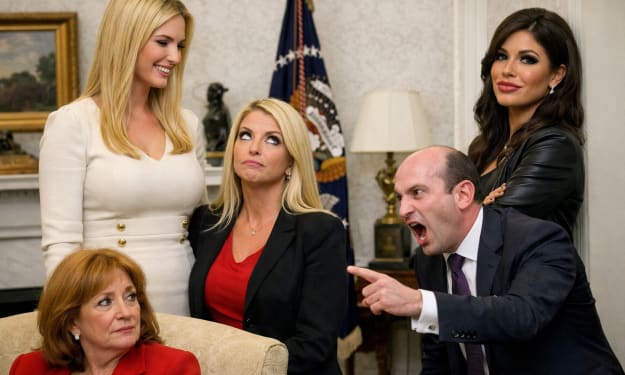
A Gathering of Evil Bosses
“I’m the queen of chin jutting while I smooth my hair, attacking, insulting, and deflecting to protect my appointer.” “Oh, please, Blondi, my hair is curled, highlighted, and longer than yours. I feature television commercials telling immigrants that we will give them a free plane ride home, and if they voluntarily turn themselves in, they will be allowed to legally apply for re-entry. It runs everywhere, and I look good in it! You can’t compete because of your blond hair. Mine is nicer, and my lips are prettier than yours.”
By Andrea Corwin 10 days ago in The Swamp
The Supreme Court’s Declaration of Independence
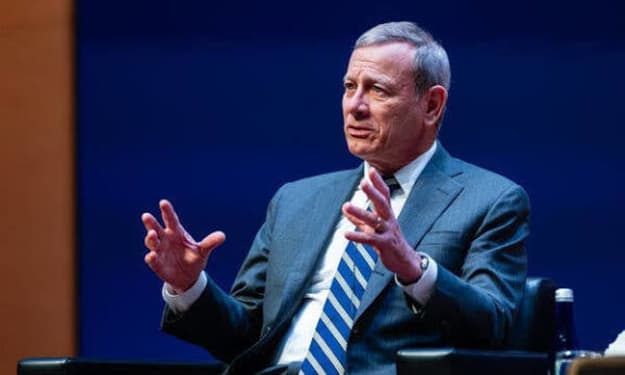
The U.S. Supreme Court has issued a series of recent rulings that many legal scholars describe as a modern “declaration of independence” from political pressure, signaling a firm assertion of judicial authority at a moment of intense polarization in the United States. In decisions touching on executive power, regulatory authority, and constitutional interpretation, the Court has increasingly positioned itself as an institution unwilling to bend to shifting political winds. While supporters praise the move as a defense of constitutional balance, critics warn that the justices are reshaping the boundaries between the judiciary, Congress, and the presidency in ways that could permanently alter American governance. A Turning Point in Judicial Authority At the heart of the Court’s recent posture is its insistence that constitutional questions belong squarely within the judiciary’s domain, regardless of political consequences. Several high-profile rulings have curtailed the reach of federal agencies and limited the discretion of the executive branch, reinforcing the idea that unelected judges, not political leaders, are the final arbiters of constitutional meaning. Legal analysts say this marks a departure from decades of judicial restraint, during which the Court often deferred to Congress or regulatory bodies on complex policy matters. The shift reflects a belief among a majority of justices that democratic accountability must be balanced against strict constitutional limits, even if that produces controversial outcomes. “This is the Court reminding the nation that it is not a subsidiary of the political branches,” said one constitutional law professor. “It is asserting its independence in unmistakable terms.” Political Reactions The response from Washington has been swift and divided. Lawmakers from both parties have accused the Court of either overreach or timidity, depending on the issue at hand. Progressive leaders argue that the justices are rolling back protections on voting rights and environmental regulation, while conservatives counter that the Court is finally restoring the Constitution’s original structure. The White House has expressed respect for judicial independence but has also raised concerns about the practical consequences of certain rulings, particularly those affecting healthcare, climate policy, and federal oversight. Behind the scenes, congressional aides say lawmakers are exploring legislative strategies to counter or clarify some of the Court’s decisions, setting the stage for an institutional standoff between branches of government. Public Trust and Institutional Legitimacy Public confidence in the Supreme Court has declined in recent years, driven in part by perceptions that the Court has become too political. Opinion polls show trust in the institution near historic lows, even as the Court insists it is acting purely on legal principle rather than ideology. Chief Justice John Roberts has repeatedly emphasized the importance of preserving the Court’s legitimacy by demonstrating neutrality and respect for precedent. Yet critics argue that recent rulings suggest a willingness to overturn long-standing doctrines, raising questions about stability in constitutional law. Supporters, however, contend that the Court is doing exactly what the framers intended: checking the power of elected officials and safeguarding the Constitution against temporary majorities. Constitutional Implications The phrase “declaration of independence” has gained traction among commentators who see the Court’s actions as redefining the separation of powers. By narrowing the authority of administrative agencies and emphasizing judicial review, the Court is effectively reclaiming influence that had shifted toward the executive branch over the last half-century. This recalibration could have far-reaching consequences. Regulatory systems governing finance, environmental protection, labor, and public health may now face higher legal hurdles. States, too, may find greater room to challenge federal authority, reshaping the balance between national and local power. A Court at the Center of American Politics Ironically, the Court’s effort to assert independence has placed it squarely at the center of political debate. Every major decision is now scrutinized not only for legal reasoning but for its political impact. Some historians compare the current moment to the New Deal era, when the Court’s resistance to federal programs sparked intense conflict with President Franklin D. Roosevelt. Others argue that today’s divisions are even sharper, fueled by social media and partisan media ecosystems that amplify every ruling into a national controversy. Looking Ahead Whether the Supreme Court’s assertiveness strengthens or weakens democracy remains an open question. Its defenders say the institution is restoring constitutional discipline and protecting liberty. Its critics fear that unelected judges are shaping policy without accountability. What is clear is that the Court has entered a new phase in its relationship with the political branches—one defined by independence, confrontation, and profound influence over the nation’s future. In doing so, it has made a statement not unlike the one issued in 1776: that its authority does not flow from politics, but from principle.
By Fiaz Ahmed 7 days ago in The Swamp
I was in a Toxic Relationship, with my Workplace
“You got that?” My ex yelled. His hands were balled into fists at his side. At six foot three, he towered over me. A normal person would have been afraid, but I looked up a video of George Lopez repeatedly saying, “I got this,” and showed it to him. I had grown used to this treatment, so much so that I didn’t blink when he ripped the phone from my hand and threw it across the room.
By Jade M.2 days ago in Confessions


Comments
There are no comments for this story
Be the first to respond and start the conversation.