
Is the New Tariff War Between the U.S. and China a Threat to Global Stability?
From Tariffs to Price Hikes: How a Global Trade Clash Affects You

Introduction
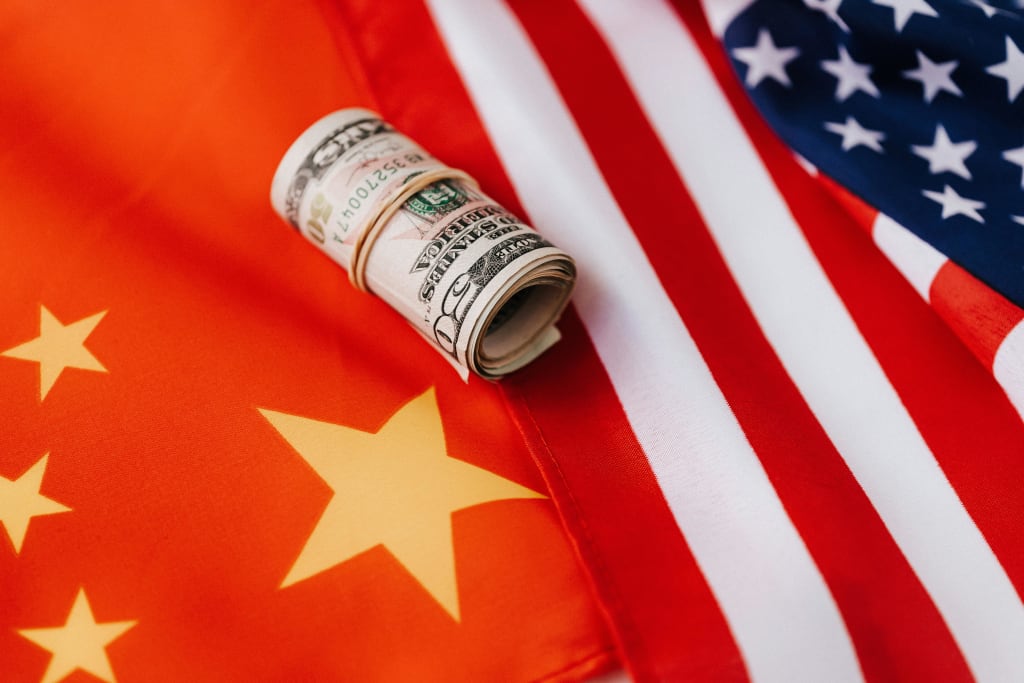
In today’s highly connected world, global trade influences the lives of nearly everyone, from top-level policymakers to everyday consumers. One of the hottest topics in global economics is the ongoing tariff war between the United States and China. As of 2025, a fresh wave of tariffs has stirred concerns about rising prices, economic uncertainty, and potential disruptions in the global supply chain. But is this just another chapter in a long-standing rivalry—or does it signal a larger threat to global stability?
What is a Tariff War?
Tariffs are taxes imposed on imported goods. Governments often use them to protect local industries or to pressure foreign countries into changing certain trade practices. When one country imposes tariffs and the other country responds with more tariffs, it escalates into what is known as a "tariff war."
This particular conflict began in 2018 when the U.S. raised tariffs on Chinese steel, electronics, and machinery, accusing China of unfair trade practices. In response, China slapped tariffs on American agricultural goods. Although things cooled off for a while, 2025 has brought a new round of economic friction.
What’s Happening in 2025?
Earlier this year, the U.S. government introduced new tariffs targeting Chinese electric vehicles (EVs), batteries, and cutting-edge tech products. The main goal? Protect American industries and reduce dependency on Chinese manufacturing.
China didn’t stay quiet. They’ve threatened to cut exports of rare earth minerals—critical components in U.S. technologies like smartphones, wind turbines, and even military equipment. It’s becoming clear that this conflict goes beyond just taxes. It’s now about who controls the future of global technology and production.
How It Affects Everyday People
Most people don’t follow trade policies daily, but that doesn’t mean they’re not affected. Here’s how this trade tension can hit home:
- Higher prices: When import taxes go up, companies pass those costs to consumers. Expect costlier gadgets, cars, and even some food items.
- Job market shifts: While some American industries may benefit, others that rely on Chinese parts or materials could face layoffs or production issues.
- Inflation pressure: With rising prices, inflation might get worse, making everyday expenses harder to manage for average families.
The Global Domino Effect
Even though the spotlight is on the U.S. and China, this conflict sends shockwaves around the world. Countries like Vietnam, India, and Bangladesh may find new opportunities as U.S. companies search for alternative supply chains. But the uncertainty also scares off investors and slows down global economic growth.
Take Bangladesh, for instance. Local exporters might benefit in the short term if U.S. buyers shift orders from China. But a long-term trade war can make global trade unpredictable, which isn’t good for developing economies that rely heavily on exports.
Final Thoughts
The new round of tariffs is more than just a political move—it has the potential to significantly impact global economies, disrupt supply chains, reshape industries, and affect the everyday lives of people worldwide. While protecting national interests and promoting domestic growth are important, long-term solutions may lie in diplomacy, cooperation, and strategic dialogue rather than escalation. As uncertainty looms, the world watches closely as two of its most powerful economies go head-to-head, hoping that tensions cool down before they spiral into a full-blown economic conflict with lasting consequences.
Photo by kabomics.com on Pixels
AI Attribution
This article was created with the assistance of AI tools like ChatGPT for idea development and structure. The final content has been reviewed and edited by the author to ensure clarity, originality, and a human touch.
About the Creator
Sohel Zain
Just someone who loves making sense of the world through words.
Keep reading
More stories from Sohel Zain and writers in The Swamp and other communities.
Title: The Power of Observation: How Your Consciousness Shapes Reality
Have you ever noticed how just watching something changes the way you experience it? Like when you’re being watched — suddenly you become aware of your every move. Or when you observe your own thoughts — and they start to shift, almost like they know you're paying attention.
By Sohel Zain11 months ago in Humans
The Forsyth House Fire
Since 1851, Forsyth House has stood on the corner of Union Street and Gordon Street in the heart of Glasgow. Its iconic, or was... because on Sunday 8th of March, 2026, a fire broke out in a small, seemingly un-named shop in the building and tore all that history down. As I write, the rubble is still unsettled and the street is still blocked off. Central Station is quiet on the upper level, and around 30 small businesses have quite literally gone up in smoke.
By S. A. Crawford3 days ago in The Swamp
U.S. Navy to increase production of anti-submarine mines
Washington, D.C. — The United States Navy has confirmed plans to expand the production of advanced anti‑submarine mine systems as part of an intensified effort to bolster its undersea warfare capabilities amid growing global competition below the waves. Officials say the move reflects mounting concerns about the expanding submarine fleets of peer competitors and the need to strengthen maritime deterrence and denial strategies. According to a recent presolicitation notice issued by the Naval Sea Systems Command, the Navy intends to modify an existing contract with General Dynamics Mission Systems that increases the number of units of the Hammerhead anti‑submarine mine to be procured over the next several fiscal cycles. The contract adjustment is designed to rapidly accelerate deliveries while ensuring operational demands are met beginning in fiscal year 2027. Senior Navy officials said that expanding Hammerhead production is a priority because the system provides a mobile, autonomous capability to detect, classify and engage hostile submarines — a capability that is increasingly vital in contested littoral and open‑ocean environments. The mines are designed to be deployed from unmanned underwater vehicles, surface vessels or aircraft, and operate in waters where traditional anti‑submarine warfare (ASW) assets may be vulnerable or limited. “We are rapidly adjusting our undersea capabilities to address the realities of great‑power competition,” a senior defense official involved in the procurement process told reporters on condition of anonymity. “The expansion of anti‑submarine mine production — particularly systems like Hammerhead — provides us with a crucial asymmetric advantage in waters where adversary submarine activity is increasing.” Why Mines Again? Naval mines have a long history as cost‑effective tools of maritime control and denial. During the Cold War, systems such as the Mark 60 CAPTOR mine were designed to disrupt Soviet submarine operations in critical chokepoints and served as part of layered ASW strategies. These weapons combined a torpedo killer with a stationary mine casing to detect and destroy submarines autonomously. Despite periods of diminished emphasis in the post‑Cold War era, mine warfare has regained attention within U.S. naval strategy as peer competitors modernize their undersea forces. The marked growth of adversary submarine fleets — particularly the rapid expansion of the People’s Liberation Army Navy nuclear and diesel‑electric submarine fleets — has renewed emphasis on tools that can impose area denial or complicate hostile maneuvers in strategic waters. Mine systems like Hammerhead are seen as force multipliers: they can extend ASW reach into denied areas, channel adversary submarines into predictable paths, and serve as persistent sensors and shooters long after initial deployment. Their autonomy also reduces risk to manned ASW platforms, which are vulnerable to advanced anti‑access systems and modern torpedoes. Industrial and Strategic Challenges Increasing production of advanced mines presents both industrial and strategic challenges. In its notice, the Navy acknowledged that General Dynamics Mission Systems is currently the only vendor capable of meeting the accelerated timeline for additional Hammerhead units, which is why the contract modification will proceed without full and open competition. This approach, while expedient, highlights broader constraints in the defense industrial base for undersea systems, where capable producers are limited and highly specialized. Supporters of the expanded program argue that concentrating production with an experienced contractor will avoid delays and preserve continuity, but some defense analysts have raised concerns about dependence on single suppliers for niche yet critical capabilities. Diversifying the industrial base, they say, could hedge against supply chain disruptions and reduce bottlenecks for future undersea programs. The increased production mandate comes at a time when the Navy is simultaneously stretched across a wide range of modernization and recapitalization efforts, including submarine construction, unmanned undersea systems and expanded mine countermeasure capabilities. Last year’s push for expanded procurement reflected similar pressures on the submarine industrial base, where funding boosts are being applied to sustain construction rates and address workforce constraints. Operational Context The strategic rationale for accelerating anti‑submarine mine production stems from the evolving global maritime environment. Analysts note that Russia’s modernization of its submarine fleet — as well as China’s rapid deployment of new nuclear and conventionally powered submarines — has placed increased pressure on U.S. undersea dominance. Submarines are a central element of both offensive and deterrent naval operations, making investments in tools that can detect and counter them a priority for defense planners. Complicating matters further, developments in autonomous underwater vehicles (UUVs) and unmanned surface vehicles (USVs) have reshaped mine warfare. Modern mines can be integrated with these platforms to achieve quicker, more precise deployment in contested or denied waters while complicating an adversary’s ability to detect and neutralize them. These advances signal a renewed era of undersea competition where traditional concepts are being blended with emerging technologies. Looking Ahead As the Navy prepares to issue and implement the contract modification for expanded Hammerhead supplies, officials emphasize that the program is just one part of a broader, multi‑domain approach to undersea warfare. Investments in detection systems, advanced torpedoes, and layered ASW networks — including manned and unmanned platforms — are moving forward in parallel to ensure that U.S. forces maintain a competitive edge beneath the surface. In an era defined by competition with near‑peer naval powers, the resurgence of mine warfare — once considered a legacy capability — underscores the complexity and adaptability of modern maritime strategy. The expanded anti‑submarine mine production effort reflects not only tactical considerations, but the Navy’s long‑term commitment to securing undersea superiority across critical sea lanes and contested regions.
By Fiaz Ahmed 2 days ago in The Swamp



Comments
There are no comments for this story
Be the first to respond and start the conversation.